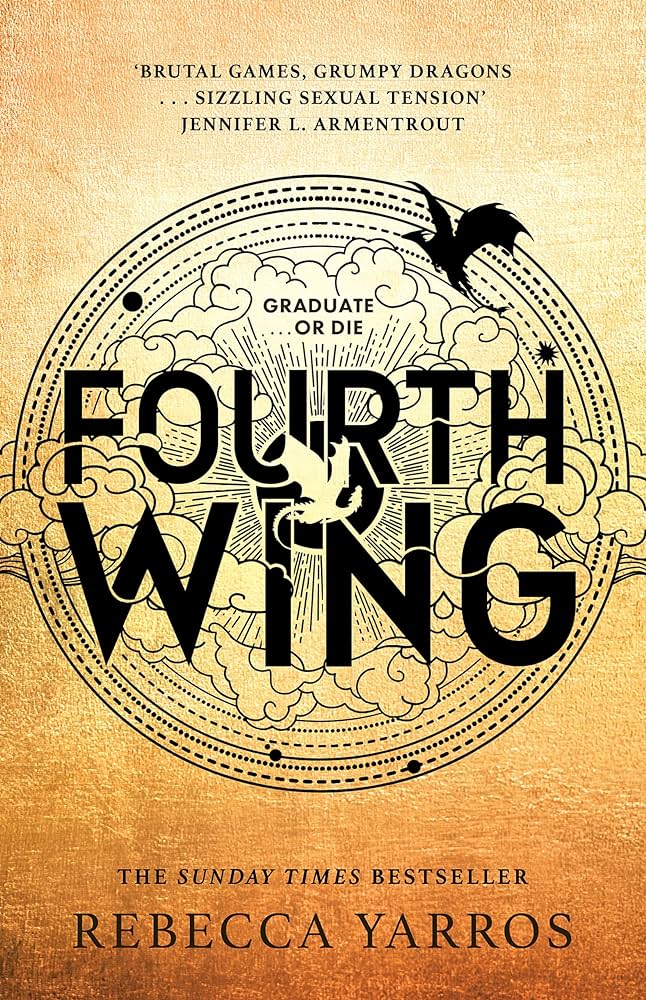
If you've spent ten minutes on BookTok, you've met Fourth Wing whether you wanted to or not. Rebecca Yarros's dragon-rider romantasy became the genre's biggest on-ramp almost overnight — and with that much hype comes the inevitable backlash. So here's the honest version, sifted from where readers argue about it most.
What readers love
The first thing nearly everyone agrees on: it's addictive. The pace is relentless, the chapters end on hooks, and the pages genuinely fly. Readers who "don't usually finish books" finish this one in a weekend. That readability is the whole engine — it's high-entertainment, low-friction, and unashamed about it.
The dragons are the runaway favourite. Tairn and Andarna aren't set dressing; they're characters with attitude, and the bond between rider and dragon does a lot of the emotional heavy lifting. People who came for romance stayed for the dragons.
Violet Sorrengail lands well as a heroine — clever, underestimated, and written with a chronic illness (Yarros drew on her own Ehlers-Danlos syndrome), which a lot of readers found genuinely meaningful representation rather than a gimmick. And Xaden is the engine of the romance: the dangerous, withholding love interest with a hidden side, the morally-grey man who's lethal to everyone but slowly, reluctantly, her. The banter and the slow-tightening tension between them is what readers screenshot.
Set it all in a brutal war college where cadets die in training, and you get the death-stakes that keep the romance from feeling weightless.
What divides them
Here's where the love splits. The most common criticism is the prose. The voice is informal, modern, sometimes very-online — and for plenty of readers that's the appeal, but for others it reads as simple, "corny," or heavy on exposition dumps. As more than one reviewer put it, this is high entertainment, not high literature, and how much that bothers you decides a lot.
The worldbuilding takes hits too. The faction-sorted military academy strikes many readers as familiar — Divergent with dragons — and the magic and politics are sketched fast, sometimes hand-waved as background between romance beats. A common note: the fantasy actually peaks earlier than the romance, and the training scenes can feel like filler.
Then there's the hype tax. A recurring, very honest reader take: "It's not even remotely original and the plot twists are predictable — but I was still super hooked." Or, more bluntly, "overrated, but a good read for what it is." Most of the negativity isn't that the book is bad; it's that no book survives that level of attention unscathed.
The spice and the pacing
On spice, Fourth Wing is a solid middle — call it a 3 out of 5. The romance simmers for most of the book and the heat arrives mainly in the back third, so readers chasing spice from page one report a wait; readers who like the slow build to a payoff are happy. The pacing overall is fast to a fault — thrilling, occasionally so quick that worldbuilding and stakes blur past.
So, should you read it?
If you're a romance reader curious about fantasy, or you just want something that will eat your weekend, Fourth Wing is close to the perfect entry point — that's genuinely what it's best at, and why it converted so many people. If you want careful prose, deep original worldbuilding, or twists you don't see coming, you may find yourself in the "overrated" camp. Both camps are right; they just want different things from a book.