Romantasy trope
Best Magic Academy Romantasy Books
Schools, trials, and rivals who become more.

Legendborn
Tracy Deonn · The Legendborn Cycle #1

Shadow Kiss
Richelle Mead · Vampire Academy #3
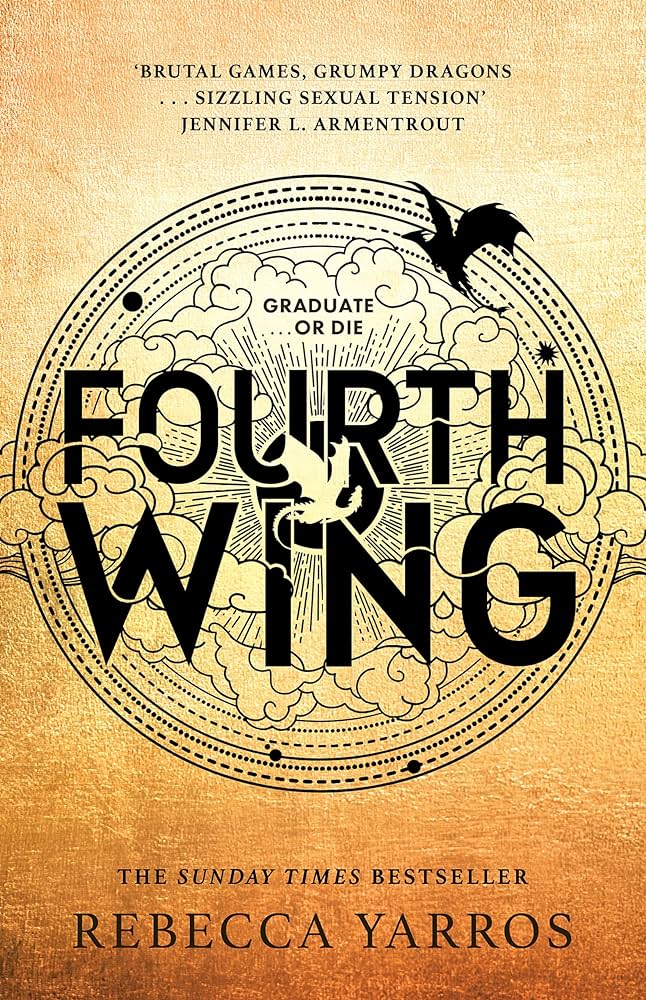
Fourth Wing
Rebecca Yarros · The Empyrean #1
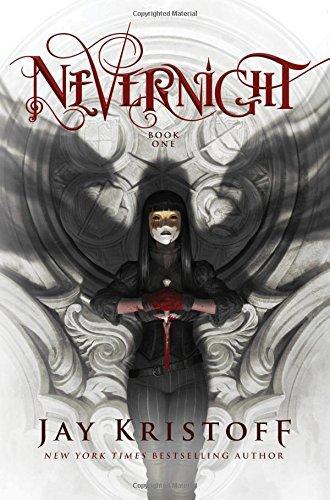
Nevernight
Jay Kristoff · The Nevernight Chronicle #1

Frostbite
Richelle Mead · Vampire Academy #2

Crush
Tracy Wolff · Crave #2

Half-Blood
Jennifer L. Armentrout · Covenant #1

Covet
Tracy Wolff · Crave #3

Vampire Academy
Richelle Mead · Vampire Academy #1

Crave
Tracy Wolff · Crave #1

The Atlas Six
Olivie Blake · The Atlas #1
Why the magic academy trope works
Magic academy romantasy delivers something specific that general fantasy doesn't: the pressure cooker. You get formal systems of power with cracks in them, rivals who know exactly which of your weaknesses to press, and a romance that has to survive public failure as much as private longing. The emotional pull isn't the magic itself — it's the way institutional hierarchies force proximity, manufacture jealousy, and make every small moment of trust feel earned. Readers return to this trope because the stakes are layered: you can fail publicly, lose the person, and lose yourself, all at once.
Fourth Wing by Rebecca Yarros turns the academy into a war machine, and the romance between Violet and Xaden works precisely because the institution keeps trying to kill one of them — the tension never deflates into comfort. The Atlas Six by Olivie Blake strips away any warmth from the setting entirely; the six students selected to compete for a single society membership are deeply aware they might be each other's endings, which makes every flicker of connection feel like a calculated risk. For readers who want the trope with less moral ambiguity, Vampire Academy by Richelle Mead grounds it in a world where the school's rules exist for genuinely protective reasons — and Rose Hathaway's slow-burn dynamic with Dimitri gets its charge from the fact that those rules are not wrong, just impossibly inconvenient.
Magic Academy romantasy — your questions
Which magic academy romantasy should I read first if I'm new to the trope?
Fourth Wing is the obvious entry point — it's the book that pulled the trope into mainstream bestseller territory and it earns that reach. The world-building is dense but the romance is propulsive enough to carry you through, and Yarros writes tension at a pace that doesn't let you set it down long enough to get confused. If you'd prefer something slightly lower in intensity and heat, Vampire Academy is a clean, fast series opener that makes the school setting feel genuinely lived-in.
Which of these books are the spiciest?
Fourth Wing and Nevernight both sit at the higher end (3/5). Fourth Wing's spice is woven into the main romance and escalates gradually; Nevernight's is sharper and more immediate — Jay Kristoff doesn't ease into it. The Vampire Academy books, The Atlas Six, and Frostbite and Shadow Kiss (the next two books in Richelle Mead's series) are all moderate (2/5) — romantic tension is central but explicit content is restrained. Legendborn and Crave are the lightest touch (1/5) and lean more toward slow-burn emotional payoff.
Which of these are standalone versus part of a series?
None of them are true standalones, but they vary in how self-contained the first book is. Fourth Wing resolves enough that it functions as a satisfying read on its own, though it's the first book in the Empyrean series. Nevernight is book one of the Nevernight Chronicle trilogy and ends on a note that will send you straight to the sequel. Vampire Academy, Frostbite, and Shadow Kiss are consecutive books in the same six-book series — start at Vampire Academy and expect to continue. The Atlas Six has a sequel (The Atlas Paradox) and ends with several threads deliberately open. Legendborn is the first in a duology. Crave is the opening of a four-book series.
What separates a great magic academy romantasy from a generic one?
The best entries in this trope use the institution itself as a character — the rules, the hierarchies, and the politics should actively shape the romance rather than just provide backdrop. In Fourth Wing, the war college's brutality forces Violet and Xaden into positions where trust becomes a tactical decision. In The Atlas Six, the selection process means every relationship is contaminated by the knowledge that someone in the group won't make it. In Nevernight, the assassin's school has its own moral logic that makes the student-teacher dynamic genuinely dangerous rather than conventionally forbidden. If the academy could be swapped out for any other setting without changing the story, the trope isn't doing its job.