Romantasy trope
Best Forbidden Love Romantasy Books
A romance the world — law, duty, or blood — forbids.

The House in the Cerulean Sea
T.J. Klune

Empire of the Vampire
Jay Kristoff · Empire of the Vampire #1

The Empire of Gold
S.A. Chakraborty · The Daevabad Trilogy #3

Winter
Marissa Meyer · The Lunar Chronicles #4

The Kingdom of Copper
S.A. Chakraborty · The Daevabad Trilogy #2

Muse of Nightmares
Laini Taylor · Strange the Dreamer #2

Strange the Dreamer
Laini Taylor · Strange the Dreamer #1

A Shadow in the Ember
Jennifer L. Armentrout · Flesh and Fire #1

Rule of Wolves
Leigh Bardugo · King of Scars Duology #2

The Dream Thieves
Maggie Stiefvater · The Raven Cycle #2

A Light in the Flame
Jennifer L. Armentrout · Flesh and Fire #2

An Ember in the Ashes
Sabaa Tahir · An Ember in the Ashes #1

The Raven King
Maggie Stiefvater · The Raven Cycle #4

Chain of Gold
Cassandra Clare · The Last Hours #1

Days of Blood and Starlight
Laini Taylor · Daughter of Smoke and Bone #2

The Priory of the Orange Tree
Samantha Shannon

Shadow Kiss
Richelle Mead · Vampire Academy #3

The Ten Thousand Doors of January
Alix E. Harrow

Lady Midnight
Cassandra Clare · The Dark Artifices #1
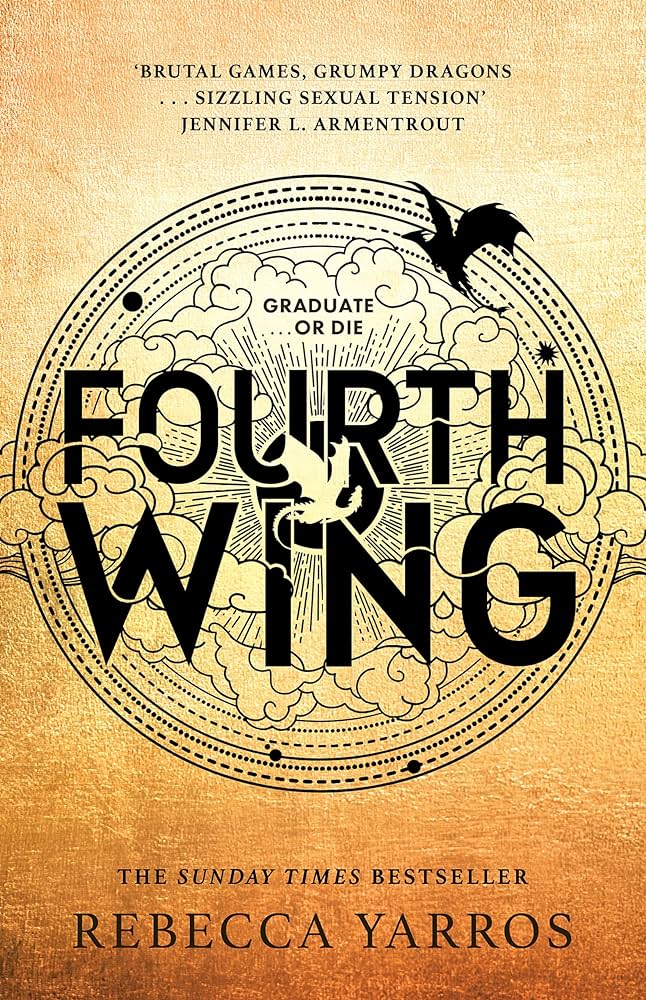
Fourth Wing
Rebecca Yarros · The Empyrean #1

Cinder
Marissa Meyer · The Lunar Chronicles #1

Daughter of Smoke and Bone
Laini Taylor · Daughter of Smoke and Bone #1

Scarlet
Marissa Meyer · The Lunar Chronicles #2
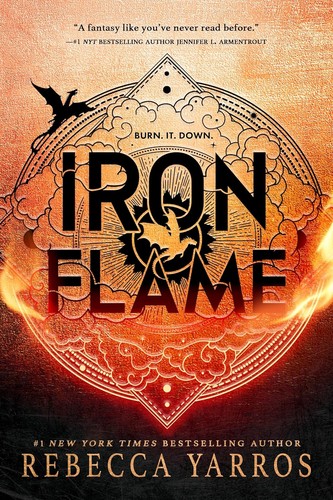
Iron Flame
Rebecca Yarros · The Empyrean #2

Our Violent Ends
Chloe Gong · These Violent Delights #2

The Witch's Heart
Genevieve Gornichec

Vow of Thieves
Mary E. Pearson · Dance of Thieves #2

Six Crimson Cranes
Elizabeth Lim · Six Crimson Cranes #1
Mother of Death and Dawn
Carissa Broadbent · The War of Lost Hearts #3

The Jasmine Throne
Tasha Suri · The Burning Kingdoms #1
Why the forbidden love trope works
Forbidden love works because it externalizes the stakes. When the world itself — duty, bloodline, law, species — stands between two people, every stolen glance carries the weight of consequence. Readers don't seek this trope for the obstacle itself but for what the obstacle reveals: who someone becomes when the cost of loving another person is catastrophically high. That tension is addictive in a way that straightforward romance rarely matches, because readers feel the pull in both directions simultaneously.
Rebecca Yarros's Fourth Wing uses military hierarchy and enemy-faction politics to make Violet and Xaden's attraction feel genuinely dangerous — the world has institutional reasons to want them apart, and those reasons don't disappear once they fall for each other. Stephenie Meyer's Twilight is the stripped-down, archetypal version: predator and prey, the forbidden written directly into biology. T.J. Klune's The House in the Cerulean Sea takes a quieter approach, swapping battle magic for bureaucratic absurdity, but the core prohibition — inspector, subject, power imbalance — is just as real, and the slow erosion of that wall is quietly devastating.
Forbidden Love romantasy — your questions
Which book is the best starting point if I'm new to forbidden love romantasy?
Start with Fourth Wing by Rebecca Yarros. It's the clearest on-ramp: an immersive magic system, a politically loaded enemies-to-lovers dynamic, and enough plot momentum that the forbidden element feels earned rather than contrived. The spice level sits at a moderate 3/5, so it's not overwhelming for new readers. If you want something lighter and faster-paced, Twilight is the archetypal version of the trope — minimal worldbuilding friction, pure tension.
Which of these books are the spiciest?
Iron Flame (the Fourth Wing sequel) is the hottest on this list at 4/5 — Yarros escalates significantly once the setup from book one is in place. Fourth Wing and Onyx Storm both sit at 3/5, explicit but not the main event. Everything else — Twilight, New Moon, The House in the Cerulean Sea, The Night Circus, and Cinder — tops out at 1/5, meaning romance and tension drive the story but there's little to no on-page sexual content.
Which of these are standalones versus part of a series?
The Night Circus (Erin Morgenstern) and The House in the Cerulean Sea (T.J. Klune) are true standalones — complete stories with no obligation to continue. Cinder by Marissa Meyer opens The Lunar Chronicles series, but each book follows a different protagonist, so the reading experience is more anthology than cliffhanger-dependent. Fourth Wing, Iron Flame, and Onyx Storm are the first three books in Yarros's Empyrean series, which is still ongoing — don't start book one without accepting you'll need the sequels. Twilight and New Moon are books one and two of a four-book series.
What makes a forbidden love story actually work versus just feeling contrived?
The prohibition has to have real institutional or social weight — it can't exist only to create drama. In Fourth Wing, the rules against fraternizing with the enemy exist because the war is genuine and the consequences are lethal. In The House in the Cerulean Sea, the power imbalance between Linus and Arthur is enforced by a government bureaucracy that neither character fully controls. When the obstacle is structural rather than just misunderstanding or poor communication, the reader believes it. The Night Circus does something subtler: the two protagonists are competitors in a game designed by forces that predate them, and their connection threatens something neither fully understands. That kind of forbidden love — where the stakes are partly unknown — tends to be the most durable.