Romantasy trope
Best Trials & Tournaments Romantasy Books
Deadly competitions that throw the leads together.

Godsgrave
Jay Kristoff · The Nevernight Chronicle #2

An Ember in the Ashes
Sabaa Tahir · An Ember in the Ashes #1
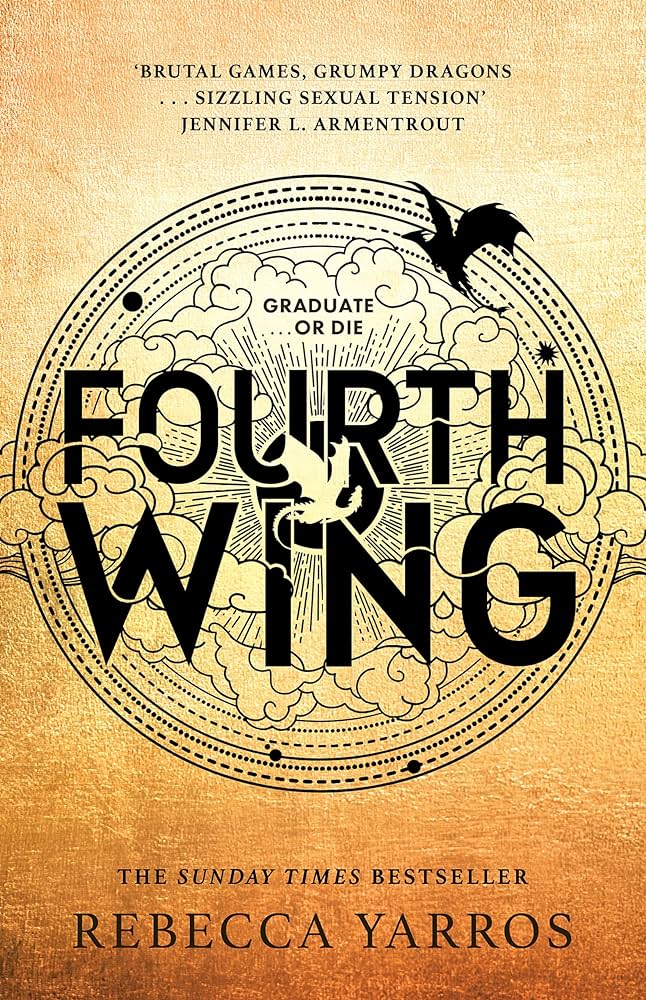
Fourth Wing
Rebecca Yarros · The Empyrean #1

The Serpent and the Wings of Night
Carissa Broadbent · Crowns of Nyaxia #1

The Prison Healer
Lynette Noni · The Prison Healer #1

A Gathering of Shadows
V.E. Schwab · Shades of Magic #2
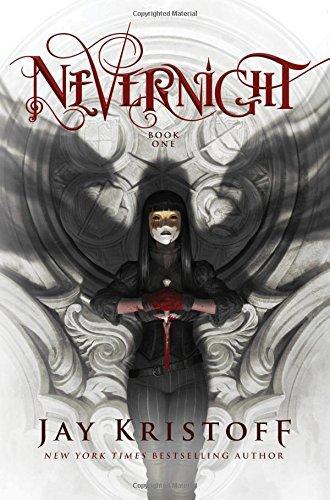
Nevernight
Jay Kristoff · The Nevernight Chronicle #1

Glow of the Everflame
Penn Cole · Kindred's Curse #2

The Sunbearer Trials
Aiden Thomas · The Sunbearer Duology #1

The Final Strife
Saara El-Arifi · The Ending Fire #1

The Scorpio Races
Maggie Stiefvater

The Night Circus
Erin Morgenstern

The Jasad Heir
Sara Hashem · The Scorched Throne #1

Wicked Beauty
Katee Robert · Dark Olympus #3

A Song of Wraiths and Ruin
Roseanne A. Brown · A Song of Wraiths and Ruin #1

Spin the Dawn
Elizabeth Lim · The Blood of Stars #1

Throne of Glass
Sarah J. Maas · Throne of Glass #1

Fearless
Lauren Roberts · The Powerless Trilogy #3

The Gilded Ones
Namina Forna · Deathless #1

Trial of the Sun Queen
Nisha J. Tuli · Artefacts of Ouranos #1

Powerless
Lauren Roberts · The Powerless Trilogy #1

Immortal Longings
Chloe Gong · Flesh and False Bone #1

Caraval
Stephanie Garber · Caraval #1

Lightlark
Alex Aster · The Lightlark Saga #1

Lore
Alexandra Bracken

A Court of Thorns and Roses
Sarah J. Maas · A Court of Thorns and Roses #1

The Atlas Six
Olivie Blake · The Atlas #1
Why the trials & tournaments trope works
Trials and tournaments in romantasy aren't really about who wins. They're about who you become when the stakes are lethal and your rival keeps pulling you out of danger instead of eliminating you. The specific tension this trope delivers — enemies forced into proximity, manufactured cooperation bleeding into something involuntary — is almost chemically satisfying. You get the slow erosion of distrust, the moment one of them makes a choice they can't explain with logic, and the understanding that danger either clarifies or destroys what's between two people. Readers return to this trope because it compresses months of ordinary relationship tension into hours of shared survival.
Fourth Wing by Rebecca Yarros runs the trope at full temperature: the war college setting makes every training exercise a referendum on who Violet is willing to become, and Xaden's presence is a constant threat that gradually redefines itself. The Serpent and the Wings of Night by Carissa Broadbent takes the premise somewhere bleaker — the Kejari tournament is genuinely designed to produce one survivor, which means the romance has to operate under conditions of near-certain loss. For something with less carnage and more theatrical menace, Caraval by Stephanie Garber turns the competition into an elaborate illusion, where the real game is figuring out what's actually real before you lose something you can't get back.
Trials & Tournaments romantasy — your questions
Which book should I read first if I'm new to this trope?
Start with Fourth Wing. It's the most fully realized version of what readers are usually looking for: a high-stakes magical academy, a training structure that creates constant forced proximity, and a romance that grows out of genuine antagonism rather than a meet-cute. The world is dense but the pacing is generous. If you finish it wanting more heat and less hope, move to The Serpent and the Wings of Night, which is darker and sparer.
Which of these books are the spiciest?
Fourth Wing (spice 3/5) and The Serpent and the Wings of Night (spice 3/5) are the most explicit — both have on-page scenes that earn that rating. The Atlas Six (spice 2/5) and A Court of Thorns and Roses (spice 2/5) sit in the middle: tension-heavy with some payoff but not the focus of the book. Throne of Glass, The Night Circus, Caraval, and A Gathering of Shadows all rate 1/5 — the romance is real but the spice is minimal. Good to know before you hand one to a teenager.
Which of these are standalones and which are series commitments?
The Night Circus is the rare true standalone — it ends completely and requires no sequels. Caraval is the first in a trilogy but functions almost as a standalone with a satisfying ending. Everything else is a series: Fourth Wing leads into Iron Flame, A Court of Thorns and Roses has four follow-up books, Throne of Glass runs eight volumes, A Gathering of Shadows is the second in Schwab's Shades of Magic trilogy, The Serpent and the Wings of Night continues in The Ashes and the Star-Cursed King, and The Atlas Six is the first of three.
What actually defines a great trials-and-tournaments romantasy versus one that just uses a competition as set dressing?
The best ones make the competition structurally inseparable from the romance — the trials have to be the reason the two leads are together, and the stakes have to be real enough that choosing each other costs something. Fourth Wing does this by making Violet and Xaden's alliance militarily logical before it becomes personal. The Serpent and the Wings of Night does it more brutally: the tournament literally mandates that they compete against each other, so every tender moment has a countdown on it. Where the trope fails is when the competition is just backdrop — a setting the characters happen to occupy while falling in love in a way that could have happened anywhere. Look for books where removing the tournament would make the romance impossible.