Romantasy trope
Best Gods & Immortals Romantasy Books
Deities, the deathless, and mortal hearts.

Muse of Nightmares
Laini Taylor · Strange the Dreamer #2

Strange the Dreamer
Laini Taylor · Strange the Dreamer #1
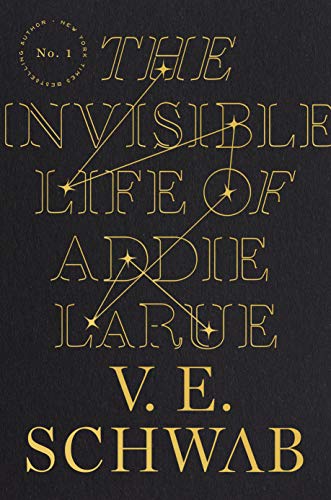
The Invisible Life of Addie LaRue
V.E. Schwab

A Conjuring of Light
V.E. Schwab · Shades of Magic #3

A Shadow in the Ember
Jennifer L. Armentrout · Flesh and Fire #1

A Light in the Flame
Jennifer L. Armentrout · Flesh and Fire #2

Ruthless Vows
Rebecca Ross · Letters of Enchantment #2

The Witch's Heart
Genevieve Gornichec

The Bear and the Nightingale
Katherine Arden · Winternight Trilogy #1

The Girl Who Fell Beneath the Sea
Axie Oh

Daughter of the Moon Goddess
Sue Lynn Tan · The Celestial Kingdom #1

The Crown of Gilded Bones
Jennifer L. Armentrout · Blood and Ash #3

Famine
Laura Thalassa · The Four Horsemen #3

Eidolon
Grace Draven · Wraith Kings #2

A Fire in the Flesh
Jennifer L. Armentrout · Flesh and Fire #3

Finale
Stephanie Garber · Caraval #3

Godkiller
Hannah Kaner · Fallen Gods #1

The Book of Azrael
Amber V. Nicole · Gods and Monsters #1

A Curse for True Love
Stephanie Garber · Once Upon a Broken Heart #3

A Touch of Chaos
Scarlett St. Clair · Hades x Persephone #4

Death
Laura Thalassa · The Four Horsemen #4

Godly Heathens
H.E. Edgmon · The Ouroboros #1

A Touch of Malice
Scarlett St. Clair · Hades x Persephone #3

War
Laura Thalassa · The Four Horsemen #2

Lies We Sing to the Sea
Sarah Underwood

Pestilence
Laura Thalassa · The Four Horsemen #1

A Touch of Ruin
Scarlett St. Clair · Hades x Persephone #2

Lore
Alexandra Bracken
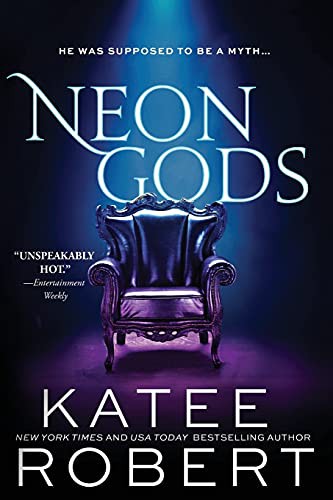
Neon Gods
Katee Robert · Dark Olympus #1

A Touch of Darkness
Scarlett St. Clair · Hades x Persephone #1
Why the gods & immortals trope works
The appeal of gods-and-immortals romantasy isn't really about power fantasy — it's about intimacy across an impossible asymmetry. When one person has lived centuries and the other a handful of decades, every glance, every confession carries a weight that mortal-to-mortal love simply can't replicate. These books tap into a hunger for being truly seen by something ancient, something that has watched empires fall and still chooses you. The best of them use that imbalance not as a shortcut to tension but as a lens: what does loving something eternal cost a mortal heart, and what does a deathless creature risk by caring at all?
Addie LaRue by V.E. Schwab is the quiet master class here — the god-figure (Luc) isn't a brooding love interest so much as an argument about whether being remembered is the same as being loved, and Schwab lets that question breathe across 300 years. On the spicier end, Katee Robert's Neon Gods transplants Greek myth into contemporary Seattle and makes Hades genuinely dangerous in the way attraction should feel — obsessive, consuming, unapologetic. And Katherine Arden's The Bear and the Nightingale takes a colder path: the immortal forces in that Rus winter are not romantic leads so much as competing claims on Vasya's soul, which makes the feeling, when it surfaces, land harder than anything conventionally swoony.
Gods & Immortals romantasy — your questions
Which gods & immortals romantasy should I read first if I'm new to the trope?
Start with The Invisible Life of Addie LaRue by V.E. Schwab. It's a standalone (no series commitment), the prose is immediately accessible, and the immortal love interest is introduced gradually enough that you feel the mythology build rather than being dropped into it. Spice is low (2/5), so the focus stays on the emotional architecture — which is the best place to understand what makes the trope work before you go hunting for heat.
Which of these books are the spiciest?
Neon Gods by Katee Robert sits at 5/5 — it's a full dark-romance reimagining of the Hades and Persephone myth and does not soften either the power dynamic or the explicit content. A Touch of Darkness by Scarlett St. Clair (also Hades/Persephone) comes in at 4/5 and is the more series-friendly gateway into high-heat Greek-myth romantasy. Everything else on this list — Addie LaRue, The Bear and the Nightingale, Strange the Dreamer, Ruthless Vows, Finale — runs between 1/5 and 2/5, prioritizing slow-burn yearning over explicit scenes.
Which are standalone novels versus series starters?
Standalones: The Invisible Life of Addie LaRue (Schwab) and The Bear and the Nightingale (though two companion novels follow, the first book resolves on its own). Series starters you'll want to continue: Ruthless Vows is the second book in a duology by Rebecca Ross, so start with Divine Rivals first. A Touch of Darkness is book one of the Hades and Persephone series by Scarlett St. Clair. Neon Gods opens the Dark Olympus series by Katee Robert. Strange the Dreamer by Laini Taylor launches a duet, and Finale closes Stephanie Garber's Caraval trilogy — read Caraval and Legendary first.
What actually makes a gods & immortals book great versus just using immortality as window dressing?
The trope earns its keep when the immortality creates a specific emotional problem neither character can ignore. In Strange the Dreamer, Taylor uses the gods' faded legacy — their very absence — as the wound the romance has to navigate. In The Bear and the Nightingale, Arden makes the winter god's nature incompatible with mortal domestic life, so every tender moment is shadowed by what Vasya would lose by choosing it. Contrast that with books where the love interest just happens to be immortal but behaves like any other brooding hero — the mythology becomes décor. The best entries use the power gap to say something real about what it means to be finite, or to be lonely across an inhuman span of time.