Romantasy trope
Best Captive / Captor Romantasy Books
Power imbalance and proximity under captivity.
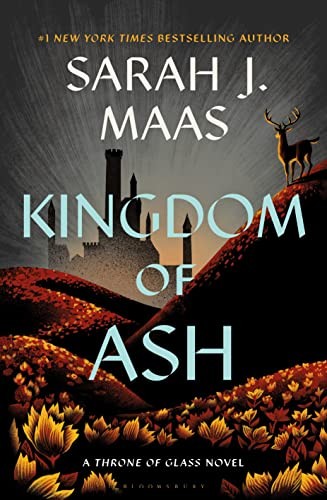
Kingdom of Ash
Sarah J. Maas · Throne of Glass #7

A Court of Mist and Fury
Sarah J. Maas · A Court of Thorns and Roses #2

Two Twisted Crowns
Rachel Gillig · The Shepherd King #2

The Wicked King
Holly Black · The Folk of the Air #2

Gleam
Raven Kennedy · The Plated Prisoner #3

A Kingdom of Flesh and Fire
Jennifer L. Armentrout · Blood and Ash #2

The Assassin's Blade
Sarah J. Maas · Throne of Glass #0

The Gilded Cage
Lynette Noni · The Prison Healer #2

Clockwork Angel
Cassandra Clare · The Infernal Devices #1

The Prison Healer
Lynette Noni · The Prison Healer #1

The City of Brass
S.A. Chakraborty · The Daevabad Trilogy #1
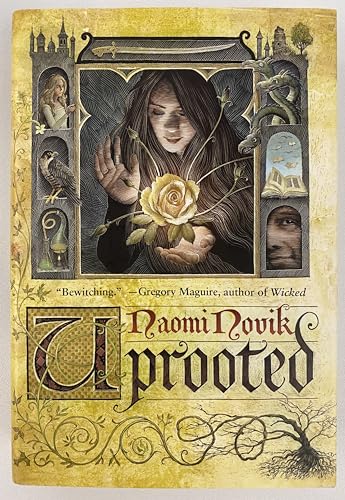
Uprooted
Naomi Novik

House of Flame and Shadow
Sarah J. Maas · Crescent City #3

The Jasmine Throne
Tasha Suri · The Burning Kingdoms #1

Glint
Raven Kennedy · The Plated Prisoner #2

The Heart of Betrayal
Mary E. Pearson · The Remnant Chronicles #2

The Endless War
Danielle L. Jensen · The Bridge Kingdom #4

Famine
Laura Thalassa · The Four Horsemen #3

From Blood and Ash
Jennifer L. Armentrout · Blood and Ash #1

The War of Two Queens
Jennifer L. Armentrout · Blood and Ash #4

A Fire in the Flesh
Jennifer L. Armentrout · Flesh and Fire #3

A Curse So Dark and Lonely
Brigid Kemmerer · Cursebreakers #1

The Inadequate Heir
Danielle L. Jensen · The Bridge Kingdom #3

The Jasad Heir
Sara Hashem · The Scorched Throne #1

Dance of Thieves
Mary E. Pearson · Dance of Thieves #1

Her Soul to Take
Harley Laroux · Souls #1

The Ashes and the Star-Cursed King
Carissa Broadbent · Crowns of Nyaxia #3

A Curse for True Love
Stephanie Garber · Once Upon a Broken Heart #3

To Snap a Silver Stem
Sarah A. Parker · Crystal Bloom #1

Death
Laura Thalassa · The Four Horsemen #4
Why the captive / captor trope works
The captive/captor trope works because it removes every social exit. You cannot leave, which means you cannot perform indifference, and neither can he. Readers seek it out for the same reason they reread certain passages five times: the tension lives entirely in proximity and power imbalance, and the slow erosion of both. It is not about romanticising captivity — it is about watching two people negotiate identity and desire when all the usual buffers are gone. The best examples in this category deliver a specific, almost unbearable ache: the moment the captor realises they no longer hold all the power, and the captive realises they do not want to leave.
A Court of Thorns and Roses earns its place at the head of this list by making Feyre's captivity in Prythian feel genuinely claustrophobic before it feels romantic — Maas earns the warmth slowly, and that patience is what makes it land. Uprooted by Naomi Novik takes a medieval-folklore angle: the Dragon demands a girl from the valley every ten years, and Agnieszka's dynamic with him is less seduction and more a bruising argument between two people who cannot admit what they actually want. The Wicked King by Holly Black strips the setup to its sharpest edge — Cardan is the captor and Jude is the captive, and Holly Black is honest about the fact that power can flip entirely within a single conversation.
Captive / Captor romantasy — your questions
Which book should I start with if I am new to the captive/captor trope?
Start with A Court of Thorns and Roses by Sarah J. Maas. The captivity premise is built in from the first act, the pacing gives you time to settle into the dynamic before it becomes romantic, and it is the entry point to a series where the tension escalates significantly across books. It is also one of the gentler spice entries on this list (2/5), so it works whether you are new to romantasy altogether or just to this trope specifically.
Which books here are the spiciest, and which are effectively clean?
A Court of Mist and Fury is the clear standout at 4/5 — it is the second book in the ACOTAR series and the one readers consistently cite as the most explicit entry in that world. Kingdom of Ash sits at 3/5 if you want something with heat that is not quite as intense. On the cleaner end, The Wicked King, The Assassin's Blade, Shatter Me, and Clockwork Angel all rate 1/5 — the tension is entirely emotional and the physical content is minimal to none. Uprooted and A Court of Thorns and Roses land in the middle at 2/5.
Which of these are standalones and which require reading a whole series?
Uprooted by Naomi Novik is a true standalone — complete story, no sequels, and the captive/captor arc resolves fully within it. Shatter Me by Tahereh Mafi is the first in a six-book series, but the core romantic tension is established and largely self-contained in book one. Everything else on this list is more series-dependent: The Wicked King is book two of The Folk of the Air trilogy and should not be read first; ACOTAR, ACOFAS, and Kingdom of Ash are all part of the same multi-book arc; Clockwork Angel is the first of The Infernal Devices trilogy; and The Assassin's Blade is a prequel collection best read after Throne of Glass.
What actually makes a captive/captor book work versus one that just uses the setup as window dressing?
The trope earns its tension when the power imbalance is honest — meaning the author does not pretend the captive is secretly an equal from page one, but also does not let the captor off the hook. The Wicked King does this exceptionally well: Holly Black lets Cardan be genuinely cruel and Jude be genuinely calculating, and the romance emerges from that friction rather than in spite of it. Uprooted works for the same reason — the Dragon is dismissive and difficult, and Agnieszka does not soften him so much as refuse to be diminished by him. Books that fail at the trope usually rush the thaw, which collapses the tension before it has done any real work.