Romantasy trope
Best Bargain / Deal Romantasy Books
A contract whose price comes due in feeling.

The Ballad of Never After
Stephanie Garber · Once Upon a Broken Heart #2
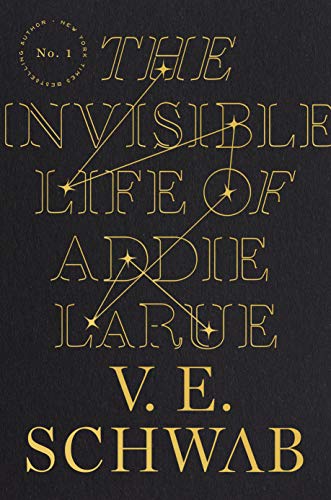
The Invisible Life of Addie LaRue
V.E. Schwab

Spinning Silver
Naomi Novik

One Dark Window
Rachel Gillig · The Shepherd King #1

Quicksilver
Callie Hart · Fae & Alchemy #1

Little Thieves
Margaret Owen · Little Thieves #1

A Gathering of Shadows
V.E. Schwab · Shades of Magic #2

Legendary
Stephanie Garber · Caraval #2
A Kingdom This Cursed and Empty
Stacia Stark · Kingdom of Lies #2

A Court This Cruel and Lovely
Stacia Stark · Kingdom of Lies #1

Painted Devils
Margaret Owen · Little Thieves #2

A Curse So Dark and Lonely
Brigid Kemmerer · Cursebreakers #1

Throne of the Fallen
Kerri Maniscalco · Prince of Sin #1

Once Upon a Broken Heart
Stephanie Garber · Once Upon a Broken Heart #1

A Song of Wraiths and Ruin
Roseanne A. Brown · A Song of Wraiths and Ruin #1

A Curse for True Love
Stephanie Garber · Once Upon a Broken Heart #3

These Infinite Threads
Tahereh Mafi · This Woven Kingdom #2

A Touch of Malice
Scarlett St. Clair · Hades x Persephone #3

Master of Crows
Grace Draven

A Witch's Guide to Fake Dating a Demon Lord
Sarah Hawley · Glimmer Falls #1

Rhapsodic
Laura Thalassa · The Bargainer #1

A Deal with the Elf King
Elise Kova · Married to Magic #1

A Touch of Ruin
Scarlett St. Clair · Hades x Persephone #2

Kingdom of the Wicked
Kerri Maniscalco · Kingdom of the Wicked #1

A Court of Thorns and Roses
Sarah J. Maas · A Court of Thorns and Roses #1

Gild
Raven Kennedy · The Plated Prisoner #1

Tithe
Holly Black · Modern Faerie Tales #1
Neon Gods
Katee Robert · Dark Olympus #1

A Touch of Darkness
Scarlett St. Clair · Hades x Persephone #1
Why the bargain / deal trope works
The bargain trope works because it makes the cost of desire visible. Someone wants something badly enough to sign away a piece of themselves — time, memory, freedom, a name — and the story becomes about what they discover that price actually meant. It's not about contracts. It's about the moment a character realizes the thing they traded away was the thing they needed most. Readers keep coming back to it because it answers a question most fiction dances around: what are you worth, and who gets to decide?
A Court of Thorns and Roses uses the bargain as a collar — Feyre's deal with Rhysand begins as coercion and slowly, uncomfortably, inverts into something she chooses. V.E. Schwab does something colder in The Invisible Life of Addie LaRue: the price is paid upfront, completely, and the novel asks whether 300 years of forgetting can still add up to a life. Spinning Silver by Naomi Novik goes quieter than either — Miryem's bargain with the Staryk is economic before it's romantic, and that grounded realism is exactly what makes the emotional stakes land.
Bargain / Deal romantasy — your questions
Which book is the best starting point if I'm new to bargain romantasy?
Start with A Court of Thorns and Roses. The bargain between Feyre and Rhysand is central to the whole series arc, the pacing is propulsive, and it gives you a clear template for how the trope operates — a power imbalance that slowly, credibly shifts. It's also widely read, so you'll have no shortage of people to discuss it with. If you want something more literary and standalone first, The Invisible Life of Addie LaRue is the other natural entry point, though its emotional texture is quieter and stranger.
Which of these are standalone books and which require a series commitment?
True standalones: The Invisible Life of Addie LaRue and Spinning Silver — both tell a complete story with no sequel required. Once Upon a Broken Heart and Legendary are the first two books in Stephanie Garber's Once Upon a Broken Heart series, so read them in order. A Gathering of Shadows is book two in Schwab's Shades of Magic trilogy — start with A Darker Shade of Magic first. One Dark Window is book one of the Parable duology. A Court of Thorns and Roses is the entry to a five-book series (the first three are the core arc). Quicksilver by Callie Hart is a series opener as well.
Which books are the spiciest, and which are clean enough to read in public?
Quicksilver is the spiciest of this list at 3/5 — there are explicit scenes, though it's not erotica. A Court of Thorns and Roses, The Invisible Life of Addie LaRue, and One Dark Window all sit at 2/5 — romantic tension and some heat, nothing graphic. The rest — A Gathering of Shadows, Spinning Silver, Once Upon a Broken Heart, and Legendary — are at 1/5, meaning the romance is real but the door stays firmly closed. If you want the emotional weight of a bargain with minimal steam, Spinning Silver and Once Upon a Broken Heart are the clearest choices.
What separates a great bargain story from a forgettable one?
The best ones make the terms feel inevitable in hindsight — the reader should finish and think 'of course that's what it cost.' What tends to fail is when the bargain is just a plot device to force proximity; the price never comes due emotionally, only logistically. Spinning Silver earns its place here because the cost is paid in quiet daily humiliations before it becomes something larger. Addie LaRue earns it because Schwab never lets the reader forget that the thing Addie lost — being remembered — is the very thing the novel is made of. The bargain should be the thesis, not just the setup.