How to Sleep Through the Night: Practical Tips for Restful Sleep
Discover how to sleep through the night with practical strategies for a calmer mind, optimized sleep environment, and lasting, deep rest.
Featured story

Orpheus & Eurydice
TheOtherLand · 1hr 48min
Step into the shadowed glades of ancient Greece, where love echoes beyond the veil of life and death in the hauntingly beautiful tale of Orpheus and Eurydice. Tonight, let the music of legend carry you deep into the heart of myth — where Orpheus, the gifted lyre-player whose songs could charm the stars, dares to journey into the underworld for the love of his life.
If you want to learn how to sleep through the night, you need a game plan. It’s not just about one magic trick; it’s about creating the right environment, calming your mind before you even get into bed, and knowing exactly what to do when you inevitably wake up.
This layered approach helps retrain your brain to see nighttime as a time for deep, uninterrupted rest.
Why Staying Asleep Is So Hard and How to Fix It
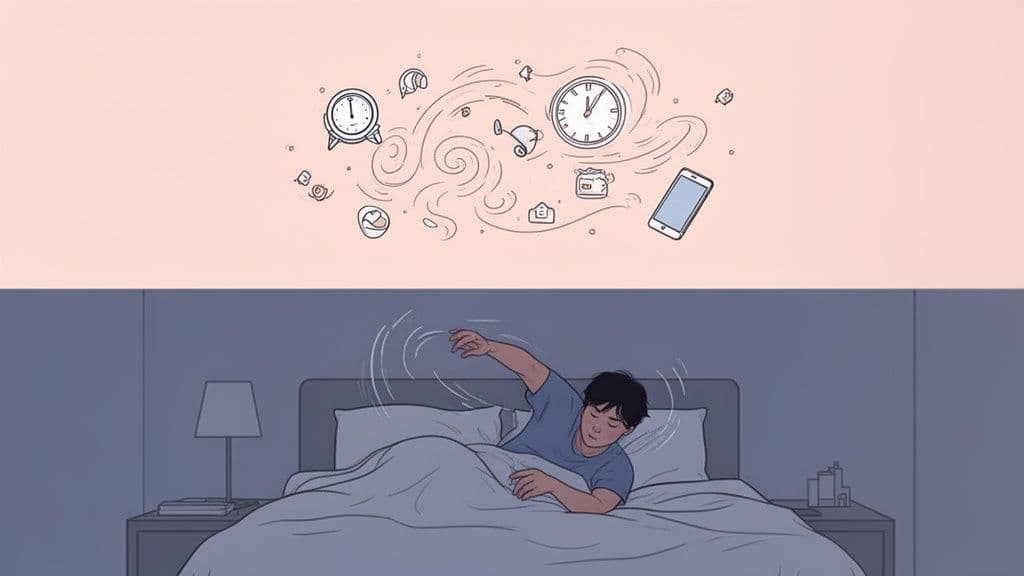
Tossing and turning isn’t just annoying—it’s a clear signal that your body and mind are out of sync. If you’re spending your nights staring at the ceiling, you are definitely not alone. This guide goes beyond the usual advice to give you a practical, real-world approach to getting consistent, deep sleep.
Instead of just telling yourself to "live with it," you'll learn how to build a personalized routine that sends a clear message of safety and rest to your brain. Think of this as your roadmap to taking back your nights and waking up with the energy you actually deserve.
Understanding the Root of Night Wakings
Waking up during the night is perfectly normal. The real problem is not being able to drift back off, which is what truly wrecks our well-being. Most of the time, the reasons we get stuck awake fall into a few key buckets:
A Racing Mind: When stress, anxiety When stress, anxiety, or just plain overthinking puts your nervous system on high alert, deep sleep feels like an impossible dream.
Environmental Disruptions: A bedroom that’s too bright, too warm, or too noisy can easily pull you out of a light sleep cycle.
Lifestyle Habits: That late-night snack, evening coffee, or glass of wine can seriously mess with your body's natural sleep rhythm.
Sound familiar? Nearly one-third of adults say they have a hard time staying asleep. What’s more, recent surveys found that a staggering 22% of people said they ‘just live with’ their poor sleep instead of trying to fix it.
The goal isn’t to eliminate every single awakening—they’re a natural part of how we sleep. The trick is to move through them smoothly without becoming wide awake.
This guide will focus on small, actionable changes you can make starting tonight. For instance, if you constantly find yourself awake at the same time every night, our article on why you might wake up at 3 AM offers some deeper insights into that common frustration. Let’s get to work on solving the puzzle of fragmented sleep.
Design Your Ideal Pre-Sleep Environment
Your bedroom should be a sanctuary for rest, not a multi-purpose room cluttered with the day's leftover stress. Crafting an environment that screams "sleep" to your brain is one of the most powerful things you can do to reclaim your nights. This is about more than just flicking off the overhead light; it’s a conscious effort to manage everything from light and temperature to the very objects in your space.
Think of your brain like a light-sensitive switch. For millions of years, darkness has been the signal for our bodies to produce melatonin, the hormone that brings on sleepiness. But modern life, with its constant glow from screens and streetlights, throws that ancient rhythm completely out of whack.
Master the Darkness
Even tiny amounts of light can sabotage your sleep quality. The goal here is to make your room as dark as you possibly can to help your body do its thing. A great first step is understanding how blackout curtains for your bedroom can enhance your rest, which is a game-changer for blocking light pollution from outside.
Once you've tackled the windows, it's time to hunt down any light sources inside the room:
Cover Those Pesky LEDs: A tiny piece of electrical tape or a dimming sticker can easily cover the little blinking or glowing lights on your TV, chargers, and other electronics.
Choose Warm Lighting: If you need a lamp for your wind-down routine, use a low-wattage bulb that gives off a warm, amber, or even red-hued light. These colors are far less disruptive to melatonin production than the cool, blue-toned light from most standard bulbs and screens.
Think of your bedroom as a cave—dark, quiet, and cool. This simple environmental shift is a powerful signal to your brain that it's safe to power down completely and enter a state of deep, restorative sleep.
Set the Right Temperature
Ever notice how you sleep better when the room is a bit chilly? There’s a biological reason for that. As your body prepares for rest, its core temperature naturally drops. A cool bedroom doesn't just feel nice; it actively supports this process, making it easier to both fall asleep and stay asleep.
The sweet spot for most people is somewhere between 60 and 67 degrees Fahrenheit (15.6 to 19.4 degrees Celsius). It might feel a little cold at first, but try experimenting within this range to find what works for you. You'd be surprised how much this one adjustment can cut down on nighttime restlessness.
Tidy Space, Tidy Mind
A cluttered room can easily lead to a cluttered, anxious mind. This isn't about achieving showroom perfection, but simply tidying the area immediately around your bed can have a surprisingly calming effect. Putting away clothes or organizing the junk on your nightstand reduces visual distractions and the mental "noise" that can keep your brain on high alert.
This brings us to a core principle of good sleep hygiene called stimulus control. The idea is simple: you want to strengthen the connection in your brain between your bed and sleep. This means your bed should only be used for two things: sleep and intimacy.
That's it. No working, no eating, and definitely no scrolling through your phone or watching TV in bed. When your brain starts associating your bed with all sorts of wakeful activities, it gets confused and struggles to switch off when it’s actually time to rest. By creating a dedicated sleep sanctuary, you're actively training your mind to recognize that getting into bed means one thing: it's time to sleep.
Practical Techniques To Quiet a Racing Mind
Lying in bed while your thoughts do laps is one of the most frustrating feelings. But you don't have to just wait for sleep to show up. You can take an active role in calming your nervous system and gently showing your mind the way to rest.
These mind-body techniques can be done right in your bed, giving you the tools to manage the mental chatter that so often sabotages a good night's sleep.
They work by breaking the cycle of anxiety. When you're stressed, your body tenses up and your breathing gets shallow, which sends a danger signal to your brain. By consciously relaxing your muscles and slowing your breath, you send a powerful message back: it’s safe to power down.
Dissolve Tension with Progressive Muscle Relaxation
Progressive Muscle Relaxation (PMR) is a deceptively simple exercise. It involves tensing specific muscle groups and then letting them go completely. The contrast between that tightness and the release makes you hyper-aware of what true relaxation feels like, helping to physically melt away the stress you've been holding onto all day. It’s like telling your body, piece by piece, to let go.
Here’s how you can do it in bed tonight:
Start with Your Feet: Lie comfortably on your back. As you inhale, curl your toes downward and tense the muscles in your feet for about five seconds. Really focus on that feeling of tightness.
Release and Notice: As you exhale, let all that tension go. Now, pay close attention to the feeling of warmth and looseness that rushes in. Linger here for about 10-15 seconds.
Move Upward: Continue this tense-and-release pattern, working your way up your body: calves, thighs, glutes, stomach, hands, arms, shoulders, and finally, your face (clench your jaw, scrunch your eyes, furrow your brow).
You don't need to tense with all your might—just enough to feel the contraction. The practice grounds you in your physical body, pulling your focus away from anxious thoughts. If your mind is especially busy, our guide on how to stop overthinking at night offers more strategies to pair with this physical approach.
A common mistake is to rush through the exercise. The magic really happens in those moments after you release the tension. Linger in that feeling of softness and warmth before moving to the next muscle group.
Calm Your Nervous System with 4-7-8 Breathing
Another fantastic tool is the 4-7-8 breathing technique. This simple, rhythmic breathing pattern is like a natural tranquilizer for your nervous system. It gently forces your heart rate to slow down and increases oxygen in your bloodstream, nudging you into a state of calm.
Here is a simple visualization to help you create a dark, cool, and tidy sleep environment.
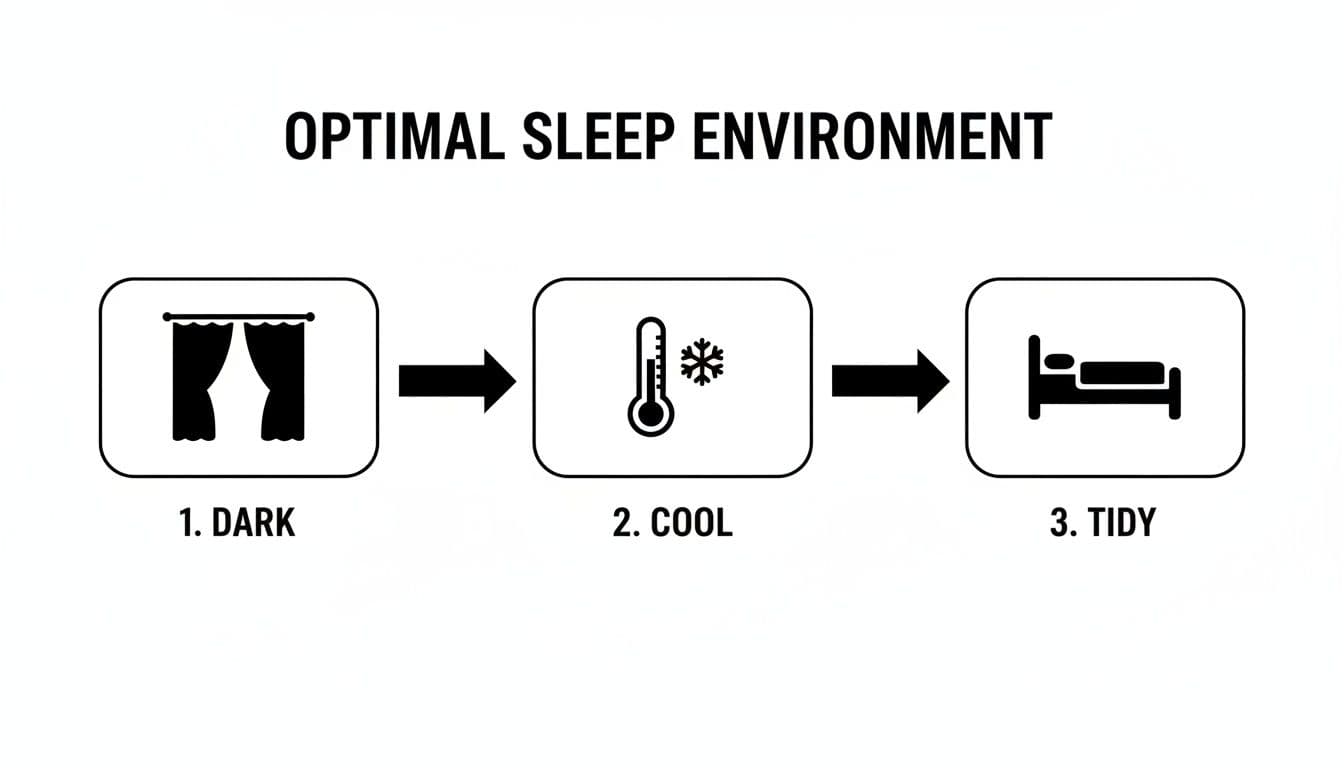
This process flow highlights the three core pillars of an ideal sleep sanctuary that support the mind-calming techniques you practice within it.
Here's how to do the 4-7-8 breath:
Place the tip of your tongue against the ridge of tissue right behind your upper front teeth. Keep it there for the whole exercise.
Exhale completely through your mouth, making a gentle "whoosh" sound.
Close your mouth and inhale quietly through your nose to a mental count of four.
Hold your breath for a count of seven.
Exhale completely through your mouth, making that "whoosh" sound again, for a count of eight.
That's one cycle. Repeat it three or four times. The long exhale is the most important part—it stimulates the vagus nerve, which helps shift your body out of "fight-or-flight" and into its "rest-and-digest" mode. For more comprehensive strategies on how to calm your mind from overthinking, exploring other techniques can build an even stronger toolkit for finding that inner peace at bedtime.
Using Soundscapes to Anchor Your Sleep
Sometimes, the dead silence of 3 AM is the loudest thing in the house. It’s a blank canvas for anxious thoughts to run wild, making every tiny creak from the floorboards or a distant cough sound like an alarm bell, jolting you wide awake.
This is where the right kind of audio becomes your most powerful ally in the quest for uninterrupted rest.
Using a soundscape isn’t just about drowning out noise; it’s about giving your brain a steady, calming anchor to hold onto through the night. A constant, gentle sound creates a protective bubble, keeping your mind from drifting into worry or getting startled by sudden noises from the world outside your window.
Suddenly, audio isn't just a sleep aid—it's a sleep-sustaining tool that works for you all night long.
Choosing the Right Audio for Sustained Sleep
The trick is finding audio that’s engaging enough to hold your attention but not so stimulating that it keeps you alert. A plot-driven podcast with cliffhangers or an exciting audiobook is definitely out. You need something soothing, with a consistent tone and pace that won’t jar you out of your sleep cycles.
This is where bedtime stories designed for adults and ambient sounds truly shine.
Calming Narratives: The gentle, steady voice of a narrator telling a low-stakes fantasy or mythology story gives your mind something pleasant to focus on, guiding it away from the stressful internal monologue that often keeps us awake.
Consistent Ambient Noise: Sounds like rain, relaxing wind sounds, or the hum of a fan (often called pink noise or white noise) are incredibly effective at masking disruptive sounds. Studies have shown that consistent background noise can shorten the time it takes to fall asleep and reduce the number of times you wake up during the night.
Think of it like this: a sudden noise, like a car door slamming, is a sharp peak on an otherwise flat line of sound. A continuous soundscape raises that baseline, so the peak of the car door is much less noticeable and far less likely to pull you from sleep.
The Power of Layering Sounds
One of the most effective strategies I’ve found for sleeping through the night is sound layering. This simply means combining different audio tracks to create a customized sound environment that masks inconsistencies and deepens your relaxation.
For instance, you can use the Otherworld Tales audio mixer to play a narrator's soothing voice over a backdrop of gentle rainfall. This combination is particularly powerful.
The story occupies the "active" part of your mind, preventing it from latching onto worries or replaying the day’s events.
The rain creates a consistent audio blanket that smooths over external disturbances—things like a partner’s snoring, a neighbor's dog, or distant traffic.
This layered approach gives you a robust defense against the most common sound-related sleep disruptions.
The best part is that you can experiment to find what works for you. Try a story with a crackling fire, or maybe mix some wind sounds with the gentle rhythm of a narrator's voice. By playing around with the combinations, you can build a personalized audio sanctuary that helps you not just fall asleep, but more importantly, stay asleep.
Your Action Plan for Waking Up at 3 AM
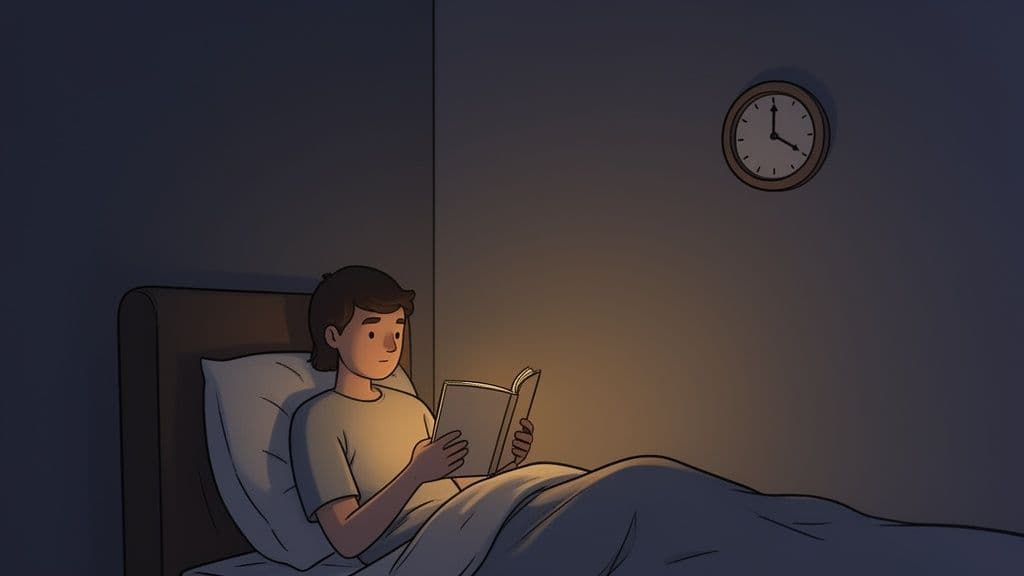
Waking up in the dead of night is one thing. Lying there, stewing about it, is something else entirely. Having a calm, pre-decided plan for these moments can stop a minor blip from turning into a full-blown, frustratingly sleepless night.
The very first rule—and perhaps the most important—is to resist the urge to check the time. Seriously. Turning to your clock or grabbing your phone only accomplishes one thing: it triggers a wave of anxiety about how much sleep you’re losing. That stress floods your body with cortisol, the very hormone you need less of to get back to sleep.
Follow the 15-Minute Rule
Instead of tossing and turning, which just creates more frustration, give the "15-minute rule" a try. It’s a core concept from a proven method called stimulus control therapy, and the idea is beautifully simple. If you find you’re still wide awake after what feels like 15 or 20 minutes, get out of bed.
This simple act helps break the mental connection your brain is forming between your bed and the stress of being awake. Over time, your brain relearns that your bed is a place for sleep, not for worrying about not sleeping.
Your goal isn't to force sleep—that never works. The point is to create the conditions for it to return naturally. Getting out of bed short-circuits the anxiety cycle and gives your body and mind a chance to reset.
This isn't just a personal struggle; it’s a global one. More than 30% of adults worldwide experience symptoms of insomnia, yet most don't seek professional help. This points to a huge need for practical, accessible strategies that actually work. To see just how common this is, you can dig into these global sleep statistics on naplab.com.
Create a Gentle Reset Routine
Once you're out of bed, what you do next is crucial for coaxing sleepiness to return. The key is to find a calm, quiet, and frankly boring activity to do in another room with very dim lighting.
Read Something Dull: Pick up a technical manual, a dry history book, or even the user agreement for a new appliance. You want to avoid thrilling novels or anything that gets you emotionally invested.
Listen to a Quiet Story: Put on some headphones and listen to a calm bedtime story from Otherworld Tales. The soothing narration can gently guide your mind away from those anxious, looping thoughts.
Fold Laundry: A simple, repetitive, and mindless task like this can be surprisingly effective at lulling you back toward a sleepy state.
The moment you start to feel drowsy—your eyes getting heavy, your head starting to nod—that's your cue to go back to bed. This simple protocol is a powerful way to retrain your brain's responses and restore your bed as a sanctuary for rest.
A Few Common Questions About Sleeping Through the Night
Even with the perfect routine, you're bound to have questions as you start this journey. That’s perfectly normal. Getting a handle on the finer points of sleep can make the process feel less frustrating and help you stick with it for the long haul.
Let's dig into some of the most common concerns that come up when people are trying to finally get a full, restful night.
Is It Actually Normal to Wake Up During the Night?
Yes, 100%. In fact, brief awakenings are a standard feature of a healthy sleep cycle.
Our bodies move through different stages of sleep all night long, from light to deep and back again. It’s completely common to surface for a few moments between these cycles. You might roll over, tug the covers, and not even remember it the next morning.
The real issue isn't that you wake up, but what happens after. A problem only crops up when that brief moment of consciousness turns into a full-blown, wide-awake state of anxiety. The goal isn't to magically eliminate all awakenings—it's to learn how to drift through them smoothly without your brain kicking into high gear.
What Should I Avoid Drinking Before Bed?
Caffeine is the obvious one, but the real stealthy sleep disruptor is alcohol. So many people reach for a nightcap thinking it helps them unwind, and it’s a trap.
While a glass of wine might make you feel drowsy and help you nod off faster, the effect is short-lived. As your body starts to metabolize the alcohol a few hours later, it leads to fragmented, low-quality sleep and more frequent awakenings.
A drink before bed can feel relaxing, but it actually suppresses REM sleep. As it wears off, your system can experience a "rebound effect" that jolts you awake right when you should be in your deepest sleep. Your best bet is to stick with water or non-caffeinated herbal tea in the hours leading up to bedtime.
Also, keep an eye on your overall fluid intake. Chugging a huge glass of water right before turning in is a surefire recipe for a midnight bathroom trip. Try to taper off all liquids an hour or two before you plan to hit the hay.
How Long Will It Take for These Changes to Actually Work?
This is where patience and consistency become your superpowers.
Some of these strategies can deliver results on the very first night. Making your room pitch-black and cool or using a soundscape to block out noise can make an immediate, noticeable difference.
But other habits are about retraining your brain, and that takes time. If you've spent years watching the clock or associating your bed with tossing and turning, it might take several weeks of sticking to the plan to build a new, positive connection.
Don't let one bad night throw you off course. Think of this as a long-term project. Every single night you stick to your new routine, you’re strengthening those neural pathways and getting one step closer to consistent, uninterrupted rest.
Ready to create the perfect audio sanctuary to help you stay asleep? The Otherworld Tales audio player lets you mix a soothing bedtime story with calming ambient sounds like rain and wind, creating a protective bubble of sound that anchors you in deep rest all night long. Explore the collection and build your custom soundscape.