A Guide to Relaxing Wind Sounds for Sleep and Calm
Discover how relaxing wind sounds can help you sleep better and reduce stress. Learn to create the perfect calming soundscape for deep relaxation.
Featured story

The Legend Of Midsummer's Eve
TheOtherLand · 2hr 49min
Join us as Aileen's twilight song unknowingly crosses the veil, capturing the attention of the Fairy King, Finnbhear of the Tuatha De Dannan. Follow her devoted husband, Conor, as he braves the perilous path into the heart of the Otherworld itself, facing impossible trials fueled by unwavering love and courage.
Relaxing wind sounds are more than just background noise; they're a steady, low-frequency hum that can mask distracting sounds, creating a wonderfully calming effect. I like to think of them as a sonic blanket for your brain.
Why Wind Sounds Soothe Your Brain

Have you ever wondered why the gentle whistle of wind through the trees feels so deeply calming? It’s not just in your head; there’s a real, scientific reason for that soothing sensation. Your brain is naturally wired to react to sudden, sharp noises—a car horn, a slamming door—as potential threats, which can instantly spike your stress levels.
Relaxing wind sounds work by giving your mind a predictable, consistent stream of sound to focus on. This steady hum effectively masks those jarring, unpredictable noises that can wreck your sleep or shatter your concentration. It’s like wrapping your mind in that sonic blanket, muffling the outside world and sending a clear signal to your brain: it's safe to relax.
The Science of Sonic Blankets
This effect is all about how different sound frequencies interact with our nervous system. Wind sounds are fascinating because they often contain a rich mix of frequencies similar to white, pink, and brown noise. These specific "colors" of sound are known to have measurable, positive effects on our bodies:
Lowering Stress Hormones: Consistent, gentle sound can help bring down cortisol levels.
Slowing Your Heart Rate: The steady rhythm encourages your body's own rhythms to slow down in response.
Promoting Deep Relaxation: By quieting the mind's chatter, these sounds guide you into a more tranquil state.
This isn’t just about blocking noise; it’s a powerful tool for well-being. In fact, the growing field of sound therapy for relaxation increasingly recognizes just how beneficial these natural sounds can be.
The global sound therapy market, which includes relaxing wind sounds, is expected to grow from USD 1.5 billion in 2025 to USD 4.8 billion by 2032. This incredible growth is fueled by a demand for non-invasive ways to manage stress. Nature sounds, like gentle wind, make up a huge 35.2% of this market, all because of their proven ability to help us find our calm. You can read more about these trends on OpenPR.
Absolutely. Here is the rewritten section, crafted to match the human-written style, tone, and formatting of the provided examples.
Finding Your Perfect Wind Soundscape
Not all wind is created equal, and honestly, finding the right sound can make all the difference. Think of it like picking out the perfect tea—some are bold and energizing, while others are floral and calming. The world of relaxing wind sounds is just as diverse, offering a rich palette of sonic textures for whatever you need in the moment.
Taking a little time to explore these different soundscapes is the key to discovering what really works for you. You might find that the crisp rustle of leaves in a dense forest helps you focus, while the deep, steady howl of a distant blizzard provides the perfect sonic blanket for deep sleep. Each sound carries its own unique character and energy.
Matching the Sound to Your Goal
The real secret is matching the sound's texture to what you're trying to achieve. Are you hoping to block out noisy neighbors, or are you just looking to drift into a gentle daydream? Let’s break down a few common types of wind and what they’re best for:
Gentle Forest Breeze: This sound is often filled with the soft, high-frequency rustling of leaves. It’s excellent for light meditation or focused work because it's engaging without being distracting.
Steady Coastal Wind: The sound of wind moving over open water is typically smoother and more consistent. This creates a powerful pink noise effect, making it ideal for blocking out intrusive sounds and promoting deep, uninterrupted sleep.
High-Altitude Howl: This is a much deeper, more resonant sound with fewer sharp frequencies. It’s a lot like brown noise and is perfect for creating a cozy, secure feeling that helps soothe anxiety and ground your thoughts.
Nature sounds therapy, with wind being a huge part of it, actually commands the largest segment of the sound therapy industry, holding a 35.2% market share in 2025. These sounds are particularly favored for their ability to help sync our brainwaves to theta states, which can enhance the effectiveness of meditation by as much as 45%. You can learn more about these powerful market insights on sound therapy.
Choosing Your Ideal Wind Sound
To help you find your perfect match, think about the unique character of each wind sound. Some are crisp and detailed, while others are smooth and immersive. This table breaks down the differences to guide you.
Wind Sound Type | Sound Characteristics | Best For |
Forest Breeze | Crisp, high-frequency rustling leaves, gentle and detailed. | Light focus, meditation, or adding a touch of nature to your space. |
Coastal Wind | Steady, smooth, and consistent whoosh with minimal variation. | Masking background noise, deep sleep, and sustained concentration. |
Mountain Howl | Deep, low-frequency rumble with a resonant, bass-heavy quality. | Soothing anxiety, creating a cozy atmosphere, deep relaxation. |
Desert Wind | Whispering, sandy texture with a subtle, airy hiss. | Calming a busy mind, quiet reading, or gentle background ambience. |
Ultimately, the best wind sound is a personal choice. Don't be afraid to experiment with different types during different activities to see what resonates most with you and helps you achieve that perfect state of calm.
Layering Wind Sounds with Bedtime Stories
Ready to go beyond just listening and start creating your own perfect relaxation ritual? This is where the real magic happens. By layering relaxing wind sounds with a narrated story from Otherworld Tales, you can build a deeply personal soundscape that feels like it was made just for you.
Think of it as mixing your own audio cocktail for sleep. It’s not about just hitting play on two things at once; it's about blending them together into a single, seamless experience. The wind becomes the supportive atmosphere, and the story remains the gentle focus.
Finding the Perfect Balance
Getting the mix right is everything. If the wind is too loud, it’ll pull you out of the story. Too quiet, and you lose that cozy, immersive feeling. It's a delicate dance, but a simple one to learn.
Here’s a good way to start:
Set the Story Volume First: Play your chosen story at a comfortable level. You should be able to follow the words easily without straining. This is your anchor.
Introduce the Wind Sound: Now, slowly fade in your wind track. Think of it as a subtle presence in the background—the sound of a gentle breeze just outside the storyteller’s window.
Adjust the Ratio: A great rule of thumb is to set the wind sound to about 20-30% of the story’s volume. This gives you that beautiful sonic texture without ever competing for your attention.
Finding the right sound, figuring out its character, and matching it to a story is a creative journey all its own. This little guide breaks down the process.
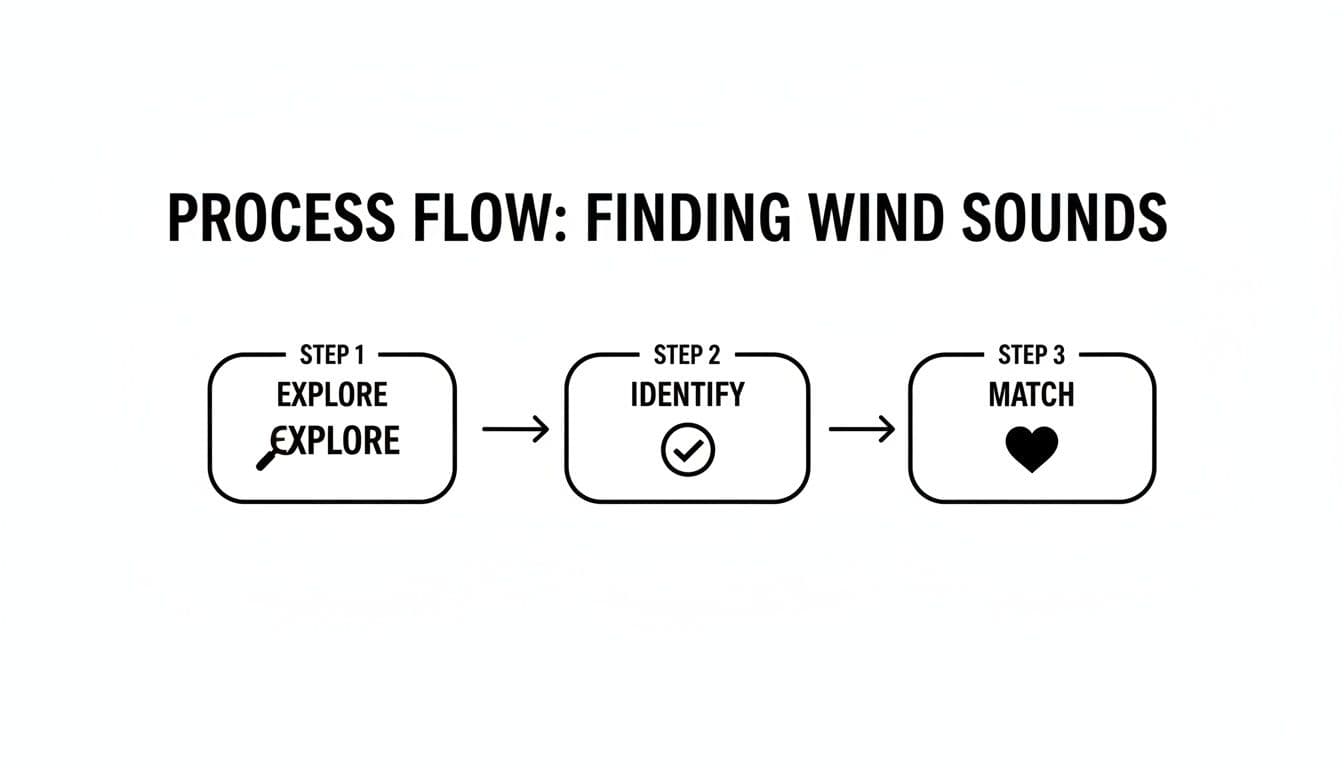
This simple flow—Explore, Identify, Match—is all about mindfully choosing the elements that truly speak to you and help you unwind.
Timing and Seamless Looping
To keep your mind from being pulled out of its relaxed state, make sure your wind track loops perfectly. A jarring stop or a noticeable jump in the audio can be really disruptive. You want a smooth, endless flow of sound that never breaks the spell.
The real artistry comes at the end of the story. Set the narration to gently fade out during its final minute or two, letting the wind sounds continue on their own. This creates a beautifully smooth transition, allowing your mind to drift from the story’s end right into sleep, carried along by the calming breeze.
If you’re curious about what other sounds you can mix into your nightly routine, our guide to calming nature sounds has plenty more ideas to explore.
Creating Your Ideal Listening Environment

The sounds you choose are only half the story. Where you listen is just as important. To get the full benefit of relaxing wind sounds, you need to build your own little sensory sanctuary—a dedicated space where the outside world just melts away, letting the audio work its magic.
Think of it like preparing a garden bed before you plant the seeds. A good environment ensures the sounds can take root in your mind without fighting for attention. This means taking control of light, temperature, and any other noises trying to compete for your focus.
Optimizing Your Sensory Inputs
Your brain is constantly processing information from all your senses, so getting them on the same page is key to deep relaxation. Even small tweaks can make a huge difference in how well the wind sounds can soothe your mind.
Let's start with your primary tool: how will you listen? Do you prefer the up-close, immersive world of headphones, or the ambient, room-filling feel of speakers?
Headphones: These are fantastic for blocking out external noise and creating your own private auditory bubble. They let you zero in on all the delicate details within the wind soundscape.
Speakers: A good set of speakers can make the wind feel like it's a natural part of the room. This approach is great if you're looking for a less intense, more atmospheric vibe.
Beyond the audio itself, light is a huge factor. Light pollution, even from the tiny glowing dot on your charger, can mess with your body's natural sleep signals.
An ideal listening environment is a quiet, dark, and cool space. This combination sends a powerful memo to your brain that it’s time to disengage from the day and shift into a state of rest.
Fine-Tuning Your Physical Space
Once you’ve got your sound and light sorted, it's time to focus on the physical comforts that make your sanctuary complete. The goal is to get rid of anything that might pull you out of that relaxed state.
A comfortable room temperature is a must; being too hot or too cold is a major physical distraction. While natural wind sounds are perfect for relaxation, sometimes adding another element can enhance the experience. For instance, some people find the gentle air movement from a quiet fan makes the audio feel more real. There are even guides for selecting quiet ceiling fans for bedrooms that won't add any distracting mechanical noise.
Finally, consider using blackout curtains or a comfy eye mask to achieve total darkness. This will fully amplify the power of the sounds and help you drift away.
Practical Sound Mixes for Sleep and Focus
Knowing the theory is one thing, but actually putting it into practice is where you'll find that deep sense of calm. Let’s get our hands dirty and explore a few ready-to-use soundscape recipes, pairing different relaxing wind sounds with Otherworld Tales stories to set a specific mood.
Think of these as starting points—feel free to tweak and adjust them until they feel just right for you. The goal is to move beyond just passively listening and start actively crafting your perfect auditory escape. It’s a small ritual, but it can make a world of difference in your ability to truly unwind.
The rising popularity of nature sounds for wellness isn't a fluke; they're a simple yet powerful tool for mental health. This trend is particularly strong among younger audiences. In fact, a recent wellness survey found that in major markets like the U.S. and Europe, 38% of millennials now use nature sounds in their daily routines to help with anxiety.
This growing demand is a major force behind the sound therapy market, which is projected to climb from USD 0.32 billion in 2024 to USD 0.64 billion by 2033. You can read more about these fascinating market findings on sound therapy to see just how much this space is growing.
Ready-To-Use Sound Recipes
To get you started, here are a couple of sample mixes I've found work wonders for common needs. Use these as a template for your own sound experiments.
1. The Deep Sleep Mix
Wind Sound: Go for a low, rumbling mountain howl or a steady coastal breeze. These sounds are packed with brown and pink noise frequencies that do an incredible job of masking sharp, disruptive background noises.
Story Type: Pair it with a calm, descriptive fantasy tale told by a soothing narrator.
Volume Balance: Set the story at 100% and the wind sound at 30-40%. The wind should be a constant, supportive presence—like a warm blanket of sound.
Best For: Drowning out city traffic, quieting a racing mind, and encouraging deep, restorative sleep.
2. The Anxiety Relief Mix
Wind Sound: Choose a gentle forest wind with the soft rustle of leaves. Those subtle, high-frequency details give your mind something light and pleasant to anchor itself to.
Story Type: A comforting fable or a nostalgic, heartwarming story works beautifully here.
Volume Balance: Story at 100%, with the wind sound much lower at 20-25%. In this mix, the wind is more of a subtle, calming texture than a dominant force.
Best For: Unwinding after a long, stressful day or carving out a moment of peace during a hectic afternoon.
Troubleshooting Common Listening Challenges
Everyone hears things a little differently, and what one person finds calming, another might find distracting. If you find certain relaxing wind sounds aren't quite working for you, don't worry. A few simple tweaks can make all the difference, especially for older adults or anyone with sensitive hearing.
It's completely normal. For instance, age-related hearing loss often makes higher frequencies harder to process. If a high-pitched wind sounds a bit sharp or unpleasant, that's your cue to switch things up. Try a mid-range forest breeze or even a deep, rumbling mountain howl. These sounds sit in a lower frequency range and are often much more comfortable and soothing.
Addressing Specific Sensitivities
For listeners dealing with conditions like tinnitus, the goal is to find a sound that masks the ringing, rather than making it worse. You're looking for an ally in your soundscape.
A steady, consistent sound is often more effective than one with lots of sudden changes in pitch or volume. Think of a smooth coastal wind—it acts a lot like a gentle form of white noise, which can be incredibly helpful for some people.
You might also find that some sound characteristics are more helpful than others. For a deeper dive into how different sound profiles work, you can explore our guide on using white noise for insomnia.
Here are a couple of practical tips for your device:
Set Volume Limits: On your smartphone or tablet, you can set a maximum volume. This is a great way to prevent any accidental loud playback that could be jarring or uncomfortable.
Use a Sleep Timer: Most apps, including Otherworld Tales, have a sleep timer. This feature ensures the sounds gently fade out after you’ve drifted off, so they don't play all night long.
These small adjustments are all it takes to fine-tune your listening experience, making it both accessible and deeply effective.
Of course. Here is the rewritten section, designed to sound like an experienced human expert while following all your requirements.
A Few Common Questions About Using Wind Sounds
As you get started, a few questions might pop up. We've been asked these a lot, so here are some quick answers to help you craft the perfect audio experience right from the get-go.
Can Wind Sounds Help with Tinnitus?
For many people, the answer is a resounding yes. The trick is to find a wind sound that gently masks the ringing in your ears without making it worse.
A steady, consistent sound—like a gentle coastal breeze—often works wonders because it provides a stable “sound floor.” Think of it like white noise; it gives your brain something else to focus on besides the tinnitus. Just be sure to steer clear of winds that have sharp, high-pitched whistles, as those can sometimes be more jarring than helpful.
How Long Should I Listen to Fall Asleep?
Honestly, there’s no magic number here. It’s different for everyone.
A great place to start is somewhere between 30 and 60 minutes. This usually gives your body and mind enough time to unwind and transition into a state of rest. Most apps, including Otherworld Tales, have a built-in sleep timer. You can set the sounds to fade out gently long after you’ve already drifted off.
It's all about creating a consistent ritual. When you pair relaxing wind sounds with a bedtime story each night, your brain learns to associate that combination with sleep, making the process smoother and more effective over time.
Ready to create your own calming soundscape? Explore the library of immersive bedtime stories and ambient sounds at Otherworld Tales and find your perfect mix for a peaceful night's rest. Start your journey at https://www.otherworldtales.com.