How to Improve Sleep Quality A Guide for Women
Discover how to improve sleep quality with our guide for women. Learn sleep hygiene, relaxation techniques, and how audio stories can transform your rest.
Featured story

The Spoils of Annwfn
TheOtherLand · 1hr 51min
Annwfn, the Celtic Otherland, a magical land of eternal youth and hidden treasures. Join us in these old tale of King Arthur, and his journey to retrieve what may be lost forever.
If you're tired of tossing and turning, you are not alone. So many women find that as they get older, the easy, deep sleep of their youth feels more and more out of reach.
The reasons for this are complex, running the gamut from the hormonal shifts of perimenopause and menopause to the piled-up stress of daily life. And then there's the mental load—that endless to-do list that loves to start running through your mind at 2 AM. It can be one of the biggest roadblocks to a good night's rest.
Your Journey to More Restful Nights
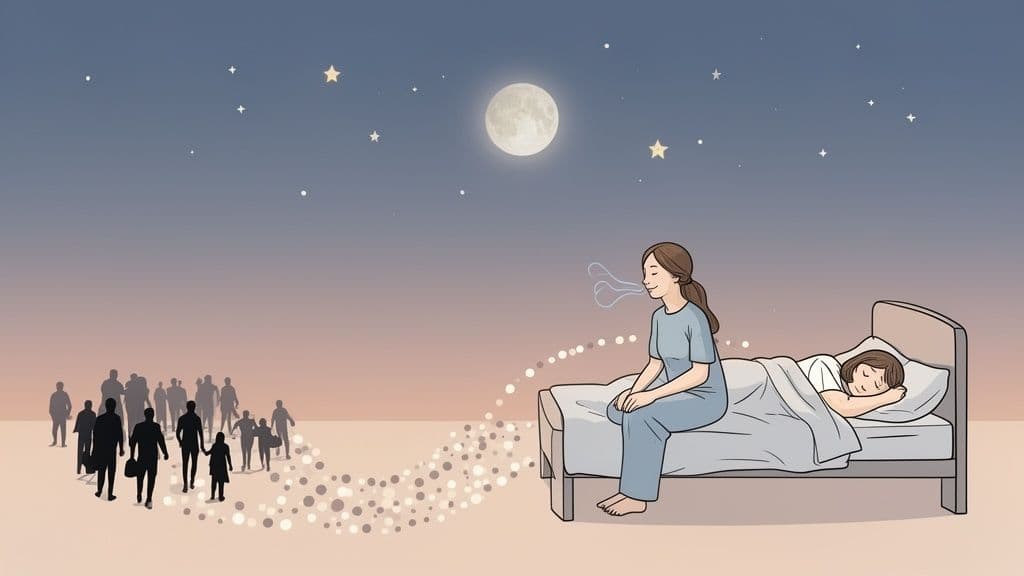
This guide is designed to go beyond the usual generic advice and get to the heart of these specific challenges. Forget rigid rules. What you'll find here is a compassionate, flexible approach to reclaiming your nights. It’s all about understanding what your body uniquely needs and building a toolkit of strategies that actually work for you.
Getting started can feel overwhelming, which is why a comprehensive guide to improving sleep quality naturally can be a fantastic starting point for foundational knowledge and practical first steps.
A Holistic Approach to Better Sleep
Improving how you sleep isn't just about what you do in the hour before bed. It's a practice that really considers your entire day. We're going to dive into several key areas to help you build a much stronger foundation for sleep:
Creating a True Sleep Sanctuary: We'll talk about how to transform your bedroom from a multi-purpose room into a haven dedicated only to rest and relaxation.
Developing a Calming Pre-Sleep Ritual: You'll learn how to send clear signals to your brain that the day is over and it's safe to power down.
Harnessing the Power of Audio: We’ll explore how things like immersive bedtime stories and ambient sounds can quiet a busy mind and create a buffer against disruptions.
The goal isn't "perfect" sleep every single night—that’s just not realistic. Instead, we’re focused on building resilience and giving you the tools to handle those inevitable restless nights with more ease and less anxiety.
Think of this as a journey of experimentation and self-compassion. You'll learn to listen to what your body is telling you and make small, sustainable changes that lead to big improvements over time. By taking these intentional steps, you can truly transform your relationship with sleep, paving the way for waking up feeling genuinely refreshed, clear-headed, and ready for the day.
Why Better Sleep Is Non-Negotiable
Chasing after better sleep is about so much more than just feeling less groggy in the morning. It's about fundamentally changing how you show up in the world—your mood, your energy, your clarity of thought, and your overall sense of well-being. When you truly prioritize rest, you're making one of the most powerful investments you can in your long-term health.
If you’ve noticed your sleep quality taking a nosedive, you are definitely not imagining things. It's a real, shared experience. In fact, recent data shows a subtle yet steady global dip in restfulness, a trend that all too often hits women the hardest.
The Global Sleep Deficit
It's easy to feel like you're the only one staring at the ceiling at 3 AM, but the numbers tell a much bigger story. A massive analysis from Sleep Cycle, which looked at over 105 million nights of sleep, found a slight but meaningful drop in global sleep quality. It’s a concerning worldwide decline of 0.46% in restorative rest.
For women, the picture gets even sharper. ResMed's Global Sleep Survey of over 30,000 people revealed that women average just 3.83 quality nights a week, compared to 4.13 for men. On top of that, 38% of women report struggling to fall asleep, a significantly higher figure than the 29% of men who say the same. You can explore more of these fascinating global sleep trends and insights on SleepCycle.com.
Knowing this isn't meant to be discouraging; it's empowering. It validates that your challenges are real and widely shared, which helps shift the focus from self-blame to finding practical solutions. This is the first step in learning how to improve sleep quality with purpose.
More Than Just Feeling Tired
The fallout from poor sleep ripples through every single part of your life. We're not just talking about yawning through a morning meeting; it's the slow burn, the cumulative effect it has on your physical and mental health.
Think about how a few restless nights in a row can show up:
Emotional Rollercoaster: You might find yourself more irritable, anxious, or just plain fragile. Small stressors that you'd normally brush off can suddenly feel like mountains.
Brain Fog: That fuzzy, unfocused feeling is very real. Poor sleep directly impacts your concentration, memory, and decision-making, making it a struggle to stay on top of work, family, or personal goals.
Physical Drain: Your energy levels just bottom out. Suddenly, finding the motivation for a walk or a coffee with a friend feels impossible, which can trap you in a cycle of being too tired to do the very things that might help you sleep.
The connection is undeniable: when your sleep suffers, so does your ability to show up as the person you want to be. Prioritizing rest isn't selfish; it's an act of self-preservation that allows you to fully live your life.
Reclaiming Your Nights Is a Health Imperative
Somewhere along the way, we started treating sleep as a negotiable part of a busy schedule. We need to flip that mindset. Quality rest is a non-negotiable pillar of health, every bit as crucial as what you eat or how you move your body. It's during these quiet hours that your body and brain get down to essential maintenance work.
Think of it as a dedicated restoration crew that comes in every night. During deep sleep, your body is busy with cellular repair, consolidating memories, regulating hormones, and fortifying your immune system. Skimping on sleep is like sending that crew home early night after night. Eventually, the wear and tear is going to show.
This becomes even more critical for older women navigating the hormonal shifts of perimenopause and menopause. These life stages can bring a whole new set of sleep disruptors, from hot flashes to night sweats, making a proactive approach to sleep hygiene more important than ever. By making conscious, deliberate choices to improve your rest, you are directly supporting your body through these natural transitions.
Building Your Sleep Sanctuary and Daily Routines
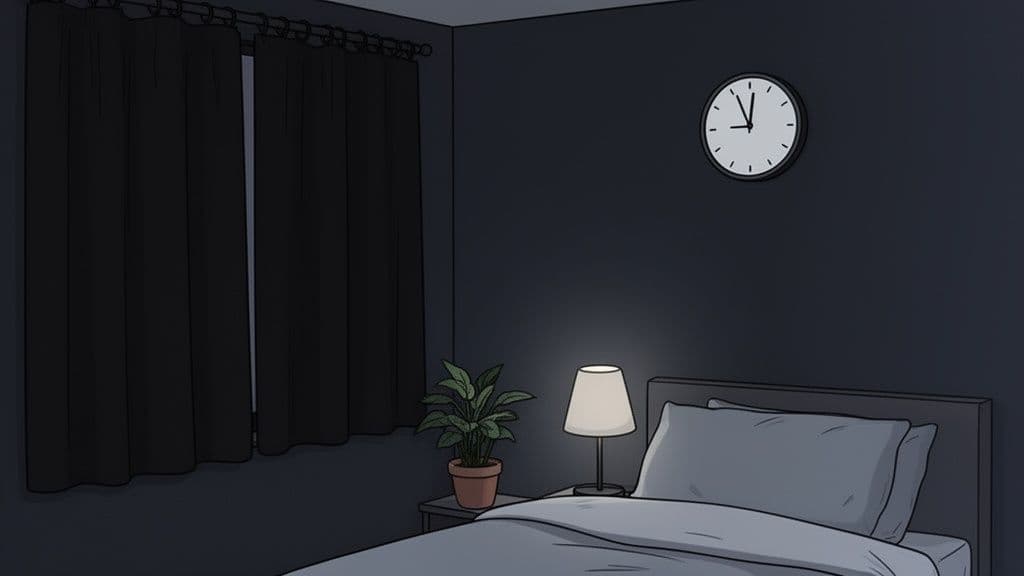
Great sleep doesn’t just happen when your head hits the pillow. It’s a process that starts long before, built on the small, intentional choices you make throughout your day and the environment you create for yourself at night. This isn't about strict, unforgiving rules; it's about gently guiding your body’s natural rhythms toward rest.
Think of your bedroom as a space with one job: sleep. When that room starts doubling as an office, a cinema, or a place to worry, your brain gets mixed signals and can struggle to power down. Creating a true sleep sanctuary is one of the most powerful and practical steps you can take.
Crafting the Ideal Sleep Environment
The mission here is simple: make your bedroom cool, dark, and quiet. Even tiny adjustments to your environment can have a surprisingly big impact on how deeply you sleep. Our bodies are incredibly sensitive to these cues.
Cool It Down: Have you ever noticed how much easier it is to drift off in a cool room? Research shows the sweet spot for sleep is between 65–68°F (18–20°C). A lower room temperature helps your core body temperature drop, which is a key physiological trigger for sleep.
Embrace the Dark: Light is the most powerful signal telling your brain to be awake. Blackout curtains are a game-changer for blocking streetlights and early morning sun. If that's not an option, a comfortable eye mask works just as well.
Hush the Noise: A sudden car alarm or a neighbor's dog can easily pull you from a deep sleep. To combat this, you can create a consistent, soothing soundscape with a white noise machine, a simple fan, or even a good pair of earplugs.
And don't forget the air you breathe. The quality of your indoor air can affect everything from congestion to allergies, which certainly doesn't help with rest. Looking into a practical guide to improving home air quality can offer some simple fixes to make your sleep sanctuary even more serene.
The Power of a Consistent Daily Rhythm
Our bodies absolutely thrive on routine. A steady sleep-wake cycle is the anchor for your internal body clock, often called your circadian rhythm. Going to bed and waking up at roughly the same time every single day—yep, even on weekends—is the best way to keep this clock stable.
This doesn't mean you need a rigid, military-style schedule. A 30-minute window on either side is perfectly fine. The real magic is in the consistency. Over time, it helps regulate the hormones that govern sleep and wakefulness, making it far easier to fall asleep at night and wake up feeling refreshed.
Key Insight: Your body doesn't know it's Saturday. Sleeping in for hours on the weekend can create a kind of "social jetlag," making it much harder to get back on track come Monday morning.
Mindful Choices Throughout Your Day
What you do from the moment you wake up has a profound impact on how you sleep at night. Simple, mindful choices about light, food, and your evening activities can either set you up for success or sabotage your efforts.
Harnessing the Power of Light
Light is the master controller of your body clock. Exposing yourself to natural sunlight, especially in the morning, is absolutely crucial for setting that clock for the day ahead.
Try to get at least 15-30 minutes of daylight shortly after you wake up. Just sitting by a bright window with your morning coffee or taking a short walk can work wonders.
In the evening, the opposite is true. Start dimming the lights in your home an hour or two before bed to signal that it's time to wind down. And yes, that includes the bright blue light from phones, tablets, and TVs, which is notorious for suppressing melatonin, the very hormone that tells your body it’s time for sleep.
Timing Your Meals and Drinks
What and when you eat can make a real difference. A big, heavy meal right before bed can lead to indigestion or heartburn that keeps you awake. It's best to finish your last large meal at least two to three hours before you plan to turn in.
A few other things to keep in mind:
Watch the Caffeine: That afternoon cup of coffee might be the reason you're staring at the ceiling at 1 a.m. Caffeine can linger in your system for hours, so it's wise to switch to decaf or herbal tea after 2 p.m.
Limit Late-Night Liquids: Staying hydrated is important, but chugging a huge glass of water right before bed is a surefire way to guarantee multiple bathroom trips overnight, each one disrupting your precious sleep cycles.
Your Evening Wind-Down Checklist
Creating a pre-sleep wind-down is the final, essential piece of the puzzle. This little ritual is your personal transition from the busyness of the day to the calm of the night. Here’s a simple checklist to help you build a routine that works for you.
Time Before Bed | Activity | Benefit for Sleep |
2-3 Hours Before | Finish your last large meal or snack. | Prevents digestive discomfort and heartburn that can disrupt sleep. |
1-2 Hours Before | Dim the lights and turn off bright screens. | Allows your brain to naturally produce melatonin, the sleep hormone. |
1 Hour Before | Engage in a calming activity (e.g., reading) | Shifts your mind away from stressors and into a state of relaxation. |
30 Minutes Before | Try gentle stretching or breathing exercises. | Releases physical tension and slows your heart rate, preparing your body for rest. |
15 Minutes Before | Listen to a calming audio story or music. | Provides a soothing distraction and helps quiet racing thoughts. |
This checklist is just a starting point. Feel free to adapt it to your own preferences. For a deeper dive into crafting the perfect pre-sleep ritual, our guide on designing a bedtime routine for adults offers even more strategies to help you end your day on a peaceful note.
Using Audio Stories to Calm a Busy Mind
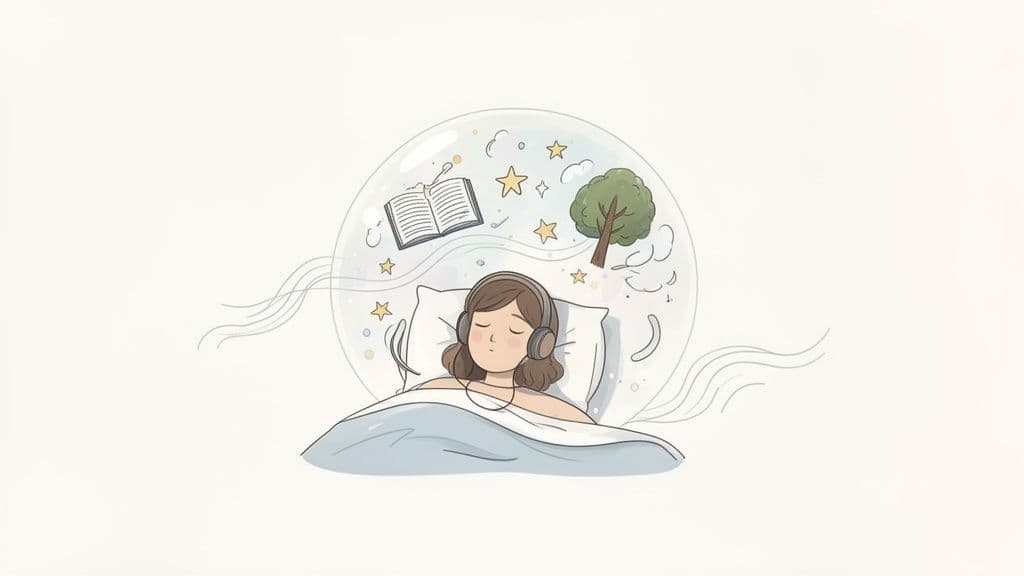
You’ve done everything right. The lights are dimmed, the pillows are perfectly fluffed, and you’ve settled into your carefully crafted sleep sanctuary. But the moment your head hits the pillow, your mind kicks into high gear. It’s suddenly the perfect time to review every decision you’ve ever made, draft tomorrow’s to-do list, and replay that awkward conversation from a week ago.
This mental chatter is often the final, most frustrating hurdle to a restorative night.
If that sounds all too familiar, it might be time to introduce a new element to your wind-down routine—one that’s both modern and deeply rooted in a timeless tradition: bedtime stories. Engaging audio narratives offer a powerful way to gently guide your brain away from the day's worries and toward a state of calm.
Why Listening Is the New Reading Before Bed
For many of us, reading a physical book is a cherished part of a pre-sleep ritual. But as we get older, things change. Eye strain becomes a bigger issue, and sometimes, just holding a book up can feel less than comfortable. This is where the magic of audio storytelling comes in, offering all the cognitive benefits of a good story without any of the physical drawbacks.
Instead of staring at a screen or straining your eyes in dim light, you can simply close them and let a soothing voice transport you. This isn't just about entertainment; it’s a strategic way to redirect your focus. An engaging plot gives your active mind something specific to follow, making it much harder for anxious thoughts to take center stage.
The need for effective, calming strategies is clear. With poor sleep costing the average person nearly three restorative nights every week, a new approach is essential. ResMed's Global Sleep Survey highlights this, showing that women report fewer quality nights, with 38% struggling to fall asleep. Relaxing ambient sounds can mimic natural white noise, which could help the 80% of adults who crave better sleep. Immersive audio stories with layered sounds directly address this gap by calming the mind. You can explore more about these sleep struggles and solutions in ResMed's full survey findings.
Crafting Your Personal Soundscape for Sleep
The real power of modern audio platforms is how personal you can make them. It’s not just about pressing play on a story; it’s about creating a rich, immersive sound environment that acts as a buffer against the outside world and your own internal noise.
Imagine listening to a tale of ancient mythology. Now, layer the narrator's voice with the gentle, rhythmic sound of falling rain. Or maybe you'd prefer the soft whisper of wind through a forest as you listen to a fantasy story. This combination does two critical things:
It Drowns Out Disruptions: The consistent ambient sound helps mask sudden noises—a distant siren, a creaking floorboard—that can jolt you awake just as you're drifting off.
It Deepens Immersion: The sound effects make the story more compelling, pulling you further away from your own thoughts and deeper into the narrative world.
Think of it like building a cozy cocoon of sound. The story is the main structure, giving your mind a safe and engaging place to rest, while the ambient sounds are the soft, protective layers that insulate you from everything else.
Choosing the Right Story to Unwind
Not all stories are created equal when it comes to sleep. An action-packed thriller is more likely to get your heart racing than to lull you into slumber. The key is to find content specifically designed to be soothing.
Look for these key elements:
Calm Narration: A narrator with a soft, steady, and slightly monotonous voice is ideal. The goal is to be engaged enough to listen but not so stimulated that you're wide awake.
Low-Stakes Plots: Stories with gentle, meandering plots—like tales from mythology, descriptive travelogues, or slice-of-life fantasies—are perfect. They hold your interest without creating suspense or anxiety.
Atmospheric Descriptions: Rich, sensory details about peaceful landscapes or serene settings can be incredibly relaxing, helping your mind paint a tranquil picture as you listen.
This curated approach is what makes bedtime stories with audio for adults such an effective tool. By selecting the right content, you turn a simple listening experience into a therapeutic ritual.
Many apps and platforms like Otherworld Tales allow you to set a sleep timer, so the audio will gently fade out after you’ve drifted off. This simple feature gives you complete control, allowing you to relax fully without worrying about turning it off.
How to Handle Common Sleep Disruptions
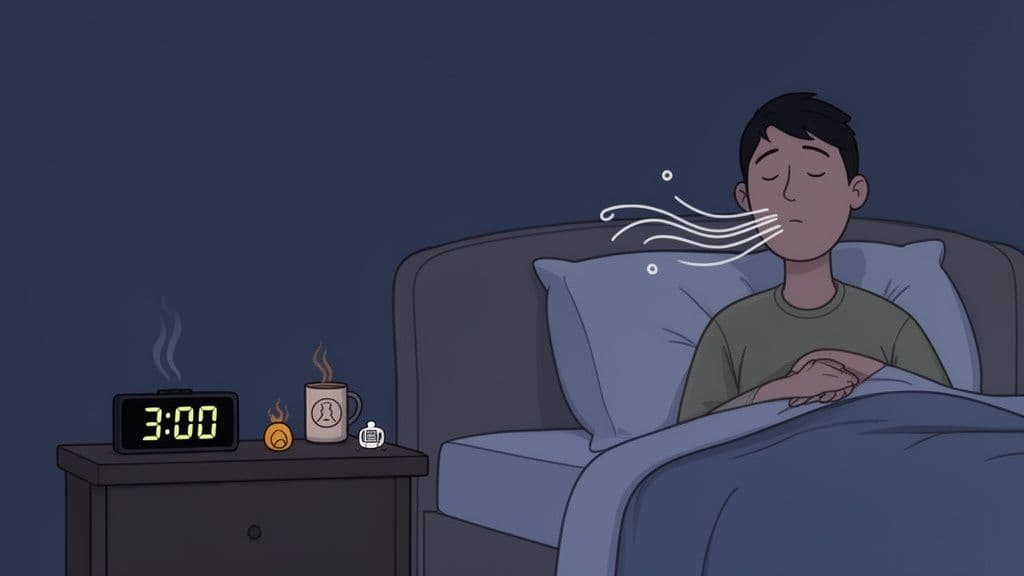
Even with the most carefully crafted routine, some nights are just plain hard. A car alarm, a stressful day replaying in your mind, or a hormonal shift can easily throw your sleep off track. The goal isn’t perfection; it’s about having a toolkit to navigate these moments without them spiraling into a totally sleepless night.
Waking up in the middle of the night is especially frustrating. The first instinct for most of us is to grab our phone and check the time. But this one small act can trigger a flood of anxiety about how little sleep you're getting. Instead of fixating on the clock, try to see it as a brief, quiet pause.
Calming Those Middle-of-the-Night Awakenings
You find yourself wide awake. It's 3 AM. The absolute worst thing you can do is stimulate your brain. Keep the lights dim and resist the powerful urge to start scrolling through your phone. The single best thing you can do is focus on your breathing—it has a direct line to your nervous system and is incredibly effective at calming it down.
A simple, powerful technique I often recommend is the 4-7-8 breathing exercise:
First, close your eyes and exhale completely through your mouth with a soft whoosh.
Close your lips and inhale quietly through your nose for a count of four.
Now, hold that breath for a count of seven.
Finally, exhale completely through your mouth—making that whoosh sound again—for a count of eight.
Repeat this cycle three or four times.
This rhythmic breathing physically slows your heart rate and pulls your focus away from racing thoughts. If you’re still awake after 20 minutes or so, it's actually better to get out of bed. Go to another dimly lit room and do something quiet until you feel sleepy again, like listening to a soft audio story or reading a (not-too-exciting) book.
Taming Pre-Sleep Anxiety
For many women, the trickiest part of the night is the time just before falling asleep. This is when the day's worries seem to magnify. This "sleep anxiety" is incredibly common; in fact, nearly 40% of adults report experiencing it multiple times a week. It’s a problem that’s gotten worse, with one major analysis showing a staggering 40% higher risk of poor sleep driven by stress and screen time. You can read more about these sleep challenges and potential solutions in this study.
Mindfulness is a gentle but powerful way to calm these pre-sleep jitters. Instead of trying to fight anxious thoughts, you simply observe them without getting tangled up in them.
A simple "body scan" meditation can work wonders. Lie comfortably and bring your attention all the way down to your toes. Notice any sensations—warmth, coolness, tingling—without trying to change a thing. Slowly, guide your awareness up through your feet, ankles, legs, and the rest of your body, just noticing how each part feels.
This practice anchors you firmly in the present moment, making it much harder for your mind to get swept away by tomorrow's to-do list or yesterday's regrets. It’s a way of telling your body, "It's safe now. It's time to rest." For more ideas on easing into sleep without medication, you might find our guide on natural remedies for insomnia helpful.
Knowing When to Call in a Professional
While these techniques can make a world of difference, they aren't a cure-all. It's vital to recognize when a persistent sleep problem might be a sign of something more, an underlying issue that needs a doctor's attention.
It’s probably time to consult a healthcare professional if you consistently experience any of these:
Chronic Insomnia: You have trouble falling or staying asleep at least three nights a week, and it’s been going on for months.
Daytime Exhaustion: You feel bone-tired during the day, even after you thought you got a full night's sleep.
Signs of Sleep Apnea: Your partner mentions loud, persistent snoring, or you wake up gasping or choking. Morning headaches are another common sign.
Restless Legs: You have an overwhelming urge to move your legs, especially in the evening when you’re trying to relax.
Your doctor can help figure out if your sleep issues are tied to medications, hormonal changes like menopause, or a specific sleep disorder. They can offer targeted treatments that might include cognitive behavioral therapy for insomnia (CBT-I), medication adjustments, or a referral to a sleep specialist. Asking for help isn't a sign of failure—it's a crucial step toward taking back your health.
Questions on Your Mind? Let's Talk Sleep.
As you start making these thoughtful changes to your nights, questions are bound to pop up. This isn't a one-size-fits-all process; improving your sleep is a personal journey, and what works for one woman might need a little tweaking for another. I've gathered some of the most common questions right here to give you clear, practical answers and help you navigate your way to better rest with confidence.
How Long Until I Actually Feel a Difference?
This is the big one, isn't it? The honest answer is, it truly varies. Some women tell me they notice a shift within just a few nights of creating a calmer routine. For others, it’s a much more gradual unfolding. A good, realistic timeframe to aim for is about two to four weeks. That’s usually enough time for new habits to stick and for your internal body clock to get the message.
The most important thing is consistency. You’re going to have an off night here and there—that’s just life. The key is to not let it throw you completely off course. Instead of chasing perfection, just focus on gentle persistence with your new evening rituals. A simple sleep journal can be a fantastic way to see how small changes are adding up over time.
Don't get discouraged if progress isn't a straight line. The goal is to build a stronger foundation for sleep, long-term. A few restless nights don't erase all the good work you're doing.
Should I Listen to Audio Stories All Night Long?
While you certainly can, it’s usually not necessary. The main purpose of a bedtime story is to help your mind transition from the busyness of the day to the quiet of the night. A story that runs somewhere between 30 and 60 minutes is often the sweet spot to guide you into the first, crucial stages of sleep.
Thankfully, most modern audio apps, including Otherworld Tales, have a built-in sleep timer. This feature is a game-changer, allowing you to set the audio to gently fade out after a certain amount of time.
For Story Lovers: Try setting the timer for 30, 45, or 60 minutes. This gives you plenty of time to get lost in the narrative and drift off without a voice waking you up hours later.
For Soundscapes: Some people find that keeping ambient sounds, like soft rain or wind, playing through the night helps them stay asleep by masking other noises. You can often set these to play for longer periods or even on a loop.
Play around with it and see what feels most restful for you. Your preference might even change from one night to the next, and that's perfectly okay.
What if My Partner's Habits Are Wrecking My Sleep?
This is a delicate but incredibly common problem. It can feel like a major roadblock when you're trying so hard to improve your rest, only to be disrupted by snoring, late-night screen scrolling, or a totally different sleep schedule. The solution requires open communication and a bit of teamwork.
The trick is to start a calm, gentle conversation—not at 2 AM when you’re both frustrated, but during the day when you're both relaxed. Explain that prioritizing your sleep is really important for your health and that you'd love to find a solution that works for both of you.
Here are a few practical ideas that can make a huge difference:
Wireless Earbuds: A comfortable pair of wireless earbuds can be your best friend. They let you tune into your audio stories without bothering your partner in the slightest.
Focused Lighting: If your partner is a night owl who loves to read, a small, focused book light is far less disruptive than a bright bedside lamp flooding the room.
Agree on a 'Tech Curfew': Gently suggest a time—say, 10 PM—when you both agree to put phones and tablets away. This helps create a more serene, screen-free zone for sleep.
The Classics Still Work: Never underestimate the power of a high-quality eye mask and a good pair of earplugs. These simple tools are incredibly effective for creating your own personal cocoon of quiet darkness.
At Otherworld Tales, we believe that a calm mind is the first step toward a restful night. Our library of immersive bedtime stories and soothing soundscapes is designed to help you quiet the day's worries and drift into a peaceful slumber. Discover your new favorite way to unwind and reclaim your nights.
Explore our collection of audio stories on otherworldtales.com