Romantasy trope
Best Vampire Romantasy Books
Immortal hunger and the romance inside it.

Empire of the Vampire
Jay Kristoff · Empire of the Vampire #1

Shadow Kiss
Richelle Mead · Vampire Academy #3

The Serpent and the Wings of Night
Carissa Broadbent · Crowns of Nyaxia #1

Frostbite
Richelle Mead · Vampire Academy #2
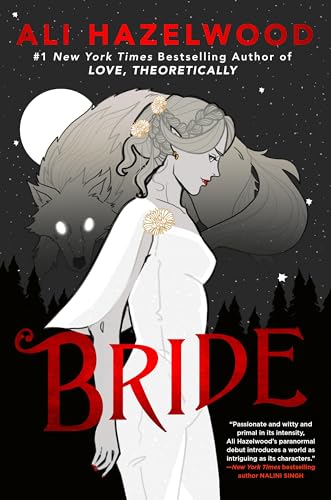
Bride
Ali Hazelwood · Bride #1

The Damned
Renee Ahdieh · The Beautiful #2

Covet
Tracy Wolff · Crave #3

The Coldest Touch
Isabel Sterling

The Beautiful
Renee Ahdieh · The Beautiful #1

Halfway to the Grave
Jeaniene Frost · Night Huntress #1

Vampire Academy
Richelle Mead · Vampire Academy #1

Dark Lover
J.R. Ward · Black Dagger Brotherhood #1

Queen of Myth and Monsters
Scarlett St. Clair · Adrian X Isolde #2

King of Battle and Blood
Scarlett St. Clair · Adrian X Isolde #1

Crave
Tracy Wolff · Crave #1

New Moon
Stephenie Meyer · The Twilight Saga #2

Twilight
Stephenie Meyer · The Twilight Saga #1
Why the vampire trope works
Vampire romantasy trades on a specific kind of tension that no other trope quite replicates: the pull between a being defined by hunger and a love that asks it to hold back. The appeal isn't the fangs or the immortality as spectacle — it's what those things cost emotionally. Readers come for the power imbalance that genuinely feels dangerous, the slow negotiation of trust across an enormous gap in vulnerability, and the particular ache of a creature who has outlived everyone they've ever cared about choosing to care again. At its best, the trope forces both characters to ask what safety even means when one of you is the threat.
Bride by Ali Hazelwood takes that premise and gives it a razor-sharp wit — a forced-proximity political marriage between a vampire and a werewolf that earns its heat through genuine ideological friction before it earns anything else. Carissa Broadbent's The Serpent and the Wings of Night runs darker and more ambitious, dropping its human protagonist into a vampire death-tournament where the romance is inseparable from survival strategy. And Twilight, whatever its detractors say, understood the core emotional grammar first: the longing of someone who wants you precisely because you are the worst possible thing for you to want.
Vampire romantasy — your questions
Which vampire romantasy book should I start with if I'm new to the trope?
Start with The Serpent and the Wings of Night by Carissa Broadbent. It's a complete story with a satisfying arc, the world-building is original rather than borrowed mythology, and the romance is slow-burn enough that it earns real investment. If you want something lighter and faster to read first, Bride by Ali Hazelwood is a standalone that delivers both humor and genuine heat without requiring any prior commitment to the subgenre.
Which of these are the spiciest, and which are appropriate for younger readers?
Bride by Ali Hazelwood is the spiciest on the list at 4/5 — explicit scenes, adult humor, and heat that's central to the story rather than incidental. The Serpent and the Wings of Night sits at 3/5, with tension that builds toward meaningful intimacy. Richelle Mead's Vampire Academy series (Vampire Academy, Frostbite, Shadow Kiss) and Empire of the Vampire by Jay Kristoff are each 2/5 — romantic tension present but not graphic, suitable for older teens and up. Twilight and New Moon are 1/5, fully clean and appropriate for any age.
Which books are standalones versus series commitments?
Bride by Ali Hazelwood is a true standalone — fully resolved ending, no continuation required. Empire of the Vampire is a series opener but functions as a long, self-contained narrative chunk. Twilight, New Moon, and Shadow Kiss are all part of multi-book series (The Twilight Saga and Vampire Academy respectively), so you're signing up for a longer journey. The Serpent and the Wings of Night is the first book in the Crowns of Nyaxia series, with a direct sequel that continues the same leads.
What separates a great vampire romantasy from a generic one?
The best ones make the vampire nature load-bearing for the romance — not just an aesthetic. In Bride, the vampire/werewolf divide creates a political and biological incompatibility that the relationship has to actively solve. In The Serpent and the Wings of Night, the protagonist's human fragility among vampires is a constant structural pressure, not just backstory flavor. The weaker entries in the subgenre use vampire immortality as a brooding accessory without ever asking what it actually costs emotionally. The books worth reading make that cost the whole point.