Romantasy trope
Best Shifter Romantasy Books
Were-creatures, packs, and animal instinct.
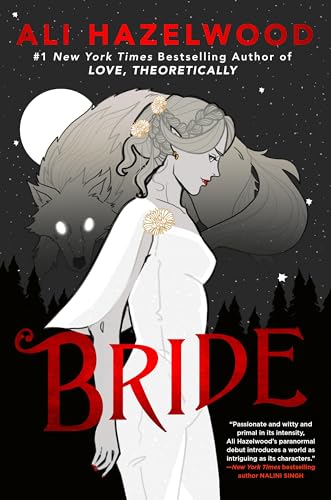
Bride
Ali Hazelwood · Bride #1

Moon Called
Patricia Briggs · Mercy Thompson #1

Dragon Bound
Thea Harrison · Elder Races #1

Storm and Fury
Jennifer L. Armentrout · The Harbinger #1

Lord of the Fading Lands
C.L. Wilson · Tairen Soul #1

Slave to Sensation
Nalini Singh · Psy-Changeling #1

Shiver
Maggie Stiefvater · The Wolves of Mercy Falls #1

New Moon
Stephenie Meyer · The Twilight Saga #2
Why the shifter trope works
Shifter romantasy delivers something other fantasy subgenres rarely attempt: a love story where instinct and biology are actively working against the characters' better judgment. The appeal isn't the transformation itself — it's the loss of control, the mate bond that bypasses consent of the rational mind, and the question of whether love chosen under that pressure is real or inevitable. Readers come for the possessive heroes and stay because the best shifter stories use the animal element to excavate something true about attachment, jealousy, and belonging that straight contemporary romance can't quite reach.
Nalini Singh's Slave to Sensation launched the Psy-Changeling series by grounding shifter politics in a fully realized world — the tension between a Psy woman trained to feel nothing and a leopard changeling who experiences everything is the template other series still measure themselves against. Ali Hazelwood's Bride takes a very different angle: her vampire-werewolf arranged marriage is sharp, funny, and deliberately modern, using the shifter pack structure as a backdrop for an outsider-belonging story that hits harder than the premise suggests. For readers who want the yearning dialed up and the heat dialed down, Maggie Stiefvater's Shiver makes the shifter curse the central tragedy — the wolf form isn't power here, it's loss, which gives the romance a fragility most entries in this space don't attempt.
Shifter romantasy — your questions
Which shifter romantasy book is best to start with if I'm new to the trope?
Slave to Sensation by Nalini Singh is the strongest entry point for most readers. It establishes the essential tensions of the genre — mate bonds, pack loyalty, the push-pull between animal instinct and emotional restraint — without requiring prior familiarity with shifter tropes. The world-building is dense but never alienating, and the romance earns its resolution. Moon Called by Patricia Briggs is the better pick if you want an urban fantasy tone with a female protagonist and lighter heat (spice 1/5), though its romance is a slow burn across multiple books.
Which of these books are the spiciest?
Bride by Ali Hazelwood and Dragon Bound by Thea Harrison both sit at spice 4/5 and are the most explicit books on this list. Bride keeps its heat playful and witty; Dragon Bound leans into possessive-mate intensity with more traditional alpha energy. Slave to Sensation lands at spice 3/5 — sensual and emotionally charged without being graphic. New Moon, Shiver, Storm and Fury, and Moon Called are all spice 1/5, making them appropriate for readers who want the romantic tension without explicit content.
Which books are standalones and which are series starters?
Bride by Ali Hazelwood is a standalone — complete story, no cliffhanger, no obligation to continue. Every other book on this list is a series starter. Slave to Sensation opens the long-running Psy-Changeling series (18+ books). Dragon Bound begins the Elder Races series. Moon Called launches the Mercy Thompson series. Shiver starts the Wolves of Mercy Falls trilogy. New Moon is book two of the Twilight Saga. Storm and Fury opens the Harbinger trilogy. Lord of the Fading Lands begins the Tairen Soul series.
What separates a great shifter romantasy from a mediocre one?
The best entries use the shifter element as emotional architecture, not just aesthetic. In Slave to Sensation, the mate bond creates genuine stakes because both characters have real reasons to resist it. In Shiver, the shifting is a tragedy that makes every moment between Sam and Grace feel borrowed. When the shifter mythology is just window dressing for a generic possessive-hero romance, the subgenre collapses into formula. The weakest entries treat the pack or animal instinct as an excuse for controlling behavior without interrogating it — the strongest ones make the instinct something the characters have to consciously decide what to do with.