Romantasy trope
Best Prophecy Romantasy Books
A foretelling that bends every choice around it.

The Dream Thieves
Maggie Stiefvater · The Raven Cycle #2

The Raven King
Maggie Stiefvater · The Raven Cycle #4

A Sky Beyond the Storm
Sabaa Tahir · An Ember in the Ashes #4

The Priory of the Orange Tree
Samantha Shannon
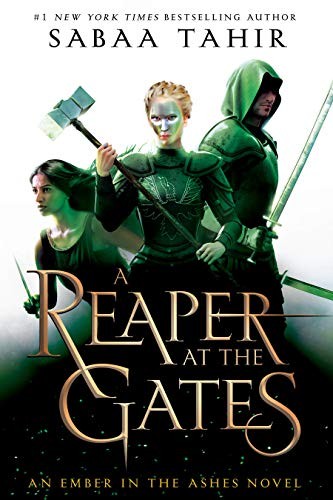
A Reaper at the Gates
Sabaa Tahir · An Ember in the Ashes #3

Dark Rise
C.S. Pacat · Dark Rise #1

The Oleander Sword
Tasha Suri · The Burning Kingdoms #2

The Raven Boys
Maggie Stiefvater · The Raven Cycle #1

The War of Two Queens
Jennifer L. Armentrout · Blood and Ash #4

A Fire in the Flesh
Jennifer L. Armentrout · Flesh and Fire #3

House of Salt and Sorrows
Erin A. Craig

This Woven Kingdom
Tahereh Mafi · This Woven Kingdom #1
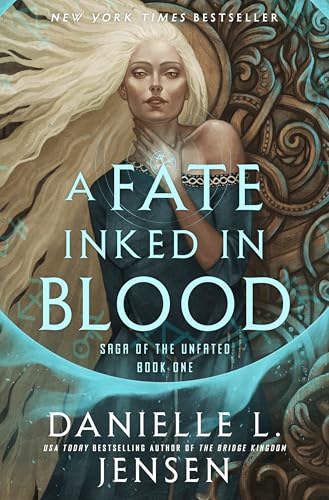
A Fate Inked in Blood
Danielle L. Jensen · Saga of the Unfated #1

Poison Princess
Kresley Cole · The Arcana Chronicles #1

Lies We Sing to the Sea
Sarah Underwood

Breath of Fire
Amanda Bouchet · Kingmaker Chronicles #2

Heart on Fire
Amanda Bouchet · Kingmaker Chronicles #3

The Kiss of Deception
Mary E. Pearson · The Remnant Chronicles #1

Lightlark
Alex Aster · The Lightlark Saga #1
Why the prophecy trope works
Prophecy romantasy scratches a very specific itch: the dread-and-desire of a future that was written before you were born. Readers come for the dramatic irony — you know the shape of what's coming, and watching characters struggle against, toward, or unknowingly into it creates a tension no amount of pure action can manufacture. The best books in this vein don't use the prophecy as a plot shortcut. They use it to force a question: if your ending is fixed, do your choices still matter? That existential weight is what separates a great prophecy story from one that just uses an oracle for window dressing.
Samantha Shannon's The Priory of the Orange Tree builds its prophecy across centuries and civilizations, so that when it finally snaps into focus it feels both inevitable and earned — the scale alone makes it one of the most ambitious uses of the trope in recent fantasy. Maggie Stiefvater takes a quieter, more suffocating approach across The Raven Boys and its sequels: Gansey's foretold death hangs over every scene like a held breath, turning an ordinary road trip into something almost unbearable. Jennifer L. Armentrout's The War of Two Queens pushes the trope toward its spiciest, most emotionally explosive end — the prophecy here is entangled with betrayal and desire in ways that make every revelation land twice as hard.
Prophecy romantasy — your questions
Which prophecy romantasy book is best to start with?
If you want to ease in, start with The Raven Boys by Maggie Stiefvater. It's the most grounded entry point — contemporary setting, small cast, and a prophecy (Gansey's death) that operates as quiet dread rather than world-ending stakes. It's also the first in a four-book series (The Raven Cycle), so if the hook catches you, there's plenty more. For readers who want epic scope from page one, The Priory of the Orange Tree by Samantha Shannon is the standalone choice — denser but deeply satisfying.
Which of these books are the spiciest?
The War of Two Queens by Jennifer L. Armentrout is the clear answer — it rates 4/5 on the spice scale and is the fourth book in the Blood and Ash series, by which point the romance is fully established and the tension pays off accordingly. A Fate Inked in Blood by Danielle L. Jensen comes in second at 3/5, with Norse-mythology prophecy wrapped around a romance that's consistently steamy. The rest — including the Raven Cycle books, The Priory of the Orange Tree, A Reaper at the Gates, and Lightlark — are all 1/5, meaning the romantic and prophecy elements are emotionally rich but not explicit.
Which are standalones and which are part of a series?
The Priory of the Orange Tree (Samantha Shannon) and Lightlark (Alex Aster) are the standalones here, though Lightlark does have sequels if you want to continue. Everything else is series: The Raven Boys, The Dream Thieves, and The Raven King are books 1-3 of The Raven Cycle (four books total). The War of Two Queens is book four of the Blood and Ash series — not a good entry point without reading from the start. A Reaper at the Gates is book three of the An Ember in the Ashes series. A Fate Inked in Blood is book one of its own series and works as a clean starting point.
What makes a prophecy storyline actually work — what should I look for?
The best prophecy plots use the foretelling to create dramatic irony, not to excuse lazy plotting. Look for books where characters actively push against or misread the prophecy — the tension comes from their choices, not the oracle's words. The Raven Cycle does this brilliantly: Blue is told kissing her true love will kill him, and Stiefvater uses that constraint to build romantic chemistry across three books without it ever feeling cheap. A Fate Inked in Blood is a good example on the epic side — the prophecy names Freya as a shield maiden of a king she despises, and the story's engine is her fighting what she's supposedly fated to be. Avoid books where the prophecy is just a vague tagline the plot mostly ignores.