Romantasy trope
Best Marriage of Convenience Romantasy Books
A practical union that becomes inconveniently real.

Spinning Silver
Naomi Novik

A Kingdom of Flesh and Fire
Jennifer L. Armentrout · Blood and Ash #2

Chain of Gold
Cassandra Clare · The Last Hours #1

Foul Lady Fortune
Chloe Gong · Foul Lady Fortune #1

A River Enchanted
Rebecca Ross · Elements of Cadence #1
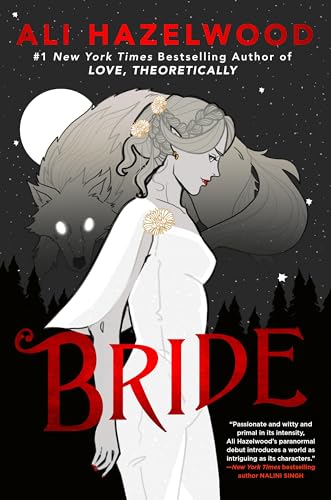
Bride
Ali Hazelwood · Bride #1

Radiance
Grace Draven · Wraith Kings #1

The Winter King
C.L. Wilson · Weathermages of Mystral #1

Electric Idol
Katee Robert · Dark Olympus #2

Serpent & Dove
Shelby Mahurin · Serpent & Dove #1
Why the marriage of convenience trope works
Marriage of convenience works because it cheats. It hands two people all the proximity, domesticity, and enforced intimacy of a relationship — the shared beds, the overheard nightmares, the accidental tenderness — while both parties are still technically allowed to keep their guard up. The tension comes from watching that permission slip expire. Readers return to this trope not for the wedding but for the exact moment the protagonist realizes the contract has stopped protecting her from her own feelings. Done well, it's one of the most psychologically rich setups in romantasy: the power imbalance is built in, the denial is structurally justified, and the emotional collapse when it finally comes feels utterly earned.
Bride by Ali Hazelwood transplants the trope into a monster romance — a vampire-werewolf political alliance sealed through marriage — and then quietly makes it about learning to trust someone whose entire world is engineered to exclude you. The slow build is patient in a way that pays off hard. Radiance by Grace Draven does something rarer: both the hero and heroine are considered ugly by their own cultures, so the mutual arrangement comes without the usual power fantasy, and the tenderness that grows between them has an almost uncomfortably real warmth to it. Serpent & Dove by Shelby Mahurin sets the marriage inside an active witch hunt, which means the stakes of the ruse unraveling are lethal, not just emotionally costly — it keeps the pacing tight in a way more languid entries in this trope sometimes lack.
Marriage of Convenience romantasy — your questions
Which marriage of convenience romantasy is the best starting point for someone new to the trope?
Serpent & Dove by Shelby Mahurin is the most accessible entry: standalone-enough in its first installment that you get a complete emotional arc, fast-paced, and the enemies-to-reluctant-spouses dynamic is immediately legible even if you have not read much romantasy. If you want something with more epic-fantasy weight from the start, A Kingdom of Flesh and Fire by Jennifer L. Armentrout (book two of the Blood and Ash series) develops the arranged-union dynamic after you have the world grounding from book one — worth the setup investment.
Which of these books are the spiciest, and which are clean reads?
Electric Idol by Katee Robert (5/5 spice) is the most explicit — it is part of Robert's Dark Olympus series and does not hold back. Bride by Ali Hazelwood and A Kingdom of Flesh and Fire both sit at 4/5 and are steamy without being wall-to-wall explicit. Serpent & Dove lands at a moderate 3/5, with tension that outpaces the page time devoted to it. On the clean end, Chain of Gold by Cassandra Clare, Spinning Silver by Naomi Novik, and A River Enchanted by Rebecca Ross are all 1/5 — romantic but essentially fade-to-black, safe for YA readers or anyone who prefers the emotional slow burn without explicit scenes. Radiance by Grace Draven sits at 2/5, sensual in atmosphere but restrained on the page.
Which of these are standalones versus series commitments?
Radiance by Grace Draven and A River Enchanted by Rebecca Ross both work as entry points to their respective series but deliver a satisfying romantic resolution within the first book. Spinning Silver by Naomi Novik is a true standalone — one book, complete story. The others involve ongoing series: A Kingdom of Flesh and Fire is book two of Blood and Ash; Serpent & Dove is book one of a trilogy; Electric Idol is part of Dark Olympus (reads well without prior books but benefits from context); Chain of Gold opens the Last Hours trilogy and ends on a cliffhanger. Bride by Ali Hazelwood functions as a standalone romance within a shared universe.
What actually makes a marriage of convenience romantasy worth reading versus a generic version of the trope?
The weak version of the trope mistakes proximity for tension — two people share a house and eventually share a bed, and that is treated as sufficient. The strong version makes the arrangement itself do narrative work. In Spinning Silver, the economic and political stakes of Miryem's deal are so concrete that the romance emerges almost as a byproduct of survival — which makes it feel genuinely surprising. In Radiance, Draven inverts the usual attractiveness hierarchy so completely that the tenderness between Brishen and Ildiko has to be built from scratch, without physical attraction as a shortcut. The best entries in this trope make you believe that without the contract forcing closeness, these two people would never have been in the same room long enough to fall.