Romantasy trope
Best Love Triangle Romantasy Books
Two compelling options and one impossible choice.

Crown of Midnight
Sarah J. Maas · Throne of Glass #2

Clockwork Prince
Cassandra Clare · The Infernal Devices #2

Chain of Gold
Cassandra Clare · The Last Hours #1

Shadow Kiss
Richelle Mead · Vampire Academy #3

A Torch Against the Night
Sabaa Tahir · An Ember in the Ashes #2

Bloodmarked
Tracy Deonn · The Legendborn Cycle #2

Clockwork Angel
Cassandra Clare · The Infernal Devices #1
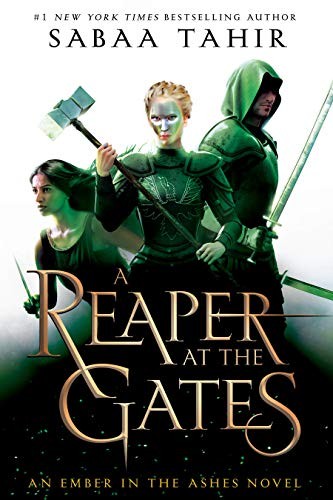
A Reaper at the Gates
Sabaa Tahir · An Ember in the Ashes #3

Daughter of the Moon Goddess
Sue Lynn Tan · The Celestial Kingdom #1

Frostbite
Richelle Mead · Vampire Academy #2

The Heart of Betrayal
Mary E. Pearson · The Remnant Chronicles #2

Legendary
Stephanie Garber · Caraval #2

Fire Falling
Elise Kova · Air Awakens #2

Crush
Tracy Wolff · Crave #2

Finale
Stephanie Garber · Caraval #3

Water's Wrath
Elise Kova · Air Awakens #4

House of Salt and Sorrows
Erin A. Craig

Moon Called
Patricia Briggs · Mercy Thompson #1

The Hemlock Queen
Hannah Whitten · The Nightshade Crown #2

Fire
Kristin Cashore · Graceling Realm #2

The Damned
Renee Ahdieh · The Beautiful #2

These Infinite Threads
Tahereh Mafi · This Woven Kingdom #2

City of Bones
Cassandra Clare · The Mortal Instruments #1

Court
Tracy Wolff · Crave #4

Half-Blood
Jennifer L. Armentrout · Covenant #1

Reckless
Lauren Roberts · The Powerless Trilogy #2

The Rose and the Dagger
Renee Ahdieh · The Wrath and the Dawn #2

Throne of Glass
Sarah J. Maas · Throne of Glass #1

Belladonna
Adalyn Grace · Belladonna #1

Covet
Tracy Wolff · Crave #3
Why the love triangle trope works
The love triangle works because it isn't really about choosing between two people — it's about a protagonist being forced to define who she is and what she actually wants, often for the first time. Readers don't come back to this trope for the will-they-won't-they; they come for the specific agony of a character who genuinely loves, or could love, two people who represent incompatible futures. The best examples in romantasy make both options feel real and costly. When it lands, it's one of the most effective engines in the genre for building tension that isn't action-dependent.
Throne of Glass puts Celaena between two men who each see a different version of her — one who wants her capable, one who wants her safe — and the triangle quietly doubles as a question about whether she'll accept her own power. Shadow and Bone goes darker: Alina's attachment to Mal is rooted in memory and survival, while the Darkling offers something more dangerous — being truly known. Cassandra Clare's Clockwork Angel and Clockwork Prince take the long view, building a triangle across an entire series so that the weight of each choice compounds over hundreds of pages.
Love Triangle romantasy — your questions
Which love triangle romantasy book should I start with if I'm new to the genre?
Shadow and Bone is the cleaner entry point. It's a standalone-enough first book, the triangle develops without requiring prior investment in a sprawling cast, and Bardugo keeps the stakes legible from the first chapter. Throne of Glass is excellent but rewards readers who can commit to a long series — the triangle doesn't fully crystallize until Crown of Midnight.
Which of these books are standalone and which are part of a series?
New Moon is the most freestanding read — it's book two of the Twilight series but its triangle (Bella, Edward, Jacob) is self-contained enough to work without the full saga. Everything else here is a series entry: Shadow and Bone opens the Grishaverse trilogy, Throne of Glass and Crown of Midnight are books one and two of a seven-book series, Shatter Me begins a trilogy, Red Queen starts a four-book sequence, and the Clockwork Angel/Clockwork Prince pair are the first two books of The Infernal Devices trilogy.
Which of these books have the most romantic tension — and which are lighter on steam?
Every title here sits at spice 1–2 out of 5, so none are explicit. The most charged romantic tension — not steam, but sustained ache — is in Clockwork Prince, where Clare draws out the triangle with real emotional precision across a full novel. Crown of Midnight steps up from Throne of Glass and has noticeably more heat than the first book, still at a 2/5. Shatter Me earns its tension through touch and restraint: physical contact has consequence in Mafi's world, which makes even small moments land hard.
What separates a great love triangle from a frustrating one in romantasy?
The difference is usually whether both love interests are written as full characters rather than one obvious answer and one placeholder. In Throne of Glass, Chaol and Dorian each have coherent worldviews that put them in genuine opposition. In Shadow and Bone, Mal and the Darkling aren't just 'safe vs. dangerous' — they represent two different claims on Alina's identity. A triangle fails when the reader can see exactly who the protagonist will choose from chapter two. Red Queen and Shatter Me both avoid that trap by keeping the protagonist's loyalties genuinely unstable for most of the book.