Romantasy trope
Best Hidden World / Portal Romantasy Books
A crossing from the ordinary into the Other.

Legendborn
Tracy Deonn · The Legendborn Cycle #1

Strange the Dreamer
Laini Taylor · Strange the Dreamer #1

Chain of Gold
Cassandra Clare · The Last Hours #1

The Ten Thousand Doors of January
Alix E. Harrow

Lady Midnight
Cassandra Clare · The Dark Artifices #1

Clockwork Angel
Cassandra Clare · The Infernal Devices #1

The Once and Future Witches
Alix E. Harrow

Daughter of Smoke and Bone
Laini Taylor · Daughter of Smoke and Bone #1
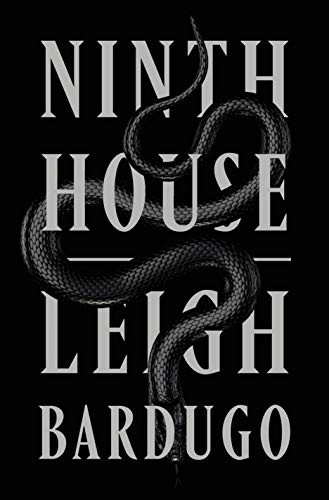
Ninth House
Leigh Bardugo · Alex Stern #1

The City of Brass
S.A. Chakraborty · The Daevabad Trilogy #1

Dark Rise
C.S. Pacat · Dark Rise #1

Hell Bent
Leigh Bardugo · Alex Stern #2

A Darker Shade of Magic
V.E. Schwab · Shades of Magic #1

Bloodlines
Richelle Mead · Bloodlines #1

The Starless Sea
Erin Morgenstern

The Night Circus
Erin Morgenstern

Moon Called
Patricia Briggs · Mercy Thompson #1

City of Bones
Cassandra Clare · The Mortal Instruments #1

The Darkest Part of the Forest
Holly Black

Magic Bites
Ilona Andrews · Kate Daniels #1

Darkfever
Karen Marie Moning · Fever #1

The Beautiful
Renee Ahdieh · The Beautiful #1

Dark Lover
J.R. Ward · Black Dagger Brotherhood #1

Obsidian
Jennifer L. Armentrout · Lux #1

Crave
Tracy Wolff · Crave #1

The Bone Season
Samantha Shannon · The Bone Season #1

Book of Night
Holly Black · Book of Night #1

Tithe
Holly Black · Modern Faerie Tales #1

The Atlas Six
Olivie Blake · The Atlas #1
Why the hidden world / portal trope works
The hidden world trope isn't really about magic — it's about the unbearable suspicion that the life you're living is only one layer of reality, and that crossing a threshold will finally make sense of everything. Readers come for the wonder, but they stay because these books give their protagonists (and by extension themselves) permission to belong somewhere extraordinary. The best examples aren't escapism so much as they are recognition: you always half-knew a place like this existed.
Erin Morgenstern's The Night Circus builds its hidden world as a sealed-off sensory experience — a circus that appears without announcement and vanishes the same way, with every detail engineered to make you mourn a place you've never been. V.E. Schwab's A Darker Shade of Magic goes a different direction, stacking parallel Londons on top of each other and then gate-keeping them furiously, so the crossing itself becomes a kind of power. Laini Taylor's Daughter of Smoke and Bone takes the portal in both directions at once, splitting its world between Prague and a mythic elsewhere, and makes the threshold feel like a wound that won't close.
Hidden World / Portal romantasy — your questions
Which book should I read first if I'm new to hidden world romantasy?
Start with The Night Circus by Erin Morgenstern. It's a standalone (no series commitment), the prose is immediately transporting, and its competition-between-magicians structure keeps the plot engine running even when you just want to wander. If you finish it wanting something with more plot velocity and world-system logic, move to A Darker Shade of Magic — Schwab builds a fuller magic framework and it's the first in a trilogy worth finishing.
Which of these books are spiciest, and which are safe for readers who prefer low heat?
Every book on this list rates 1 or 2 out of 5 on heat — this trope skews toward tension and longing over explicit romance. The Atlas Six (2/5) is the outlier with the most charged dynamics, though even that is more slow-burn intellectual rivalry than anything graphic. If you want romantic tension without steam, Daughter of Smoke and Bone and Clockwork Angel both do aching, slow-burn exceptionally well. Ninth House by Leigh Bardugo deals with dark and disturbing content (violence, trauma), but its romantic element is minimal.
Which are standalones and which are the start of a series?
Standalones: The Night Circus and The Starless Sea (both by Morgenstern — unconnected to each other). Everything else is a series opener: A Darker Shade of Magic starts the Shades of Magic trilogy; Ninth House starts the Alex Stern series; Clockwork Angel starts The Infernal Devices trilogy; The Atlas Six starts The Atlas series; The City of Brass starts The Daevabad Trilogy; Daughter of Smoke and Bone starts a trilogy. If you want the full hit without a series commitment, start with either Morgenstern.
What separates a great hidden world book from a generic one?
The best ones make the hidden world feel earned rather than convenient. In The City of Brass, Chakraborty's djinn city of Daevabad has centuries of political history that existed long before the protagonist arrived — her crossing disrupts a world that doesn't need her, which creates genuine stakes. In The Starless Sea, the underground library isn't a backdrop; it's the subject. The weakest examples use the hidden world as scenery and forget to make the crossing cost anything. A good rule: if the protagonist could step back through the portal with no real loss, the book hasn't done its job.