Romantasy trope
Best Grumpy / Sunshine Romantasy Books
A cold one thawed by a warm one, and vice versa.

The House in the Cerulean Sea
T.J. Klune

Cress
Marissa Meyer · The Lunar Chronicles #3

Emily Wilde's Map of the Otherlands
Heather Fawcett · Emily Wilde #2

King of Scars
Leigh Bardugo · King of Scars Duology #1

Emily Wilde's Encyclopaedia of Faeries
Heather Fawcett · Emily Wilde #1

Powerful
Lauren Roberts · The Powerless Trilogy #2

Apprentice to the Villain
Hannah Nicole Maehrer · Assistant to the Villain #2

A Marvellous Light
Freya Marske · The Last Binding #1

Foul Lady Fortune
Chloe Gong · Foul Lady Fortune #1

Famine
Laura Thalassa · The Four Horsemen #3
Children of Fallen Gods
Carissa Broadbent · The War of Lost Hearts #2

The Songbird and the Heart of Stone
Carissa Broadbent · Crowns of Nyaxia #2

Daughter of No Worlds
Carissa Broadbent · The War of Lost Hearts #1

Assistant to the Villain
Hannah Nicole Maehrer · Assistant to the Villain #1

Radiance
Grace Draven · Wraith Kings #1

Storm and Fury
Jennifer L. Armentrout · The Harbinger #1

Radiant Sin
Katee Robert · Dark Olympus #4

A Far Wilder Magic
Allison Saft

A Fragile Enchantment
Allison Saft

A Witch's Guide to Fake Dating a Demon Lord
Sarah Hawley · Glimmer Falls #1

Serpent & Dove
Shelby Mahurin · Serpent & Dove #1

A Promise of Fire
Amanda Bouchet · Kingmaker Chronicles #1
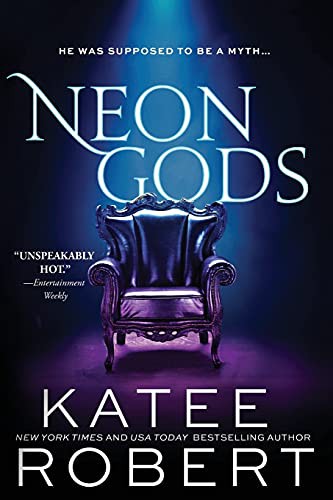
Neon Gods
Katee Robert · Dark Olympus #1

A Touch of Darkness
Scarlett St. Clair · Hades x Persephone #1
Why the grumpy / sunshine trope works
Grumpy/sunshine works because it's a story about permission — the guarded one finally letting themselves be known, and the warm one discovering that tenderness isn't weakness. Readers return to this trope not for wish-fulfilment but for the specific ache of watching someone who has armoured themselves against the world slowly, reluctantly decide that one person is worth the risk. The cold exterior isn't cruelty; it's scar tissue. And the sunshine character isn't naive — they see exactly what they're dealing with and choose it anyway. That asymmetry, and the inevitable crack in the armour, is what makes the payoff feel earned.
T.J. Klune's The House in the Cerulean Sea is the gentlest version of this dynamic: a buttoned-up caseworker and a chaos-wielding magical caretaker, their tension playing out through bureaucratic politeness rather than brooding stares, which makes the eventual warmth all the more disarming. Heather Fawcett's Emily Wilde's Encyclopaedia of Faeries tilts the polarity — Emily is the prickly one, a glacially focused academic undone by her insufferable, charming colleague Wendell — and it works precisely because the trope doesn't require the woman to be the sunshine half. Serpent & Dove by Shelby Mahurin splits the difference: two people who genuinely irritate each other, trapped by circumstance, learning that irritation and longing are closer neighbours than either would admit.
Grumpy / Sunshine romantasy — your questions
Which grumpy/sunshine romantasy should I read first?
Start with The House in the Cerulean Sea by T.J. Klune if you want something low-stakes and cosy — it eases you into the dynamic without any heat or peril. If you'd rather begin with something that has more romantic tension and a proper fantasy plot underneath it, Emily Wilde's Encyclopaedia of Faeries is the cleaner pick: the grumpy/sunshine roles are reversed in a way that feels fresh, and the pacing is brisk enough that you're never waiting around for the thaw.
Which of these books are the spiciest?
Neon Gods by Katee Robert is the most explicit by a significant margin — it's a dark modern retelling of Hades and Persephone and does not hold back. A Touch of Darkness by Scarlett St. Clair (also Hades/Persephone) sits just below it with heat that's integral to the plot rather than incidental. Serpent & Dove delivers steamy moments with some emotional weight behind them. The House in the Cerulean Sea, Emily Wilde's Encyclopaedia of Faeries, Cress, King of Scars, and Assistant to the Villain are all effectively clean reads — romantic tension without explicit scenes.
Which of these are standalones and which are series openers?
The House in the Cerulean Sea is a standalone (there's a companion novel, but it's self-contained). Emily Wilde's Encyclopaedia of Faeries is the first in a duology. Cress is book three of The Lunar Chronicles — you'd want to start with Cinder. A Touch of Darkness and Neon Gods are both series openers that function reasonably well alone but set up longer arcs. King of Scars is book one of a duology and works better if you've already read the Six of Crows duology. Serpent & Dove and Assistant to the Villain are both series openers, though each has a satisfying central romance arc within the first book.
What actually makes a grumpy/sunshine pairing work versus one that just feels like the grumpy character is unpleasant to be around?
The difference is interiority and reason. A grumpy character who works on the page has a legible why — grief, betrayal, self-protection — and the sunshine character responds to that why, not just to the surface behaviour. In Emily Wilde's Encyclopaedia of Faeries, Emily's social coldness is clearly rooted in how she's learned to move through academic spaces as a woman; it reads as armour, not as a personality flaw. When the dynamic is poorly executed, the grumpy character just withholds warmth arbitrarily and the sunshine character tolerates it for no apparent reason, which tips into something more uncomfortable. The best examples — Serpent & Dove included — keep the tension reciprocal: both characters are changed by the other.