Romantasy trope
Best Fated Mates Romantasy Books
A bond destiny or magic insists upon — fought, then accepted.
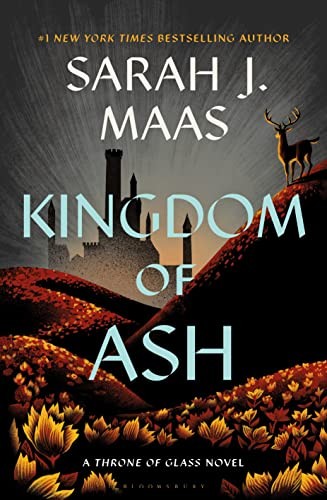
Kingdom of Ash
Sarah J. Maas · Throne of Glass #7
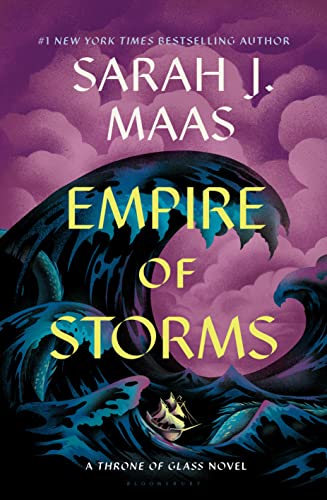
Empire of Storms
Sarah J. Maas · Throne of Glass #5

A Court of Mist and Fury
Sarah J. Maas · A Court of Thorns and Roses #2
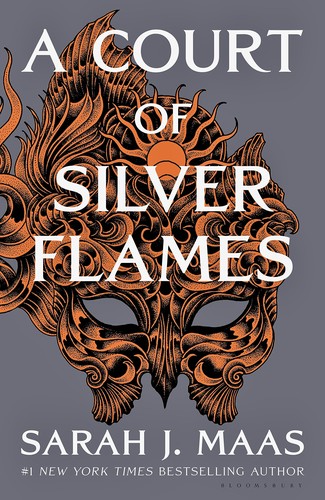
A Court of Silver Flames
Sarah J. Maas · A Court of Thorns and Roses #4

A Court of Wings and Ruin
Sarah J. Maas · A Court of Thorns and Roses #3

A Light in the Flame
Jennifer L. Armentrout · Flesh and Fire #2

The Crown of Gilded Bones
Jennifer L. Armentrout · Blood and Ash #3

A Fire in the Flesh
Jennifer L. Armentrout · Flesh and Fire #3

Crush
Tracy Wolff · Crave #2

A Touch of Chaos
Scarlett St. Clair · Hades x Persephone #4

To Snap a Silver Stem
Sarah A. Parker · Crystal Bloom #1

Dragon Bound
Thea Harrison · Elder Races #1

Rule of the Aurora King
Nisha J. Tuli · Artefacts of Ouranos #2

Lord of the Fading Lands
C.L. Wilson · Tairen Soul #1

A Soul of Ash and Blood
Jennifer L. Armentrout · Blood and Ash #5

Slave to Sensation
Nalini Singh · Psy-Changeling #1

Kingdom of the Feared
Kerri Maniscalco · Kingdom of the Wicked #3

Dark Lover
J.R. Ward · Black Dagger Brotherhood #1

Shiver
Maggie Stiefvater · The Wolves of Mercy Falls #1

A Court of Frost and Starlight
Sarah J. Maas · A Court of Thorns and Roses #5
Why the fated mates trope works
Fated mates works because it externalises the thing most romantic tension has to earn through plot: the certainty that this person is the one. The bond arrives early, uninvited, and the story becomes about whether the characters can accept being chosen by something beyond their own control. That resistance is where all the heat lives. Readers return to this trope not because they want fate to do the work, but because watching someone fight a pull they already feel — and eventually surrender to it — is one of the most satisfying emotional arcs in fiction.
A Court of Mist and Fury is the definitive example of the trope done right: the bond between Feyre and Rhysand is felt long before it's named, and Maas makes the acceptance cost something real. A Court of Silver Flames inverts the usual template — Nesta and Cassian resist each other through sheer stubbornness rather than circumstance, which gives the eventual yield a different, more abrasive satisfaction. For readers who want the bond threaded through genuine grief and consequence, Empire of Storms stretches the fated connection across an entire continent's worth of stakes before it's allowed to breathe.
Fated Mates romantasy — your questions
Which book is the best starting point for fated mates romantasy?
A Court of Mist and Fury is the near-universal answer. It's technically the second book in the ACOTAR series, but it's where the fated mates thread becomes central — and it's the book most readers cite as the one that got them hooked on the trope. You'll want to read A Court of Thorns and Roses first (it's short and fast), but ACOMAF is the real entry point. If you want something outside the Maas orbit, The Crown of Gilded Bones by Jennifer L. Armentrout drops you into a fated bond that's already in motion and builds from there.
Which of these books are the spiciest?
A Court of Silver Flames sits at the top — it's the most explicit book in the ACOTAR series by a significant margin. A Court of Mist and Fury and Empire of Storms are both notably spicy without being quite as graphic. A Court of Wings and Ruin and Kingdom of Ash pull back slightly in heat relative to their setup, and A Court of Frost and Starlight is a short novella with minimal spice. Shiver by Maggie Stiefvater is the outlier — it's YA, emotionally intense, but essentially clean.
Are any of these standalone, or do they all require reading a full series?
None of them are true standalones — the fated mates trope rewards series structure because the bond needs room to resist and resolve. That said, A Court of Silver Flames works reasonably well if you've already read the ACOTAR series and want Nesta's story specifically. Shiver is the first in Maggie Stiefvater's Wolves of Mercy Falls trilogy, but it has the most self-contained arc of any book on this list. For the fullest payoff, Empire of Storms and Kingdom of Ash should be read as part of the Throne of Glass series rather than picked up cold.
What separates a great fated mates book from a lazy one?
The bond has to be an obstacle before it becomes a resolution. In weak versions, fate does too much heavy lifting — characters accept the connection without it costing them anything, and the tension evaporates. The best examples on this list make the pull feel like a problem: in A Court of Mist and Fury, Rhysand spends most of the book withholding the truth of the bond because acting on it would hurt Feyre; in A Court of Silver Flames, Nesta's resistance is rooted in genuine self-loathing, not just plot friction. The Crown of Gilded Bones earns its bond by putting real political and personal stakes in the way. When the characters have actual reasons to fight the pull — not just misunderstandings — the trope delivers.