Romantasy trope
Best Fae Court Romantasy Books
Seasonal courts, fae politics, and dangerous bargains.

A Court of Mist and Fury
Sarah J. Maas · A Court of Thorns and Roses #2

A Court of Wings and Ruin
Sarah J. Maas · A Court of Thorns and Roses #3

The Queen of Nothing
Holly Black · The Folk of the Air #3

The Wicked King
Holly Black · The Folk of the Air #2

Quicksilver
Callie Hart · Fae & Alchemy #1

House of Flame and Shadow
Sarah J. Maas · Crescent City #3

Glint
Raven Kennedy · The Plated Prisoner #2

The Stolen Heir
Holly Black · The Stolen Heir Duology #1
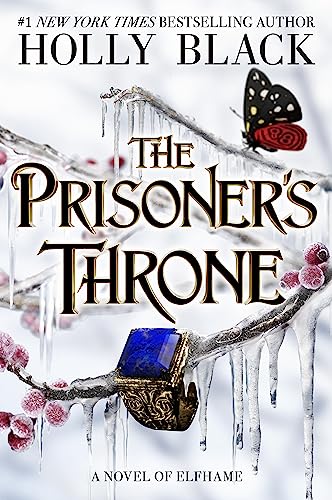
The Prisoner's Throne
Holly Black · The Stolen Heir Duology #2

The Cruel Prince
Holly Black · The Folk of the Air #1

To Carve a Fae Heart
Tessonja Odette · Entangled with Fae #1

The High Mountain Court
A.K. Mulford · The Five Crowns of Okrith #1

The Iron King
Julie Kagawa · The Iron Fey #1

An Enchantment of Ravens
Margaret Rogerson

A Court of Thorns and Roses
Sarah J. Maas · A Court of Thorns and Roses #1

Tithe
Holly Black · Modern Faerie Tales #1

A Court of Frost and Starlight
Sarah J. Maas · A Court of Thorns and Roses #5
Why the fae court trope works
Fae court romantasy scratches a very specific itch: the fantasy of being the person who walks into a room full of ancient, beautiful, genuinely dangerous beings — and matters to them anyway. The politics are treacherous, the bargains are binding, and the love interest is someone who could destroy you without breaking a sweat but keeps choosing not to. That tension between power and vulnerability is the engine. Readers who love this trope aren't just here for the magic system; they want the vertigo of falling for someone whose motives they can't fully trust.
Sarah J. Maas's A Court of Thorns and Roses is the obvious entry point — it establishes the seasonal courts, the political fracture lines between Spring and Night, and a heroine who earns her place rather than having it handed to her. The sequel, A Court of Mist and Fury, is where the trope reaches full intensity: Rhysand's Inner Circle, the politics of the High Lords' summit, and a romance that reframes everything you thought you understood about the first book. Holly Black's The Cruel Prince takes a cooler, more morally ambiguous approach — Jude Duarte is a mortal girl playing fae politics without any special powers, which makes every win feel genuinely earned and every betrayal cut sharper.
Fae Court romantasy — your questions
Which book should I start with if I'm new to fae court romantasy?
Start with A Court of Thorns and Roses by Sarah J. Maas. It's the most accessible entry point — it eases you into the court structure and political dynamics before ramping up complexity in later books. If you prefer a darker, more cynical tone from page one, The Cruel Prince by Holly Black is the better pick; it drops you straight into fae politics with a protagonist who has no magical advantages whatsoever.
Which books in this list are the spiciest?
A Court of Mist and Fury is the clear answer — it's the most explicit book in the ACOTAR series by a significant margin (rated 4/5). A Court of Wings and Ruin steps back to a 3/5. The Cruel Prince and The Wicked King by Holly Black are largely closed-door (0/5 and 1/5 respectively), so if heat level matters to you, the Holly Black Folk of the Air trilogy is closer to slow-burn tension than explicit romance.
Which of these are standalone books versus series commitments?
None of them are truly standalone — all are series. A Court of Thorns and Roses is the first of five books (ACOTAR through A Court of Frost and Starlight, plus the Crescent City crossover House of Flame and Shadow). The Cruel Prince is book one of the Folk of the Air trilogy, followed by The Wicked King and The Queen of Nothing. The good news: the Holly Black trilogy is a tight three books that resolves completely, making it a more contained commitment than the Maas universe.
What makes a fae court romantasy actually good versus just using the setting as window dressing?
The best examples make the court politics inseparable from the romance — the power imbalance isn't just aesthetic, it has real stakes. In A Court of Mist and Fury, Rhysand's position as High Lord of the Night Court directly shapes every interaction and creates genuine moral complexity. In The Wicked King, Jude's political scheming and her feelings for Cardan are the same problem — she can't untangle them, and neither can you. When the fae rules (bargains, glamours, the inability to lie) actively constrain and complicate the romance, that's the trope working at its best.