Romantasy trope
Best Dark Magic Romantasy Books
Forbidden power and the cost of using it.

Two Twisted Crowns
Rachel Gillig · The Shepherd King #2

Legendborn
Tracy Deonn · The Legendborn Cycle #1

Muse of Nightmares
Laini Taylor · Strange the Dreamer #2

A Conjuring of Light
V.E. Schwab · Shades of Magic #3

The Dream Thieves
Maggie Stiefvater · The Raven Cycle #2

One Dark Window
Rachel Gillig · The Shepherd King #1

Bloodmarked
Tracy Deonn · The Legendborn Cycle #2

King of Scars
Leigh Bardugo · King of Scars Duology #1

The Once and Future Witches
Alix E. Harrow
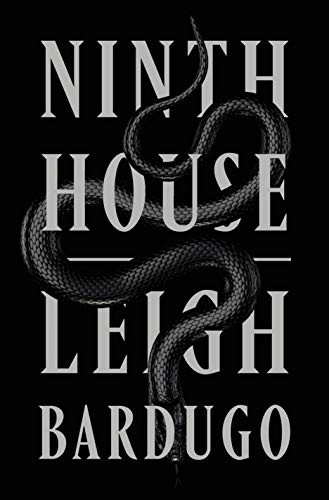
Ninth House
Leigh Bardugo · Alex Stern #1

A Gathering of Shadows
V.E. Schwab · Shades of Magic #2

The Witch's Heart
Genevieve Gornichec

The Bone Shard Daughter
Andrea Stewart · The Drowning Empire #1
A Sorceress Comes to Call
Ava Reid

Sorcery of Thorns
Margaret Rogerson

The Bear and the Nightingale
Katherine Arden · Winternight Trilogy #1
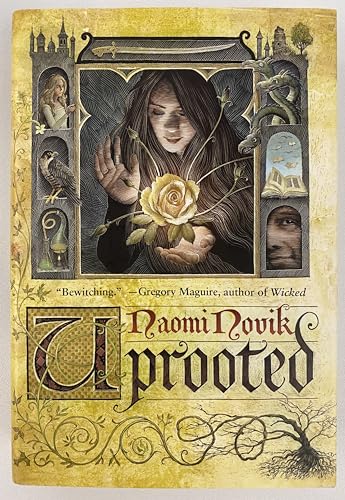
Uprooted
Naomi Novik

Hell Bent
Leigh Bardugo · Alex Stern #2

A Darker Shade of Magic
V.E. Schwab · Shades of Magic #1

Vespertine
Margaret Rogerson

The Heart Forger
Rin Chupeco · The Bone Witch #2
Children of Fallen Gods
Carissa Broadbent · The War of Lost Hearts #2

We Free the Stars
Hafsah Faizal · Sands of Arawiya #2

Onyx Storm
Rebecca Yarros · The Empyrean #3

A Song of Wraiths and Ruin
Roseanne A. Brown · A Song of Wraiths and Ruin #1

House of Salt and Sorrows
Erin A. Craig

Malice
Heather Walter · Malice Duology #1

Her Soul to Take
Harley Laroux · Souls #1

The Hemlock Queen
Hannah Whitten · The Nightshade Crown #2

The Merciless Ones
Namina Forna · Deathless #2
Why the dark magic trope works
Dark magic romantasy scratches a very specific itch: the feeling that power has a price, and watching someone pay it anyway. What draws readers to these books isn't the magic system itself — it's the moral vertigo. The protagonist knows the cost, knows it might hollow her out or mark her as monstrous, and reaches for it anyway because the alternative is worse. That tension between self-preservation and something larger — justice, love, survival — is where the genre does its best emotional work. These stories reward readers who want to feel genuinely uneasy about who they're rooting for.
Shadow and Bone keeps its dark magic intimate and personal: Alina's power is a gift that quietly becomes a leash, and the Darkling's allure is inseparable from his willingness to use magic as domination. Uprooted goes somewhere stranger and more psychological — the Wood's corruption isn't just physical, it rewrites identity from the inside, making Agnieszka's choices about what she'll sacrifice feel genuinely costly. Ninth House is the outlier on this list that earns its darkness most honestly: Bardugo grounds forbidden magic in institutional violence and grief, making the supernatural feel like a precise metaphor rather than a genre flourish.
Dark Magic romantasy — your questions
Which book on this list is the best starting point for dark magic romantasy?
Shadow and Bone is the most accessible entry point — the magic is clearly defined, the stakes build gradually, and Bardugo's Grisha world is designed to reward series investment without punishing new readers. If you want something more self-contained and immediately absorbing, Uprooted by Naomi Novik is a standalone that gets to the psychological cost of dark power faster and leaves you with a complete story. Throne of Glass works well for readers who want a longer series arc from the beginning, but the dark magic elements deepen considerably in later entries.
Which of these books has the most romantic heat alongside the dark magic?
Onyx Storm (spice 3/5) is the highest-heat option on this list — Yarros writes romance that runs in parallel with genuinely high magical stakes, and the power-cost elements are intertwined with the central relationship in ways that make both feel more intense. One Dark Window and Uprooted both sit at spice 2/5 and handle romance with more slow-burn tension than explicit content. The Schwab titles and Shadow and Bone are spice 1/5 — the romantic tension is real but restrained, with the magic doing the emotional heavy lifting.
Which of these are standalone novels and which require series commitment?
Uprooted by Naomi Novik is the only true standalone — complete story, no sequel required. Ninth House is technically book one of a series but reads with enough closure that stopping there is a legitimate choice. Everything else on this list is a series opener or mid-series entry: Throne of Glass is seven books, the Shades of Magic trilogy starts with A Darker Shade of Magic (followed directly by A Gathering of Shadows), Shadow and Bone opens the six-book Grishaverse, Onyx Storm is book three of the Empyrean series, and One Dark Window has a direct sequel.
What actually makes a dark magic romantasy great versus one that just uses magic as decoration?
The best ones make the magic inseparable from character identity and moral cost. In Throne of Glass, Celaena's power is tied to secrets she's been running from — it reveals who she is as much as it threatens her. In Shadow and Bone, the dark magic isn't just a plot device; it's a metaphor for manipulation and the seductiveness of being chosen. A Gathering of Shadows deepens what Schwab started by showing that magical ability creates political exposure and personal risk, not just power. The books that disappoint in this trope tend to treat dark magic as a cool aesthetic rather than a burden — the ones above treat it as something that costs the protagonist something real.