Romantasy trope
Best Court Intrigue Romantasy Books
Thrones, factions, and the games played for them.
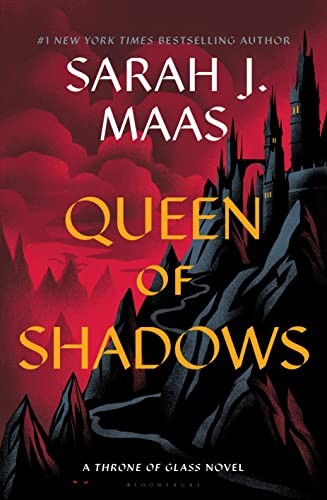
Queen of Shadows
Sarah J. Maas · Throne of Glass #4

The Empire of Gold
S.A. Chakraborty · The Daevabad Trilogy #3

Two Twisted Crowns
Rachel Gillig · The Shepherd King #2

A Court of Wings and Ruin
Sarah J. Maas · A Court of Thorns and Roses #3

Crown of Midnight
Sarah J. Maas · Throne of Glass #2

The Kingdom of Copper
S.A. Chakraborty · The Daevabad Trilogy #2

The Queen of Nothing
Holly Black · The Folk of the Air #3

The Wicked King
Holly Black · The Folk of the Air #2

Tower of Dawn
Sarah J. Maas · Throne of Glass #6

Rule of Wolves
Leigh Bardugo · King of Scars Duology #2

Gleam
Raven Kennedy · The Plated Prisoner #3

The Priory of the Orange Tree
Samantha Shannon

Shield of Sparrows
Devney Perry

King of Scars
Leigh Bardugo · King of Scars Duology #1

The Gilded Cage
Lynette Noni · The Prison Healer #2

The City of Brass
S.A. Chakraborty · The Daevabad Trilogy #1

Glow of the Everflame
Penn Cole · Kindred's Curse #2

The Traitor Queen
Danielle L. Jensen · The Bridge Kingdom #2

The Winner's Kiss
Marie Rutkoski · The Winner's Trilogy #3

Legendary
Stephanie Garber · Caraval #2
A Kingdom This Cursed and Empty
Stacia Stark · Kingdom of Lies #2

Eidolon
Grace Draven · Wraith Kings #2

The War of Two Queens
Jennifer L. Armentrout · Blood and Ash #4

Crystal Crowned
Elise Kova · Air Awakens #5

The Inadequate Heir
Danielle L. Jensen · The Bridge Kingdom #3

Water's Wrath
Elise Kova · Air Awakens #4

Wicked Beauty
Katee Robert · Dark Olympus #3

Defy the Night
Brigid Kemmerer · Defy the Night #1
Kill the Queen
Jennifer Estep · Crown of Shards #1

Kingdom of the Cursed
Kerri Maniscalco · Kingdom of the Wicked #2
Why the court intrigue trope works
Court intrigue romantasy scratches an itch that pure romance or pure fantasy rarely reaches on its own: the pleasure of watching someone outwit a room full of people who want them dead, while also desperately wanting one of them. The emotional engine here is sustained dread and delayed trust — you spend whole books unsure whether the person your protagonist is falling for is a threat, an ally, or both at once. Done well, it makes the romantic payoff feel earned in a way that domestic or quest-driven stories almost never can, because every shared glance carries political stakes.
Holly Black's The Cruel Prince is the clearest argument for why this trope works: Jude Duarte is not the most powerful person in the faerie court and knows it, which means her victories come from observation and nerve rather than magic — the intrigue is genuinely tactical. Sarah J. Maas runs the trope differently across her Throne of Glass series; Crown of Midnight is where the court scheming sharpens into something with real teeth, using secrets and institutional loyalty as the wedge between Celaena and everyone she trusts. A Court of Wings and Ruin applies the same architecture at series-climax scale, where the factions and alliances assembled over earlier books finally collide — it rewards readers who have been tracking the political landscape, not just the romance.
Court Intrigue romantasy — your questions
Which book should I start with if I'm new to court intrigue romantasy?
The Cruel Prince by Holly Black is the cleanest entry point. It's a standalone-first book in a trilogy, the court mechanics are introduced alongside the reader, and Holly Black doesn't assume prior genre familiarity. Jude's outsider status means the rules of faerie politics get explained organically rather than dumped. If you want to start with Sarah J. Maas, Throne of Glass is the series opener, though the court intrigue element is lighter there — it builds considerably with each sequel.
Which of these books are the spiciest?
A Court of Wings and Ruin is the highest-spice entry on this list at 3 out of 5 — it's the book where the ACOTAR series leans most explicitly into physical intimacy alongside the political conflict. Crown of Midnight and Tower of Dawn both sit at 2 out of 5, meaning there's romantic tension and some heat but nothing graphic. The Cruel Prince, The Wicked King, and The Queen of Nothing (Holly Black's Folk of the Air trilogy) are essentially spice-free — the tension is psychological and political rather than sexual, which some readers actually prefer for this trope.
Which of these are standalone versus part of a series?
None of these are true standalones — court intrigue tends to demand series length because the payoff requires accumulated betrayals and shifting alliances. Holly Black's trilogy (The Cruel Prince, The Wicked King, The Queen of Nothing) is the most self-contained arc and is worth reading in order. The Throne of Glass series by Sarah J. Maas runs seven books; Crown of Midnight, Queen of Shadows, and Tower of Dawn are all mid-series entries, so jumping in there cold means missing significant setup. A Court of Wings and Ruin is book three in the ACOTAR series and should not be read first.
What actually makes a court intrigue romantasy work versus just having a throne in the background?
The best examples use the political structure to generate the romantic obstacle — not as decoration but as load-bearing plot. In The Wicked King, the power imbalance between Jude and Cardan is the intrigue; the romance cannot resolve until the political problem resolves. In Crown of Midnight, Celaena's true loyalties are a state secret that keeps her isolated from the people closest to her. When the court is just atmosphere and the central conflict is something the characters could resolve by leaving the palace, it's not really court intrigue — it's a romance with fancy costumes.