Romantasy trope
Best Chosen One Romantasy Books
A heroine marked by prophecy or power.
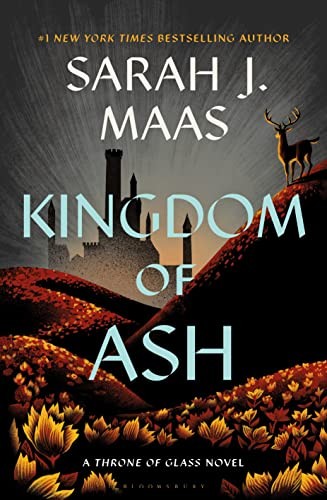
Kingdom of Ash
Sarah J. Maas · Throne of Glass #7
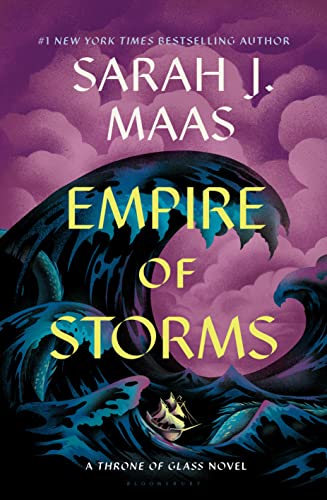
Empire of Storms
Sarah J. Maas · Throne of Glass #5

Heir of Fire
Sarah J. Maas · Throne of Glass #3

Legendborn
Tracy Deonn · The Legendborn Cycle #1

Dark Heir
C.S. Pacat · Dark Rise #2

The Ten Thousand Doors of January
Alix E. Harrow

Bloodmarked
Tracy Deonn · The Legendborn Cycle #2

Cinder
Marissa Meyer · The Lunar Chronicles #1
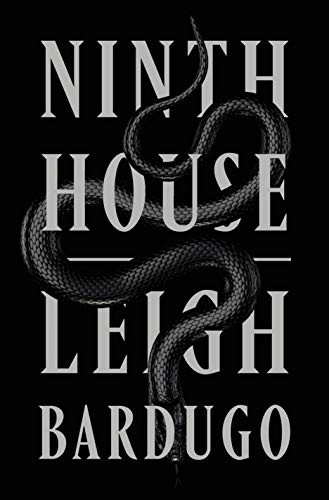
Ninth House
Leigh Bardugo · Alex Stern #1

Dark Rise
C.S. Pacat · Dark Rise #1

The Bear and the Nightingale
Katherine Arden · Winternight Trilogy #1

The Sunbearer Trials
Aiden Thomas · The Sunbearer Duology #1

The Girl Who Fell Beneath the Sea
Axie Oh

Children of Blood and Bone
Tomi Adeyemi · Legacy of Orisha #1

The Crown of Gilded Bones
Jennifer L. Armentrout · Blood and Ash #3

Vespertine
Margaret Rogerson

Fire Falling
Elise Kova · Air Awakens #2

From Blood and Ash
Jennifer L. Armentrout · Blood and Ash #1

Crystal Crowned
Elise Kova · Air Awakens #5

House of Salt and Sorrows
Erin A. Craig

Malice
Heather Walter · Malice Duology #1

The Merciful Crow
Margaret Owen · The Merciful Crow #1

The Merciless Ones
Namina Forna · Deathless #2

A River of Royal Blood
Amanda Joy · A River of Royal Blood #1

Shadow of the Fox
Julie Kagawa · Shadow of the Fox #1

City of Bones
Cassandra Clare · The Mortal Instruments #1
Jade Fire Gold
June CL Tan
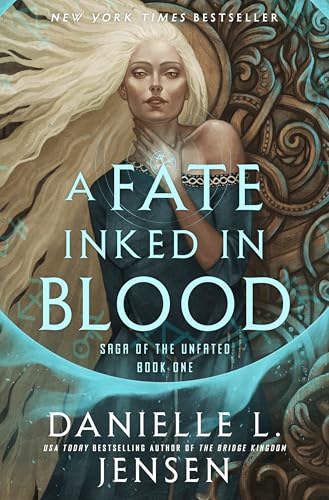
A Fate Inked in Blood
Danielle L. Jensen · Saga of the Unfated #1

Court
Tracy Wolff · Crave #4

Godly Heathens
H.E. Edgmon · The Ouroboros #1
Why the chosen one trope works
The Chosen One trope delivers something readers don't always admit they want: permission to believe the protagonist's suffering means something. It's not escapism in the cheap sense — it's the fantasy that the weight you carry was put there deliberately, that power comes with cost, and that being singled out by fate is as much a burden as a gift. The emotional core isn't "she's special"; it's the vertigo of discovering you're standing at the center of a story you didn't choose, surrounded by people who want to use you for it.
Leigh Bardugo's Shadow and Bone is the cleanest entry point for this trope — Alina's power erupts publicly and violently, and the novel is largely about what it costs her to be claimed by institutions that see her as a weapon. Sarah J. Maas takes the trope somewhere rawer in Heir of Fire, stripping Celaena of her identity entirely before letting her rebuild on her own terms; it's less about being chosen and more about surviving the choosing. Victoria Aveyard's Red Queen uses it to interrogate class and betrayal — Mare's "specialness" is a political accident that nearly destroys her, which gives the trope some welcome cynicism.
Chosen One romantasy — your questions
Which book is the best starting point if I'm new to chosen one romantasy?
Shadow and Bone by Leigh Bardugo is the most accessible entry. It's a tight standalone-ish first book in a trilogy, the magic system is intuitive, and Bardugo doesn't bury you in lore before you care about the characters. Cinder by Marissa Meyer is an equally good pick if you want lighter stakes and a sci-fi-fairy-tale blend — it's a fast read with a propulsive plot and almost no spice, so it works for a wide range of readers.
Which of these books are the spiciest?
Empire of Storms by Sarah J. Maas is the spiciest on this list at 4/5, with explicit scenes that are clearly earned by that point in the Throne of Glass series. Kingdom of Ash comes in at 3/5 — still steamy but weighted more toward emotional payoff given it's the series finale. The rest of the list (Shadow and Bone, Heir of Fire, Cinder, Ninth House, Red Queen, Shatter Me) are all at 1/5 — romantic tension, longing, and slow burns, but nothing explicit.
Which of these are standalones and which require reading a series?
None are true standalones, but some starting points work better than others. Cinder (The Lunar Chronicles #1) and Shadow and Bone (Shadow and Bone #1) both function as satisfying first books with contained arcs. Red Queen and Shatter Me also open their respective series with enough resolution to feel complete. Ninth House is technically a series opener but reads closer to a standalone mystery novel. Heir of Fire, Empire of Storms, and Kingdom of Ash are deep into the Throne of Glass series (books 3, 5, and 7 respectively) — reading them out of order will spoil major character arcs.
What separates a great Chosen One story from a generic one?
The best versions complicate the premise. In Ninth House, Bardugo makes Galena's "gift" a history of trauma she'd have traded away in a heartbeat — the power isn't empowering, it's violating. In Heir of Fire, Maas spends most of the book making Celaena face how badly she's failed before she earns her agency back. The trope goes flat when the protagonist accepts her destiny smoothly and the narrative treats specialness as inherently deserved. The books on this list that resonate longest are the ones where being chosen feels like a trap as much as a gift.