Romantasy trope
Best Arranged Marriage Romantasy Books
A match made by others that the leads must live inside.

The Kingdom of Copper
S.A. Chakraborty · The Daevabad Trilogy #2

Shield of Sparrows
Devney Perry

Six Crimson Cranes
Elizabeth Lim · Six Crimson Cranes #1

Eidolon
Grace Draven · Wraith Kings #2
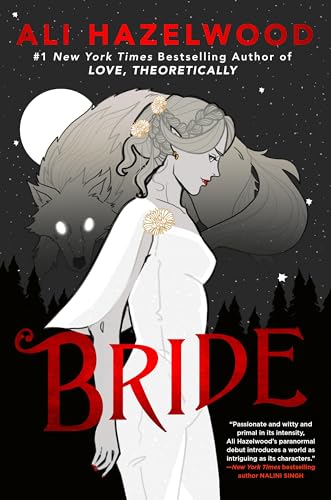
Bride
Ali Hazelwood · Bride #1

To Snap a Silver Stem
Sarah A. Parker · Crystal Bloom #1

Radiance
Grace Draven · Wraith Kings #1

The Bridge Kingdom
Danielle L. Jensen · The Bridge Kingdom #1

To Carve a Fae Heart
Tessonja Odette · Entangled with Fae #1

A Dance with the Fae Prince
Elise Kova · Married to Magic #2

The Winter King
C.L. Wilson · Weathermages of Mystral #1

The Wrath and the Dawn
Renee Ahdieh · The Wrath and the Dawn #1

A Fragile Enchantment
Allison Saft

The Hurricane Wars
Thea Guanzon · The Hurricane Wars #1

The Kiss of Deception
Mary E. Pearson · The Remnant Chronicles #1

Queen of Myth and Monsters
Scarlett St. Clair · Adrian X Isolde #2

A Deal with the Elf King
Elise Kova · Married to Magic #1

King of Battle and Blood
Scarlett St. Clair · Adrian X Isolde #1
Why the arranged marriage trope works
The arranged marriage trope isn't really about the arrangement — it's about two people stuck in enforced proximity, stripped of the usual courtship rituals, and forced to negotiate trust before they've earned it. Readers come back to it because it compresses the emotional timeline: resentment and tenderness live in the same room from page one. There's no slow build to the first real conversation. Instead you get the ache of sleeping next to a stranger, the moment one of them does something unexpectedly kind, and the particular terror of realising you might actually want this thing you never asked for.
Ali Hazelwood's Bride drops a vampire heroine into an arranged match with a werewolf Alpha, then dismantles the power imbalance from the inside — dry humour masking genuine emotional stakes. Danielle L. Jensen's The Bridge Kingdom makes the marriage a political trap on both sides, turning the heroine into a spy against a husband who may be the most dangerous man she's ever met, or the only honest one. Renée Ahdieh's The Wrath and the Dawn re-clothes Scheherazade in Mongol-era Khorasan silk and asks what it costs a girl to outlive grief by becoming indispensable to the man who caused it.
Arranged Marriage romantasy — your questions
Which arranged marriage romantasy should I read first if I'm new to the trope?
Start with The Bridge Kingdom by Danielle L. Jensen. It's a tight standalone (first in a duology, but wholly satisfying on its own), the arranged marriage is central rather than incidental, and Jensen keeps the tension alive through shifting loyalties rather than misunderstandings. If you want something with a modern, conversational voice instead, Bride by Ali Hazelwood is a faster entry point — same emotional beats, more banter.
Which of these books are the spiciest?
Bride by Ali Hazelwood tops the list at 4/5 — explicit scenes that still serve the emotional arc. The Bridge Kingdom and Radiance by Grace Draven both sit at 2–3/5: sensual, slow-burn, and satisfying without being graphic. The Wrath and the Dawn, Six Crimson Cranes, The Kiss of Deception, and The Kingdom of Copper are all closer to 1/5 — the romance is the engine, but the heat stays mostly off-page.
Which titles are standalones and which are series starters?
Bride is a standalone. Radiance is also effectively standalone (its sequel follows different characters). The others are series openers: The Bridge Kingdom leads into The House of Nameless (duology); The Wrath and the Dawn continues in The Rose and the Dagger; Six Crimson Cranes has a sequel, The Dragon's Promise; The Kiss of Deception is book one of the Remnant Chronicles trilogy; A Deal with the Elf King kicks off a trilogy; and The Kingdom of Copper is book two in the Daevabad Trilogy — read The City of Brass first.
What separates a great arranged marriage romantasy from a mediocre one?
The best ones make the external obligation genuinely binding — there has to be a real reason the characters can't just leave. Then they use that captivity to reveal character rather than manufacture drama. Radiance does this quietly: Ildiko and Brishen are each other's social misfits in their respective cultures, and the marriage forces them to build friendship before anything else. The Kingdom of Copper works because the match carries political consequences that echo across 700 pages. When the arrangement feels like a thin excuse for proximity rather than a structural constraint with teeth, the trope falls flat.