Rain Sounds For Sleeping Unlock Deeper Rest Tonight
Discover how rain sounds for sleeping can quiet your mind and mask disruptive noise. This guide explores the science, types, and best practices for deep rest.
Featured story

The Legend Of Midsummer's Eve
TheOtherLand · 2hr 49min
Join us as Aileen's twilight song unknowingly crosses the veil, capturing the attention of the Fairy King, Finnbhear of the Tuatha De Dannan. Follow her devoted husband, Conor, as he braves the perilous path into the heart of the Otherworld itself, facing impossible trials fueled by unwavering love and courage.
Using rain sounds for sleeping is such a popular way to find better rest, and for good reason. Their steady, gentle noise creates a kind of sonic blanket for your mind.
This natural soundscape smooths over the sharp edges of sudden, jarring noises—think of things like late-night traffic or a neighbor's barking dog. When those sounds are softened, your brain can finally let go and sink into deeper, more restorative sleep.
How Rain Sounds Create Your Personal Sleep Sanctuary
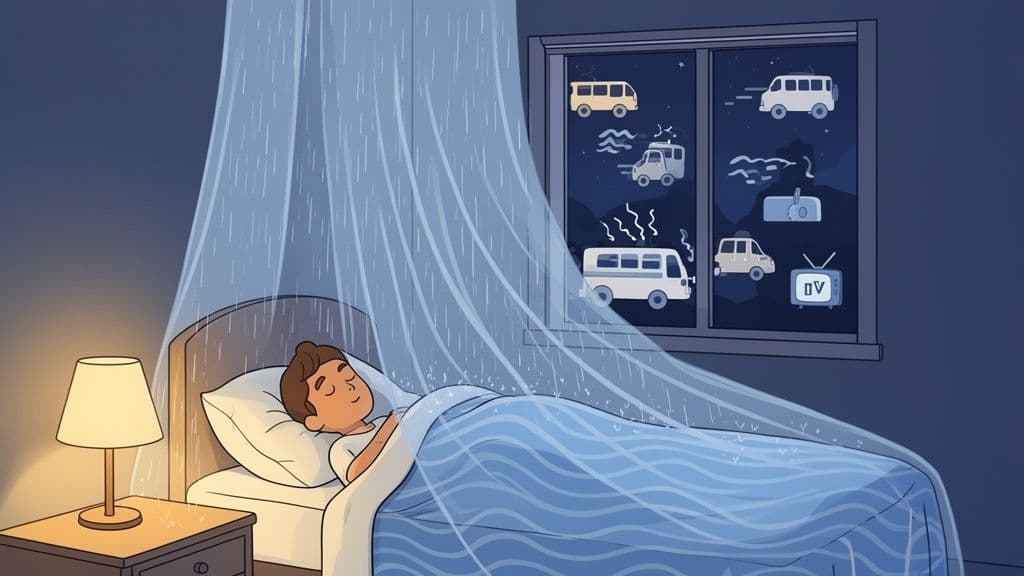
Have you ever wondered why the gentle patter of rain against a window feels so profoundly calming? It's more than just a cozy feeling. Your preference for rain sounds is actually grounded in some pretty fascinating science.
These natural sounds work by creating a consistent and predictable auditory environment, which sends a powerful signal of safety to our primal brain.
Think of it like this: complete silence can actually put your senses on high alert. Every creak of the floorboards or distant siren gets magnified, triggering a subtle stressThink of it like this: complete silence can actually put your senses on high alert. Every creak of the floorboards or distant siren gets magnified, triggering a subtle stress response that keeps you from fully relaxing. Rain sounds fill that void with a soothing, non-threatening hum.
The Power of Sound Masking
This phenomenon is known as sound masking. The steady rhythm of rainfall raises the baseline noise level in your room, which cleverly makes those sudden, disruptive sounds far less noticeable. A car door slamming outside is much less likely to startle you when it’s blended into the gentle wash of a downpour.
This sonic curtain allows your nervous system to finally switch from "vigilance" mode to "rest" mode.
The core benefit of using rain sounds for sleeping is their ability to create a stable soundscape. This predictability tells your brain it's safe to let down its guard, paving the way for uninterrupted sleep cycles.
This simple yet effective tool for better sleep has grown from a niche wellness practice into a massive market. The specialized industry for digital sleep-sound apps, where rain tracks are a top choice, was valued at approximately $1.93 billion in 2024. That number reflects a huge shift in how we approach our nightly rest. You can explore more about the growth of the sleep aids market on PrecedenceResearch.com.
Ultimately, weaving rain sounds into your bedtime routine offers a few key benefits:
Masks Disruptive Noises: It effectively drowns out unpredictable sounds that can easily disturb light sleepers.
Calms the Nervous System: The predictable, gentle pattern helps reduce feelings of stress and anxiety.
Signals Safety to the Brain: It taps into an instinctual response, associating the sound with shelter, security, and peace.
The Science Of Sound That Lulls Your Brain To Sleep
To really get why rain sounds for sleeping work so well, we have to look at how our brains process sound in the first place. The steady, gentle rhythm of rainfall does more than just sound nice—it actively changes what's happening inside your head, guiding you from a state of busy alertness toward deep, peaceful rest.
It all comes down to a specific kind of sound called pink noise. You've probably heard of white noise, which is that sharp, static-like hiss that contains all frequencies at the same intensity. Pink noise, however, is what you find all over nature in sounds like steady rain, rustling leaves, or a flowing river. It’s different because it's more balanced; the lower frequencies are a bit louder, which our ears hear as a softer, deeper, and far less jarring sound.
This natural balance is the secret. While the harshness of pure white noise can sometimes be a little grating, the gentle hum of pink noise is incredibly soothing.
How Pink Noise Calms Your Brainwaves
When your mind is racing after a long day, buzzing with thoughts and to-do lists, your brainwaves are fast and chaotic. Listening to the steady pattern of pink noise from a rainstorm helps calm that chaos down. Your brain, in its amazing way, starts to sync up with the consistent, predictable rhythm of the rain. This process encourages a natural shift toward the slower, simpler brainwave patterns associated with relaxation and the first stages of sleep.
It doesn't force your brain to shut down. Instead, it offers a gentle, non-threatening sound to focus on, which allows all those distracting thoughts and nagging anxieties to just... fade away.
The consistent, yet subtly varied, nature of rain sounds gives an anxious mind a safe place to rest. It reduces brainwave complexity, making the transition from wakefulness to sleep feel smoother and more natural.
This is a core idea behind many forms of relaxation. If you're curious about how other sounds affect the mind, you can dive deeper in our guide to sound therapy for relaxation. The goal is always to create an environment where your brain feels secure enough to let go of its daytime watchfulness.
Lowering Stress Hormones Naturally
Beyond just brainwaves, rain sounds can trigger a powerful response in your body. The predictable, non-threatening sound of rainfall signals safety to the most ancient, primal parts of our brain. Think back through human history: the sound of rain often meant that predators were less active and it was a good time to take shelter and rest.
This deep-seated feeling of security helps your body dial down its production of cortisol, the main stress hormone. When cortisol levels are high, you feel alert and anxious, making it almost impossible to fall asleep. By wrapping you in a calming auditory blanket, rain sounds help to naturally quiet this stress response.
The calming effect of rain sounds is a great first step, and understanding how to reduce cortisol levels naturally can give you even more tools for better sleep and well-being. This biological shift is what prepares your body for deep, restorative sleep, creating a state of calm from the inside out.
Finding Your Perfect Rain Soundscape
Just like no two storms are exactly the same, the world of rain sounds for sleeping is full of different textures and moods. Finding the right soundscape is a personal journey, a bit like hunting for the perfect pillow. It's all about matching the audio to your unique sleep needs and whatever challenges your bedroom environment throws at you.
Let's be clear: not all rain is created equal. The sound you'll find most relaxing really depends on your sensitivity to noise and what your mind is doing at bedtime. A light sleeper in a quiet apartment might find a gentle drizzle deeply calming. But if you're living on a busy street, you'll probably need a much heavier downpour to drown out the traffic.
Matching The Sound To Your Needs
The best way to figure out what works is simply to experiment. Think of it like tuning an old radio—you’re trying to find the clearest, most soothing station for your brain. The goal is a sound that’s just interesting enough to pull your attention away from distracting thoughts, but gentle enough that it eventually fades into the background.
To get you started, here are a few common rain sound profiles:
Gentle Drizzle on a Windowpane: This sound is light, crisp, and has a higher frequency. It’s perfect for those who find deeper rumbles a bit unsettling or for nights when you just need a soft auditory blanket to quiet a restless mind.
Steady Forest Downpour: This one is fuller and more consistent, providing excellent sound masking for moderate external noises. The mix of falling water hitting soft foliage creates a lush, immersive environment that can feel incredibly cocooning.
Distant Thunder and Rain: For some, the low, rolling rumble of a far-off storm is incredibly grounding. It adds a deep, bass-heavy layer that can be profoundly relaxing, almost like it’s signaling that you’re safe and sheltered inside.
This decision tree can help you visualize how different mental states might point you toward certain types of sounds.

The key takeaway here is that your ideal sound is often situational. What works when you're feeling stressed might be different from what your mind needs on a calm night to simply drift off.
To make it even easier, think about your sleep style and the kind of noise you're trying to block. This table breaks down which rain sounds might be your best bet.
Choosing The Right Rain Sound For Your Sleep Style
Type Of Rain Sound | Sound Characteristics | Best For Masking Noise | Ideal Sleeper |
Light Drizzle | High-frequency, crisp, gentle, non-intrusive | Low | Light sleepers in quiet environments; sensitive ears |
Steady Rain on a Tent | Mid-frequency, consistent, with a soft pattering texture | Medium | Those who need a consistent buffer against mild noises |
Heavy Downpour | Full-spectrum, dense, powerful, and immersive | High | Deep sleepers or those in noisy urban settings |
Rain with Distant Thunder | Low-frequency rumbles mixed with steady rain | High | Individuals who find deep, bass sounds grounding |
Ultimately, finding the right sound is less about a perfect formula and more about what feels right to you.
Your perfect rain sound is the one your brain accepts as part of the environment. It shouldn't demand attention but should instead provide a stable, predictable backdrop that allows your nervous system to fully relax and let go.
The right soundscape can transform your bedroom into a true sanctuary. It’s a personal choice that gives you control over your auditory world, turning it into the perfect stage for deep, restorative rest.
And if you're curious about what lies beyond the sound of rain, you can learn more about other calming nature sounds and how they can fit into your sleep routine. The journey to better sleep often starts with just listening.
Building Your Nightly Rain Sound Ritual
So, you've found a rain soundscape you love. That's a great first step, but the real magic begins when you weave it into a nightly ritual. This is about more than just hitting "play." It's about creating a powerful, multi-sensory signal that tells your brain the day is officially over and it's time for rest.
A solid routine becomes a reliable cue for relaxation. The foundation, of course, is high-quality audio. Make sure you're using apps or dedicated sound machines that offer seamless, non-looping tracks. Nothing yanks you out of a sleepy state faster than a jarring break or an obvious repetitive pattern. The goal is a sound that feels as natural and endless as a real storm.
This isn't some niche practice anymore, either. People of all ages are catching on. Market intelligence shows that while younger adults (18–44) are big on sleep apps, older adults often go for dedicated bedside devices. With the sleep-sound app market revenue pegged at USD 1.93 billion in 2024, it's clear people are willing to invest in their rest. You can dig into more stats about the sleep aids market on MarketDataForecast.com.
Fine-Tuning Your Sound Environment
Once you've got your sound source, the next piece of the puzzle is volume. It's a delicate balance. The sound should be just loud enough to mask sudden noises like a door closing, but not so loud that it becomes a distraction itself. Think of it as a gentle sonic blanket, not a heavy curtain.
Next, play around with a timer. While some people like having the sound run all night long, a timer that gently fades the rain out after 60 or 90 minutes can be just as effective. This lets your brain drift off into deep sleep without needing constant audio stimulation for the entire night.
The most effective ritual is one your brain can predict. By pairing the same sound with the same calming activities each night, you build a powerful sleep association that only gets stronger over time.
Pairing Rain with Other Sleep Habits
To really supercharge your routine, layer your rain soundscape with other proven sleep hygiene practices. This creates a cascade of calming signals that get both your mind and body ready for deep, restorative rest.
Here’s a simple blueprint to get you started:
Dim the Lights: About 30-60 minutes before bed, start lowering the lights. This is a classic trick to signal your brain to start producing melatonin, the hormone that makes you sleepy.
Put Away Screens: The blue light blasting from our phones and tablets actively suppresses melatonin. Make a hard rule to disconnect at least half an hour before you plan to sleep.
Start the Rain: Cue up your chosen rain sound at a low, comfortable volume. Let it become the background music for your wind-down period.
Engage in a Quiet Activity: Pick up a book, do some light stretching, or jot down your thoughts in a journal. The key is to avoid anything mentally stressful or overly stimulating.
By layering these habits, you create a powerful sequence that tells your body it’s time to shut down. For more ideas on crafting your end-of-day routine, check out our guide to creating a relaxing evening routine. This is how a simple sound transforms into a cornerstone of better sleep.
Common Mistakes To Avoid With Sleep Sounds
Using rain sounds for sleeping can be a total game-changer, but a few common missteps can turn a helpful tool into just another distraction. To get the most out of your soundscape, you'll want to sidestep a few pitfalls that can accidentally disrupt your rest instead of deepening it.
One of the biggest errors is settling for low-quality audio. Many free tracks you find online are built on short, obvious loops with noticeable breaks or repetitive patterns. Your brain is incredibly good at spotting these little inconsistencies, and hearing that same digital "blip" every thirty seconds is a surefire way to pull you right out of a relaxed state.
On a similar note, watch out for rain tracks that include sudden, jarring elements like a thunderclap that sounds like it's right outside your window. While a distant, gentle rumble can be soothing, an unexpected crash of thunder can trigger your startle response—doing the exact opposite of what you want.
Fine-Tuning Your Volume And Duration
Another critical mistake? Setting the volume way too high. The goal is to create a gentle auditory blanket, not a roaring wall of sound. Your soundscape should be just loud enough to mask annoying noises but quiet enough to fade into the background. If you can still distinctly hear every drop of rain after a few minutes, it’s probably too loud.
Then there's the debate over playing sounds all night versus using a timer. While playing a track on a continuous loop is great for light sleepers in noisy environments, it's not always necessary for everyone.
A common misconception is that more is always better. In reality, the ideal sound environment is one that supports your transition to sleep and then allows your brain to rest deeply without constant stimulation.
While plenty of people swear by continuous sound, some sleep scientists advise a bit of caution. Research shows that while sounds can definitely help you fall asleep, indefinite nightly exposure might affect your ears' natural recovery processes and could disturb certain sleep stages for some individuals. To dive deeper into the nuances of this topic, you can read more on sleep sound science.
To really dial in your approach, try these best practices:
Prioritize High-Fidelity Audio: Always opt for seamless, high-quality recordings. You want something without jarring loops or sudden, loud noises that can snap you back to full alertness.
Set a Gentle Volume: Keep the sound at a low, comfortable level. Think of it as background ambiance, not the main event.
Experiment with a Timer: Give a timer a shot. Try setting it to fade the sound out after 60-90 minutes. This gives you the sound-masking benefit as you're drifting off but allows for a quieter environment during your deepest sleep cycles.
By steering clear of these simple mistakes, you can make sure your rain sounds remain a powerful and effective ally in your quest for better rest.
Your Action Plan For Better Sleep With Rain Sounds
Alright, let's bring all this theory into the real world. By now, you know that rain sounds for sleeping aren't just some pleasant background hum. They're a genuine, science-backed tool for tuning out distractions, quieting a busy mind, and building the peaceful sleep sanctuary you deserve.
Your journey to more restorative nights can start tonight. It’s really just about taking back control of your sleep environment and giving yourself a simple, effective ritual to lean on. The whole point is to build a routine that signals safety and calm to your brain, making the slide into sleep feel natural and effortless, not forced.
Your Quick-Start Checklist
Getting started is the easy part. Just focus on these key things to build a powerful and consistent nightly routine that invites deep, restorative rest.
Choose High-Quality Audio: Go for seamless, non-looping rain sounds. Any obvious breaks or repetitive patterns can jolt you right out of that relaxed state and mess with your sleep cycle.
Set the Perfect Volume: You're looking for the sweet spot here. Your rain soundscape should be just loud enough to mask that annoying street noise but quiet enough that it fades into the background.
Integrate It Into a Routine: Don't just press play and hope for the best. Pair your rain sounds with other good sleep habits, like dimming the lights and putting away your phone. This creates a powerful signal for your brain that it’s time to wind down.
Experiment with a Timer: See if having the sound gently fade out after 60-90 minutes works for you. This can help you drift off without needing the sound to play all night long.
Rain sounds create a predictable environment where your nervous system can finally let go of its daytime vigilance. This consistency is the foundation of a truly restorative night's sleep.
While rain sounds are an incredible tool, it's also important to address any deeper sleep issues you might be facing. For anyone really struggling to get the rest they need, we recommend understanding the causes of insomnia and its remedies. When you combine these strategies, you're not just hoping for better sleep—you're building a complete approach to achieve it.
A Few Lingering Questions About Rain Sounds
If you're still wondering about the best way to use rain sounds for sleeping, you're in good company. It's smart to ask how to make these calming sounds a genuine tool for better rest, not just another nighttime distraction. Let’s clear up some of the questions that pop up most often.
We'll tackle everything from whether you should listen all night to how rain sounds can help with specific conditions like tinnitus and anxiety, so you can press play with confidence.
Is It Bad to Sleep With Rain Sounds All Night?
Not at all—it really comes down to what works for you and your sleep environment. For many people, especially those in noisy apartments or busy neighborhoods, having a continuous soundscape playing all night is a lifesaver. It acts like a protective blanket of sound, preventing sudden car alarms or loud neighbors from jarring you awake.
On the other hand, some sleep experts suggest setting a timer for 60-90 minutes. The idea here is to let the rain guide you into the deeper stages of sleep, after which your ears can enjoy the quiet. The best way to know? Try both. See what leaves you feeling the most refreshed when your alarm goes off.
Think of rain sounds as a tool to help you fall asleep and stay asleep. Whether that means all-night playback or a gentle fade-out is a personal call, based entirely on what your nervous system and your bedroom need.
What Is The Difference Between Pink Noise and White Noise?
Imagine the difference between a soft, rolling waterfall and the sharp static from an old, untuned TV. Both can cover up other noises, but they feel completely different.
White Noise: This is the TV static. It contains every frequency we can hear, all at the same intensity. It's a powerful sound-masker, but some people find it a bit harsh or tinny.
Pink Noise: This is the waterfall—and it’s much closer to what you hear in a natural rainstorm. Pink noise emphasizes the lower, deeper frequencies, creating a softer, more balanced sound that most people find far more soothing and less jarring for sleep.
For most ears, pink noise just feels more natural and is less likely to become fatiguing after listening for a while.
Can Rain Sounds Help With Tinnitus or Anxiety?
Yes, for many people, rain sounds can be a huge relief for both conditions. If you experience tinnitus, the constant, broad-spectrum sound of rain can gently mask that internal ringing or buzzing. In a quiet room where the ringing feels loudest, a rainscape can make it far less noticeable and intrusive.
When it comes to anxiety, the predictable, steady rhythm of a rainstorm is incredibly grounding for a racing mind. There are no sudden shifts or demanding lyrics—just a non-threatening, calming sound. This helps lower stress hormones and creates a feeling of safety, making it much easier to let go of the day's worries and drift off.
At Otherworld Tales, we believe in the power of sound to transport you to a place of rest. Our collection of fantasy and mythology-based bedtime stories for adults allows you to layer in the perfect rain soundscape, creating a personalized ritual that guides you into a deep, restorative sleep. Discover your next favorite story and build your ideal sound mix at Otherworld Tales.