The Ancient Mythology Behind Romantasy's Most Addictive Tropes
Every romantasy trope you're obsessed with - the morally grey protector, the soul bond, forced proximity, the stolen-bride arc - was a myth first. Here's where they came from, what they meant, and why they still wreck you thousands of years later.
Featured story
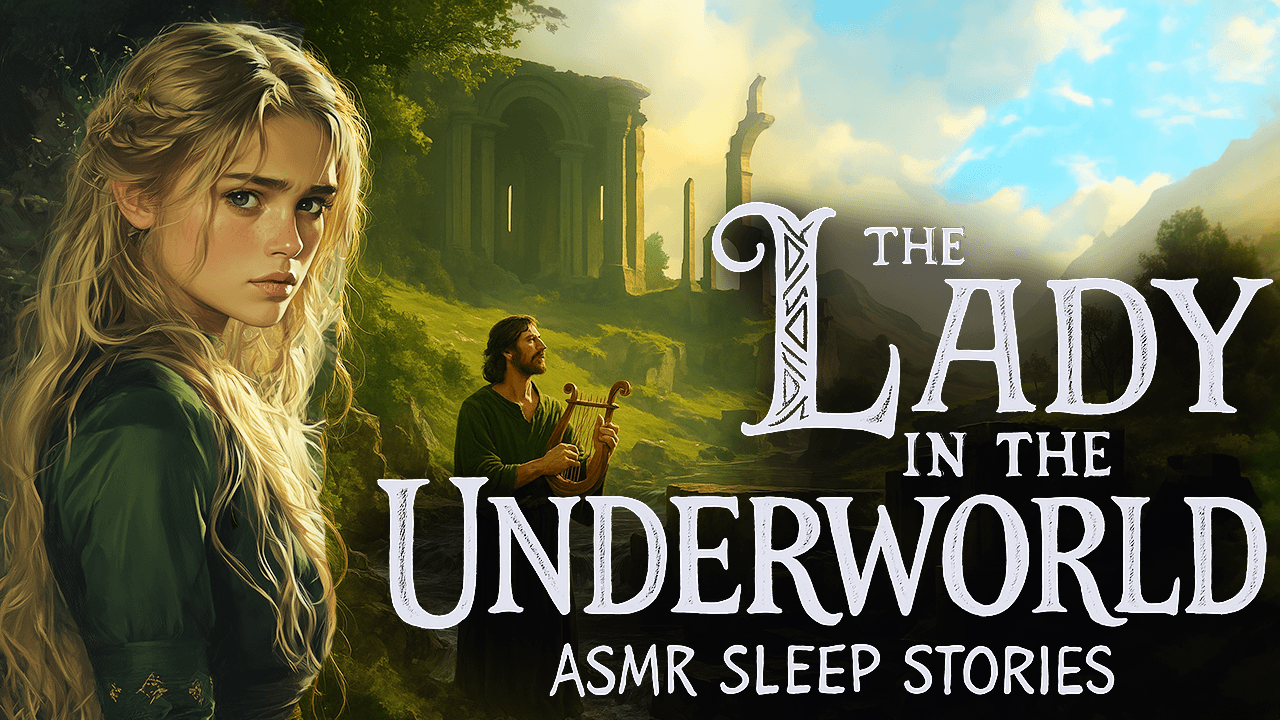
Orpheus & Eurydice
TheOtherLand · 1hr 48min
Step into the shadowed glades of ancient Greece, where love echoes beyond the veil of life and death in the hauntingly beautiful tale of Orpheus and Eurydice. Tonight, let the music of legend carry you deep into the heart of myth — where Orpheus, the gifted lyre-player whose songs could charm the stars, dares to journey into the underworld for the love of his life.
Every trope you love was a myth first.
The brooding, morally grey love interest who'd burn the world to keep one person safe? That's Hades. The soul bond that ties two people together before they've chosen each other? That's the red thread of fate, threaded through Chinese, Japanese, and Korean mythology for over a thousand years. The forced proximity arc where enemies become something more dangerous than lovers? That's Persephone in the Underworld, and it's been making readers feral since ancient Greece.
Romantasy didn't invent these patterns. It inherited them — from myths that survived millennia because they tap into something fundamental about desire, power, and the terrifying vulnerability of love. When Sarah J. Maas writes Rhysand or Carissa Broadbent writes Raihn, they're channelling archetypes that existed long before the fantasy romance shelf at Waterstones.
This isn't a coincidence. It's the reason the genre works.
Here's where romantasy's most addictive tropes actually come from — and why understanding the mythology makes the books hit even harder.
The Morally Grey Protector: Hades and the Lord of the Underworld
The archetype: a powerful figure who rules a dark domain, feared by everyone, tender only toward one person.
In Greek mythology, Hades is the god nobody wants to visit and everybody misunderstands. He didn't choose the Underworld. It was assigned to him by lot when he and his brothers divided the cosmos. He governs the dead not out of cruelty but out of duty. He's the only Olympian who doesn't scheme, doesn't cheat (in most versions), and doesn't start wars for sport. He simply rules, quietly and alone, in a kingdom nobody else would take.
Then Persephone arrives, and everything shifts.
The mythology gives us the template that romantasy readers recognise instantly: a man made of darkness and responsibility who discovers something worth more than control. His power doesn't soften — it redirects. He becomes dangerous for someone rather than to someone.
Rhysand in A Court of Mist and Fury is this archetype distilled. Ruler of a dark court, feared across the continent, savage when threatened — but the savagery bends toward protection. Cardan in Holly Black's The Folk of the Air wears cruelty like armour and only removes it in private. The Darkling in Leigh Bardugo's Shadow and Bone is the version where the archetype goes wrong — the protector who couldn't stop being the predator. Each of them is a Hades figure, reworked for a new story but running the same mythological code underneath.
What makes this archetype so effective is the promise it carries: you could be the exception. The god of the dead doesn't soften for anyone — except for her. That selectivity is the engine. It's not that he's capable of love. It's that his love is so rare it functions as proof of the beloved's worthiness. Mythology understood this thousands of years ago. Romantasy readers feel it on every page.
The Soul Bond: The Red Thread of Fate
The archetype: two people connected by forces beyond their choosing, tied together before they've decided if they even want to be.
The red thread of fate appears across East Asian mythology in various forms. In Chinese tradition, the deity Yuè Lǎo ties an invisible red thread around the ankles of those destined to meet, regardless of time, place, or circumstance. In Japanese folklore, the thread is tied around the little finger — the unmei no akai ito. The thread can stretch and tangle but never break.
The critical detail: neither person chose the connection. It was imposed by divine will. The thread doesn't care about compatibility, preference, or timing. It simply binds.
This is exactly what makes the soul bond trope in romantasy so devastating. The mating bond in Maas's ACOTAR series, the blood bond in Broadbent's Serpent and the Wings of Night, the magical tether in dozens of fae romances — none of them are chosen. They're discovered. The characters must decide what to do with a connection that already exists, and that decision is where the tension lives.
The mythology adds a dimension most readers feel without articulating it: the soul bond raises the question of fate versus free will. If the bond chose them, did they choose each other? Is the love real if it was fated? Every romantasy that uses this trope is, at its core, retelling an ancient philosophical debate about whether destiny creates love or love creates destiny. The thread connects them. The story is about whether they'd choose the connection if the thread were cut.
Norse mythology offers a different angle on the same idea. The concept of wyrd — fate as a web being woven in real-time by the Norns — suggests that destiny isn't a fixed line but a pattern being made. Every choice alters the weave. The soul bond in this framing isn't a prison. It's a thread in a larger tapestry, and the characters' choices determine what the tapestry depicts. You can feel this version in stories where the bond evolves based on the characters' actions — tightening when they're close, punishing when they resist, changing its nature as the relationship changes.
Forced Proximity and the Captive Bride: Persephone in the Underworld
The archetype: one character taken or trapped into the domain of another, where proximity turns danger into desire.
The Persephone myth is the foundational forced-proximity romance in Western storytelling. She's taken to the Underworld. She's in Hades' domain, surrounded by his power, cut off from everything she knows. In most modern retellings, the story dwells on what happens during the captivity — how proximity to someone who frightens you becomes proximity to someone who fascinates you, and eventually to someone you can't imagine leaving.
The pomegranate seeds are the genius of the myth. Persephone eats six seeds in the Underworld, which binds her to return for six months every year. But the myth is deliberately ambiguous about whether she ate them by accident, by coercion, or by choice. That ambiguity is the entire trope. Did she choose to stay? Was she tricked into staying? Or did she choose to eat the seeds because she wanted a reason to come back?
Romantasy runs on this ambiguity constantly. Feyre in the Spring Court, Poppy in From Blood and Ash, every heroine trapped in a fae lord's castle or a shadow king's palace — they're all Persephone, and the reader is always asking: does she want to leave? The genre has gotten increasingly sophisticated about this, leaning away from pure captivity and toward what might be called chosen entrapment — the heroine who could leave but doesn't, who stays not because the door is locked but because she's not finished yet.
The captive-bride variant appears across global mythology. In Hindu mythology, Sita's abduction by Ravana in the Ramayana drives the epic's central conflict. In Irish mythology, the Tuatha Dé Danann stories are full of mortals taken to the Otherworld who find time moves differently there — a year in the fairy realm is a century in the mortal world. The common thread is liminality: the captive exists between worlds, between identities, between who they were and who they're becoming. Romantasy uses this liminal space to stage transformation. The heroine who enters the dark lord's palace is never the same person who leaves it.
The Protector Who Cannot Confess: Enkidu, Patroclus, and Love as Action
The archetype: a figure who demonstrates love through sacrifice, protection, and presence rather than declaration.
Not every mythological love is spoken aloud. Some of the most powerful bonds in ancient literature are defined by what goes unsaid — by devotion expressed as vigilance, sacrifice, and the willingness to stand between someone and death.
In the Epic of Gilgamesh — the oldest known literary work — Enkidu is created as Gilgamesh's equal and becomes his most loyal companion. Their bond is never romantically declared in the text, but Enkidu's death drives Gilgamesh to attempt the impossible: the quest for immortality. The grief isn't performed through confession. It's performed through action so extreme it reshapes the narrative.
In Homer's Iliad, the relationship between Achilles and Patroclus follows the same pattern. Patroclus dies wearing Achilles' armour — literally taking his place in danger — and Achilles' response is a rage so total it changes the course of the Trojan War. No love confession. Only the evidence of what love does when it loses.
Romantasy has absorbed this archetype deeply. The love interest who won't say "I love you" but will step between the heroine and a blade. Who won't name what they feel but will burn themselves alive to keep her safe. Who shows tenderness as vigilance — standing guard, offering choices in a voice that sounds like a command until you realise they're trying not to beg.
This is arguably the most emotionally effective archetype in the genre because it exploits a specific readerly desire: the wish to be loved by someone whose love is evident in everything except words. The reader becomes a detective, scanning every gesture, every sentence, every act of protection for proof of a feeling the character refuses to name. That detective work — that active participation in decoding love — is what creates obsession. The myth teaches the pattern. The genre makes it interactive.
The Trickster and the Bargain: Loki, the Fae, and Deals with Devils
The archetype: a cunning, charismatic figure who offers exactly what you want at a price you don't yet understand.
Every mythology has its trickster. Loki in Norse tradition. Anansi in West African and Caribbean folklore. Coyote in Indigenous American stories. Hermes in Greek mythology, who stole Apollo's cattle on the day he was born and talked his way out of punishment. The trickster operates in the spaces between rules — bending them, exploiting them, revealing their absurdity.
In Celtic and specifically Irish mythology, the trickster energy fuses with the fae tradition to produce something romantasy has adopted wholesale: the fairy bargain. Fae deals are built on precise language and hidden consequences. You get what you asked for, never what you meant. The Tuatha Dé Danann and later folk traditions are full of mortals who bargained with the fair folk and discovered the terms were nothing like what they imagined.
This maps directly onto a specific romantasy dynamic: the love interest who offers protection, alliance, or power in exchange for something the heroine doesn't fully understand she's giving. Rhysand's bargain with Feyre Under the Mountain is the most famous modern example — a deal that looks like exploitation and turns out to be salvation, but the reader doesn't know that until much later. The bargain creates a binding that isn't a soul bond but functions like one: a contractual tether that forces proximity and creates obligation.
The genius of the trickster-bargain in romance is that it provides a narrative excuse for two people to be entangled without either of them admitting attraction. "We're together because of the deal" is easier than "we're together because we want to be," and the gap between the excuse and the reality is where tension breeds.
The Dark Forest and the Threshold: Campbell, Jung, and the Space Between
The archetype: a place of transformation where the ordinary world ends and something unknown begins.
Joseph Campbell's monomyth framework describes the hero's journey as requiring a threshold crossing — a departure from the known world into a realm of trials and transformation. Carl Jung framed this psychologically: the dark forest of fairy tales represents the unconscious, and entering it means confronting aspects of yourself you've been avoiding.
Romantasy leans into this with absolute commitment. Virtually every story in the genre involves the heroine crossing a threshold — entering a new court, a hidden realm, a cursed forest, a shadow city — where the rules of her old life don't apply. The threshold crossing isn't just a plot device. It's the mythological signal that transformation is about to begin.
The dark forest specifically appears across European folklore as the liminal space where identity dissolves and reforms. In the Brothers Grimm, the forest is where children become heroes, where beasts become princes, where the powerless discover power. In romantasy, the forest becomes the fae realm, the Underworld court, the shadow kingdom — any place where the heroine is stripped of her old identity and must discover who she becomes under pressure.
The love interest is almost always native to this other realm. He belongs to the dark forest. She's entered his world. The power imbalance created by this dynamic — she's out of her depth, he's in his element — generates the tension that fuels the early chapters. As the heroine learns to navigate the new world, the power rebalances, and the romance shifts from protection to partnership. That arc — from vulnerability to competence to equality — is Campbell's hero journey with a romance engine bolted to it.
Why the Myths Still Work
These patterns survive because they're not arbitrary. They encode real psychological truths about how desire, power, and vulnerability interact.
The morally grey protector works because selectivity signals value — being chosen by someone who chooses almost no one. The soul bond works because it externalises the overwhelming feeling of connection that the characters can't yet articulate internally. Forced proximity works because it removes the option of avoidance and forces emotional confrontation. The silent protector works because it makes the reader an active participant in decoding love. The trickster bargain works because it provides a narrative structure for entanglement before either character is ready to choose it honestly.
Romantasy isn't borrowing from mythology because writers are running out of ideas. It's drawing from the same well because the well taps into something real — patterns of attraction, fear, and transformation that are as true now as they were when someone first told the story of a god who fell in love with the girl who wasn't afraid of the dark.
The next time you read a romantasy and feel something shift in your chest — the catch when the love interest steps between the heroine and danger, the ache when the bond tightens without permission, the vertigo of entering a dark court where nothing is safe — remember that you're feeling something ancient. The myth hasn't changed. The story around it has just learned new ways to tell itself.
Otherworld Tales explores the intersection of mythology, storytelling, and the fantasy worlds we can't stop returning to. If you're interested in experiencing these tropes from the inside — not reading about them but living them — we're building something new. More on that soon.