How to Reduce Stress Naturally for Deeper More Restful Sleep
Discover how to reduce stress naturally with our guide. Learn calming rituals, mindfulness, and gentle habits for lasting peace and better sleep.
Featured story

The Legend of Echtra Condla
TheOtherLand · 2hr 4min
Let us travel to the misty hills and sacred groves of ancient Ireland, where Conle, son of Finnan the Bold, encounters the radiant Otherworldly maiden, a being of beauty and mystery. She speaks of a land beyond mortal sight — a place where time flows like a gentle stream, untouched by sorrow or death. Her invitation is irresistible, but the choice is fraught with longing, loss, and the pull of destiny.
You can learn to quiet the storm inside. By weaving simple, intentional rituals into your day—things like focused breathing, gentle movement, or creating a truly restful sleep space—you can naturally lower stress. These aren't massive lifestyle overhauls. They are small, powerful practices that work by dialing down cortisol, your body's main stress hormone, helping you find that feeling of peace again.
Understanding Your Body's Response to Stress
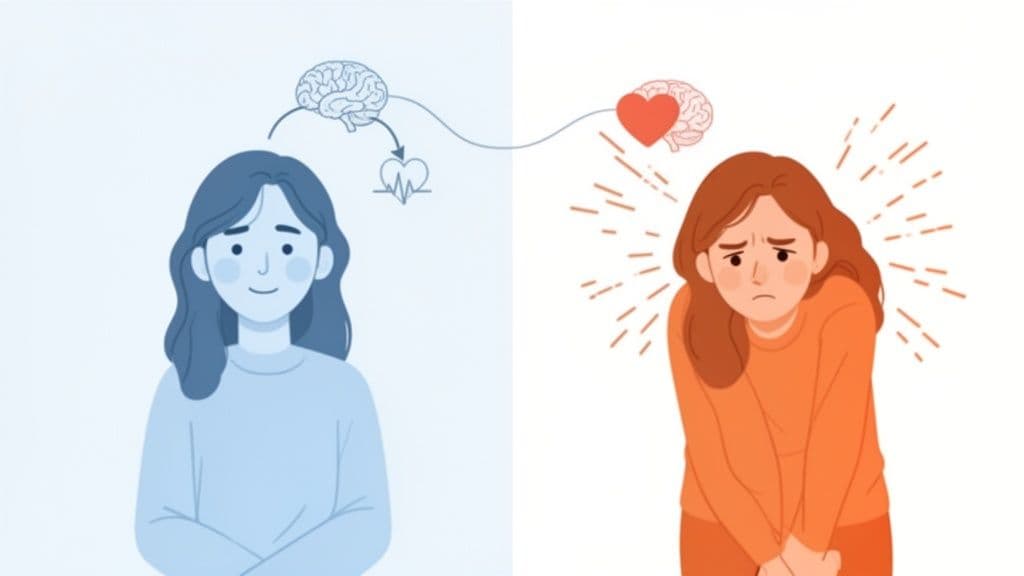
Does it ever feel like you're just running on fumes? It's a feeling so many of us know well. Juggling family, health concerns, and a to-do list that never seems to shrink can make a state of chronic worry feel... normal. If you often feel overwhelmed by it all, please know you are far from alone.
This isn't just a feeling; it’s a physical, biological reaction. When your brain senses a threat—whether it’s a real danger, a looming deadline, or just a difficult conversation you're dreading—your body kicks into survival mode. It floods your system with hormones like cortisol and adrenaline to get you ready for action.
This is your body's ancient, hardwired defense mechanism, what's commonly known as the understanding the 'fight or flight' response. It’s a brilliant system designed for short-term crises, not the slow, persistent hum of modern-day pressures.
The Problem with Chronic Stress
When that stress response switch is always flipped on, your body never gets the "all-clear" signal to stand down and rest. This is what we call chronic stress. It keeps your cortisol levels high, which can ripple out and disrupt your well-being in some very tangible ways.
Sleep gets disrupted: High cortisol messes with your natural sleep-wake cycle. You might find it impossible to drift off at night or wake up frequently, unable to get back to sleep.
Physical tension builds: That persistent headache, those tight shoulders, that ache in your neck? Stress is very often the silent culprit.
Mental fog rolls in: When your nervous system is on high alert, it's hard to concentrate. Feeling mentally scattered or having trouble focusing are common side effects.
This is a massive issue. In fact, a staggering 31% of adults in a global survey pointed to stress as the single biggest health problem in their country. This widespread concern is exactly why finding simple, natural ways to manage it has become so vital.
The beautiful truth is that you can learn to work with your body’s natural systems, not against them. By sending intentional signals of safety and calm, you can gently guide your nervous system back to a state of balance.
And that’s what this guide is all about. We’re going to walk through some simple, practical strategies that serve as a powerful antidote to a world that often feels too loud and demanding. You'll see how small rituals—from a few mindful breaths to getting lost in a calming story—can create profound, positive change.
To give you a quick look at where we're headed, here's a simple roadmap. Think of these not as more chores for your to-do list, but as small acts of kindness for yourself.
Your Roadmap to Natural Stress Relief
This table gives you a quick look at the simple yet powerful strategies we'll cover to help you find calm and restore balance.
Strategy | How It Helps You | Perfect For |
Mindful Breathing | Activates your body's relaxation response. | Instant calm anytime, anywhere. |
Muscle Relaxation | Releases physical tension you didn't know you had. | Winding down before sleep. |
Better Sleep Hygiene | Creates a sanctuary for restorative rest. | Anyone tired of being tired. |
Guided Imagery | Uses your imagination to create deep calm. | Escaping a racing mind. |
Gentle Movement | Eases stress hormones and boosts mood. | Releasing pent-up energy. |
Nourishment | Stabilizes blood sugar and supports your nervous system. | Building a foundation of resilience. |
Social Connection | Reminds you that you're not in this alone. | When you're feeling isolated. |
Each of these paths leads back to the same destination: a more peaceful, centered you. Let's start walking.
Calming Your Mind with Breathwork and Relaxation
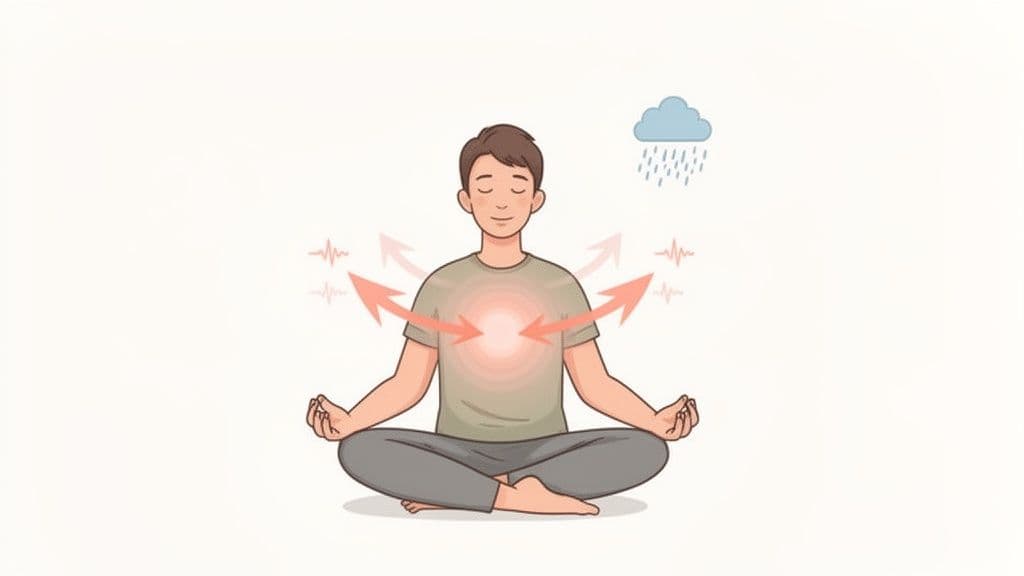
When stress sends your thoughts racing, the simplest tool to find your footing is already with you—your breath.
Intentionally slowing down your breathing is one of the fastest ways to let your nervous system know it’s safe to relax. This simple act can directly lower cortisol levels and gently guide you out of that frantic "fight or flight" state. Think of it as a brief, restorative pause in your day, not just another task on your to-do list.
It doesn’t require any special equipment or a lot of time. Just a few minutes of focused breathing can make a world of difference, grounding you in the present moment.
A Five Minute Breathing Sanctuary
Let’s try a simple five-minute breathing exercise you can do right now, whether you're sitting at your desk or getting ready for bed. The goal is to make your exhale slightly longer than your inhale, which is a powerful signal to your body to relax.
Settle In: First, find a comfortable position. You can sit upright in a chair with your feet flat on the floor, or lie down on your back. Gently close your eyes or soften your gaze.
Breathe In: Inhale gently through your nose for a count of four. Feel your belly expand as you draw the air in.
Hold: Hold the breath softly for just a moment, without straining.
Breathe Out: Now, exhale slowly and completely through your mouth for a count of six. Imagine you are gently blowing out a candle.
Repeat: Continue this cycle for five minutes. If you notice your mind wandering, just gently guide your focus back to the sensation of your breath.
To deepen this experience, try pairing it with a calming soundscape. Using the Otherworld Tales audio player to mix in the sound of gentle rain, for instance, can create an immersive sanctuary that helps quiet your mind even more effectively.
Releasing Hidden Tension with Progressive Muscle Relaxation
Beyond the mind, stress also takes up residence in our bodies. You might carry tension in your shoulders from a long day, clench your jaw while concentrating, or tighten your fists without even realizing it. Progressive muscle relaxation (PMR) is a wonderful technique that teaches you to notice and then release this physical strain.
The practice is simple: you systematically tense and then relax different muscle groups. This contrast makes you acutely aware of what physical tension feels like, which gives you the power to consciously let it go. It's an incredibly effective way to unwind before sleep.
Progressive Muscle Relaxation works on a simple principle: you cannot have a tense body and a relaxed mind at the same time. By systematically releasing physical tension, you send a powerful message of calm that ripples through your entire nervous system.
This isn't about strenuous effort; it's about mindful release. As you move through the exercise, you'll likely discover little pockets of tightness you weren't even aware of. This increased body awareness is a skill that will help you manage stress throughout your day. For even more ways to wind down, our guide to bedtime meditation for adults offers additional gentle techniques to prepare your mind and body for deep rest.
Your Ten Minute Evening PMR Ritual
This gentle sequence is designed to be done lying down in bed, making it the perfect transition into a peaceful sleep.
Toes and Feet: Curl your toes tightly for five seconds, then release. Notice the feeling of warmth as the tension just melts away.
Legs: Tense your calf and thigh muscles, pulling your feet back toward you. Hold for five seconds, then release completely.
Hands and Arms: Clench your fists and tighten your biceps. Hold, and then let your arms go limp and heavy at your sides.
Shoulders and Neck: Gently shrug your shoulders up toward your ears. Hold that tension for five seconds, then let them drop. Feel the space you've just created.
Face and Jaw: Clench your jaw, squint your eyes, and furrow your brow. Hold it, then release every single muscle in your face, letting your jaw hang slightly open.
As you finish, take a few deep, cleansing breaths. Feel the weight of your body, heavy and relaxed against your bed. This practice not only relieves physical stress but also provides a focal point for a busy mind, preparing you for a night of truly restorative sleep.
Designing a Sleep Sanctuary to Quiet a Racing Mind
A stressful day has a nasty habit of bleeding into a restless night. If you’ve ever found yourself staring at the ceiling, replaying conversations or fretting about tomorrow, you know this frustrating cycle all too well. Stress and poor sleep are tangled together, but you can absolutely break the loop by turning your bedroom from just a place you sleep into a true sanctuary for rest.
This is all about creating an environment that sends a clear signal to your mind and body: it’s safe to let go now. When you're stressed, your system is swimming in cortisol, the hormone that keeps you wired and alert. A proper sleep environment helps dial those levels back down, making it much easier to finally drift off.
It all starts with the fundamentals of your room. You'd be surprised how much simple tweaks to light, temperature, and sound can impact the quality of your rest.
Optimizing Your Environment for Deep Relaxation
Your brain is incredibly sensitive to cues from your surroundings, even when you're asleep. By fine-tuning these three key areas, you can create a space that actively encourages deep, uninterrupted sleep.
Embrace the Dark: Even a sliver of light from your phone or a streetlight can mess with the production of melatonin, your body’s natural sleep hormone. Blackout curtains or a comfortable eye mask can work wonders. It’s also a good idea to cover up any glowing clocks or charging lights.
Find Your Cool Spot: A cooler room is hands-down better for sleep. Most experts point to a sweet spot between 60 and 67 degrees Fahrenheit (15 to 19 degrees Celsius). Why? A cooler environment helps your body’s core temperature drop, which is a natural trigger for it to get ready for rest.
Curate Your Soundscape: A sudden, unpredictable noise can jolt you right out of a deep sleep. But a consistent, gentle sound? That can actually mask those disruptions and soothe a busy mind. This is where a tool like the Otherworld Tales audio player becomes a game-changer. You can lay down a steady backdrop of calming sounds—like soft rain or a gentle wind—to create a peaceful bubble that blocks out the outside world. To learn more about how specific sounds can help, check out our guide on sound therapy for relaxation.
These environmental fixes lay the groundwork for better sleep. They get the physical space ready, but quieting a mind that won't shut up often requires another layer of support.
A racing mind at bedtime is like a train with no station; it just keeps going. The key isn't to force the train to stop, but to gently guide it onto a different, more peaceful track.
This is where the unique power of a good story comes into play.
The Gentle Power of Adult Bedtime Stories
When your mind is stuck on a worry loop, telling it to "just stop thinking" is about as effective as telling water not to be wet. You need to give it something else to focus on—something engaging enough to capture its attention but gentle enough not to wake it back up. This is the magic behind bedtime stories for adults.
Listening to a narrative, like one of the fantasy tales from Otherworld Tales, kicks off a process a bit like cognitive shuffling. Instead of chewing on your own stressful thoughts, your mind starts following the story’s path. The plot, the characters, the imagery—they all provide a soft distraction, effectively swapping out your anxieties for a different, more pleasant stream of thought.
Picture it: You climb into bed after a rough day, your head buzzing with everything that went wrong. But instead of letting those thoughts spiral, you press play on a story. A few minutes later, you’re no longer thinking about your to-do list; you’re picturing a misty forest or a starlit shore.
This isn’t just escapism; it's a genuinely practical technique for how to reduce stress naturally. It gives your mind a gentle off-ramp from the highway of your daily worries, guiding it down a quiet side road that leads directly to a night of restful sleep. By making this a part of your nightly ritual, you’re not just hoping for better sleep—you’re actively designing it.
6. Nourish Your Body to Calm Your Mind
Have you ever noticed that when you’re feeling stressed, your hand automatically reaches for a sugary snack or a second (or third) cup of coffee? There's a powerful, undeniable link between what we eat and how we feel. This isn't about starting a strict diet—far from it. It's about making small, gentle shifts that can help soothe your nervous system from the inside out.
When stress hits, our bodies often crave a quick fix, usually in the form of processed foods. While that donut might feel good for a minute, the resulting blood sugar rollercoaster can leave you feeling even more jittery and drained. A more nourishing approach helps keep you on an even keel, giving your body the tools it needs to better handle stress hormones like cortisol.
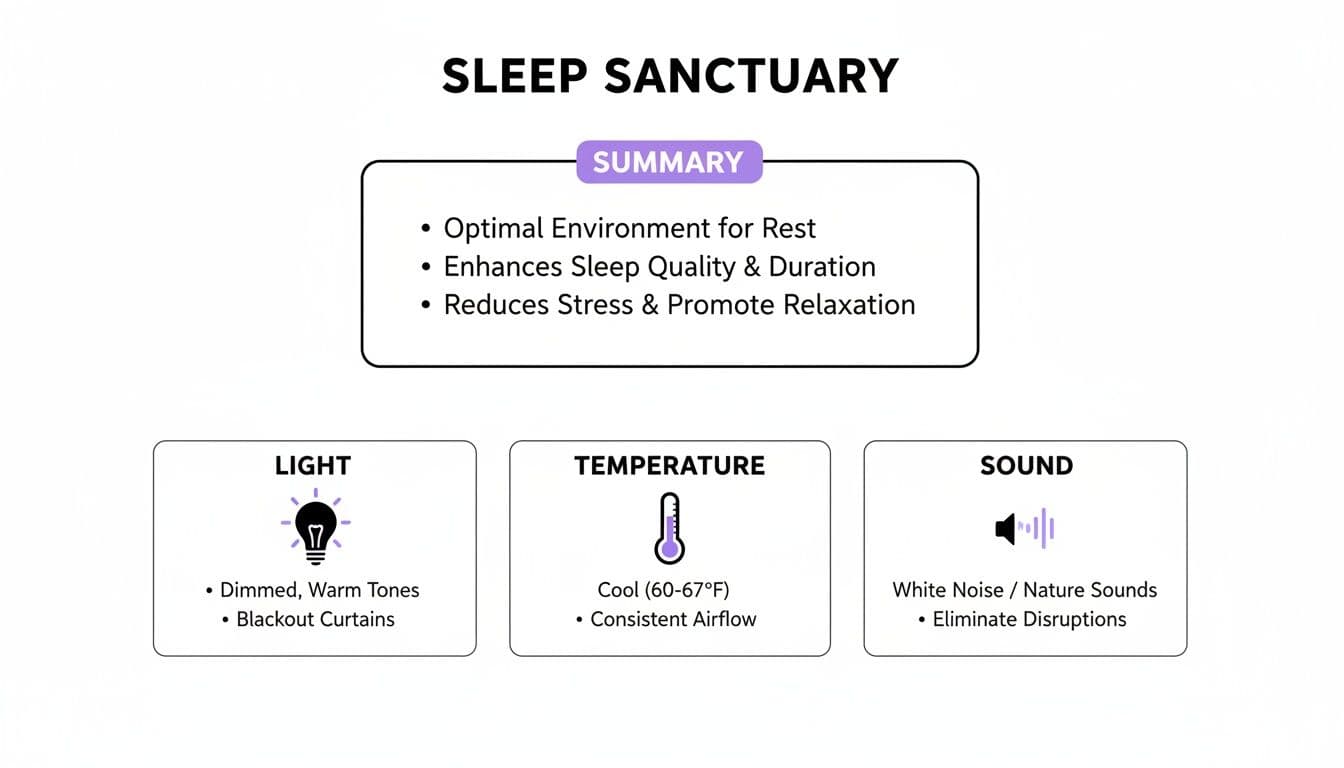
Creating a peaceful environment extends beyond your plate. As the infographic shows, a well-prepared sleep sanctuary is your foundation for recovery, allowing your body to truly rest and repair.
Foods That Help You Feel More Grounded
Think of your grocery cart as a toolkit for tranquility. Certain foods are packed with nutrients that have a real, calming effect on the body. We're not talking about a total diet overhaul, just small, consistent additions that build your resilience over time.
Magnesium-Rich Foods: This mineral is a true relaxation powerhouse. It helps regulate cortisol and has a natural calming effect on the nervous system. You'll find it in leafy greens like spinach, nuts (especially almonds), seeds, avocados, and even a bit of dark chocolate. A small handful of almonds can be the perfect afternoon snack to steady your nerves.
Omega-3 Fatty Acids: Famous for their brain-boosting benefits, omega-3s also help buffer the negative effects of stress hormones. Fatty fish like salmon are fantastic sources. For plant-based options, try adding chia seeds, flaxseeds, or walnuts to your meals.
Nourishing your body isn't another chore to add to your list; it's a profound act of self-care. Each mindful choice is a quiet message to yourself that you are worthy of feeling calm and well.
Making a few simple swaps is an easy way to start. It doesn’t have to be complicated!
Simple Food Swaps to Soothe Your Nerves
Even small changes can make a big difference in how you feel throughout the day. Here’s a quick guide to choosing foods that promote calm over those that can amplify feelings of stress.
Swap This Stress-Inducing Choice | For This Calming Alternative |
Sugary breakfast cereal | A warm bowl of oatmeal topped with walnuts and berries |
Caffeinated soda or coffee in the afternoon | A calming cup of herbal tea or a glass of water with lemon |
Salty, processed chips | A handful of almonds or pumpkin seeds |
White bread or pasta | Whole-grain bread, brown rice, or quinoa |
Candy bar or sugary pastry | A piece of dark chocolate ( 70% cacao or higher) |
These aren't rigid rules, but gentle suggestions. By focusing on adding more calming foods, you'll naturally start to crowd out the ones that leave you feeling frazzled.
Hydration and Herbal Teas for Serenity
Staying properly hydrated is so important. Even mild dehydration can cause your cortisol levels to spike. While plain water is always a fantastic choice, herbal teas offer the double benefit of hydration and gentle, therapeutic properties.
A warm cup of tea in the evening can become a beautiful ritual, signaling to your body and mind that the day is done and it's time to unwind. Certain herbs are especially good at this.
Chamomile: The classic calming tea. It contains an antioxidant that binds to receptors in your brain that help decrease anxiety and encourage sleep.
Lavender: The soothing aroma alone can help ease anxiety. It’s been used for centuries to improve sleep quality.
Lemon Balm: This gentle herb from the mint family is wonderful for reducing stress and promoting an overall sense of well-being.
Creating a small ritual around your evening tea can be a lovely moment of self-care. As you steep your tea, you could pair it with a quiet audio story from Otherworld Tales, letting the soothing warmth and gentle sounds melt away the day's tensions. To explore more relaxing blends, check out our guide to the best herbal teas for sleep. This simple practice reinforces your commitment to finding peace, one nourishing sip at a time.
Finding Peace Through Gentle Movement and Connection
When you hear “exercise for stress relief,” what comes to mind? Probably high-intensity workouts and breaking a sweat. But finding a sense of peace isn’t about pushing your body to its absolute limits.
In fact, for many of us, the opposite is true. Gentler, more mindful movement is often a far more effective way to release stored tension and calm an overactive nervous system.
This isn't about burning calories; it's about reconnecting with your body. Simple activities like a slow-paced walk or a few minutes of stretching can lower cortisol levels without the jarring spike that more intense exercise can sometimes cause. Think of it as a restorative practice that sends a clear signal to your body: it's safe to relax.
Embracing Mindful Movement to Release Tension
Mindful movement is really just the simple act of paying close attention to how your body feels as you move. It shifts the focus away from performance and toward presence, turning a basic stretch into a full-blown meditative experience.
This is how you start to release the physical tightness that so often comes with mental stress. You know the feeling—that familiar tension that gathers in your shoulders or the ache in your lower back after a long, trying day.
A short, dedicated routine can make a world of difference. You don't need a full hour at the gym. Just ten minutes of focused, gentle movement before bed can help your body finally let go of the day's burdens, preparing you for a deeper, more restorative sleep.
Your 10-Minute Evening Stretch Routine
This simple sequence is designed to be done just about anywhere you have a little space. It's the perfect way to wind down and check in with your body.
Neck Rolls: Sit comfortably and gently drop your chin to your chest. Slowly roll your right ear toward your right shoulder, hold for a breath, and then return to the center. Repeat on the left side. Do this three times on each side to feel that tension melt away.
Shoulder Shrugs: Inhale deeply and lift your shoulders up toward your ears, holding them tightly for just a moment. As you exhale, let them drop completely. Feel the weight and tension releasing with the breath. Repeat five times.
Cat-Cow Stretch: Come onto your hands and knees. As you inhale, drop your belly and look up, arching your back (Cow pose). As you exhale, round your spine toward the ceiling, tucking your chin (Cat pose). This movement is wonderful for warming up the spine and releasing back tension. Continue for eight to ten breaths.
Gentle Spinal Twist: Lie on your back and bring your knees into your chest. Extend your arms out to the sides in a 'T' shape. Gently let both knees fall to your right side as you turn your head to the left. Hold for five deep breaths, then switch sides.
Child's Pose: From your hands and knees, sit back on your heels and fold forward, resting your forehead on the floor. This is a deeply restorative pose that calms the mind. Breathe here for as long as it feels good.
Movement is a powerful language the body understands. By gently stretching and moving, you are communicating a message of safety and release directly to your nervous system, bypassing the chatter of a worried mind.
This physical release is a crucial piece of the puzzle. But stress can also create a profound sense of isolation, which requires a different kind of remedy entirely.
The Healing Power of Social Connection
One of the most powerful—and often overlooked—ways to manage stress is through genuine human connection. Loneliness can be a significant stressor all on its own, while feeling understood and supported acts as a potent buffer against life's challenges. In fact, positive interactions can physically calm your body's fight-or-flight response.
Nurturing these relationships doesn't have to be some grand gesture. It's really about the small, consistent efforts that remind you, and others, that you're not alone. Intentionally carving out time for connection is a radical act of self-care.
Here are a few simple ways to cultivate that connection:
Schedule a Weekly Call: Pick one person—a friend, a sibling, a child—and schedule a non-negotiable weekly phone or video call. Putting it on the calendar makes it real.
Join a Group: Find a local book club, gardening group, or walking club that piques your interest. Sharing a common hobby is a wonderful, low-pressure way to build new friendships.
A Simple Text: Never underestimate the power of a quick message. A simple, "Thinking of you today," can brighten someone's day and reinforce your bond in an instant.
These acts of movement and connection work hand-in-hand, addressing both the physical and emotional sides of stress. They are gentle yet powerful tools for building resilience and finding your way back to a state of calm.
Recognizing When You Need More Support
Putting these natural strategies into practice is a wonderful act of self-care. You're building your resilience, one day at a time. But it's just as important to honor those moments when stress feels like more than you can carry alone.
Knowing when to ask for professional guidance isn't a sign that these techniques have failed. Far from it. It's a courageous, powerful step forward on your wellness journey.
Sometimes, despite our very best efforts, the weight of chronic stress can begin to look and feel a lot like persistent anxiety or even depression. This shift can be subtle, so it helps to know what to watch for.
When to Consider Professional Guidance
If you find yourself nodding along to several of the following for more than a few weeks, it might be a sign that some structured support could make a real difference.
A Persistent Low Mood: That constant feeling of sadness, emptiness, or hopelessness that just won’t seem to lift.
Losing Interest: Hobbies and activities you once loved now feel like a chore, bringing little to no joy.
Overwhelming Worry: Anxiety that feels out of control, coloring your daily thoughts and steering your actions.
Big Changes in Sleep or Appetite: You're either sleeping way too much or barely at all, or your eating habits have changed dramatically.
Pulling Away: You feel a strong urge to withdraw from friends, family, and social gatherings you used to enjoy.
Reaching out for help is a sign of immense strength and self-awareness. It’s you telling yourself that you deserve to feel better—and that you're willing to take the steps to get there.
If these signs are hitting close to home, the first step can be a simple one: schedule a chat with your primary care doctor. They can help rule out any underlying physical reasons for your symptoms and can refer you to a qualified therapist or counselor who is a good fit.
Therapy provides a safe, confidential space to explore the roots of your stress and develop coping strategies that are made just for you. A professional can offer tools and perspectives that work beautifully alongside the natural techniques we’ve talked about.
Remember, learning how to reduce stress naturally is a layered process. Just as you’d see a specialist for a physical issue that isn’t getting better, seeking support for your mental well-being is a vital, proactive part of taking care of your whole self. You truly don't have to navigate this alone.
Common Questions About Natural Stress Relief
Starting a new wellness practice always brings up a few questions. That's completely normal. Having a little clarity can give you the confidence to stick with these gentle methods and really make them your own. Let's walk through some of the most common things people ask.
How Long Until I Feel a Difference?
This is a great question, and the answer really has two parts.
You can feel immediate, in-the-moment relief from something like a deep breathing exercise in just a few minutes. It’s a fantastic way to stop a stress spiral right in its tracks.
But for the deeper, more lasting changes—the kind that come from building better sleep habits or improving your nutrition—consistency is everything. Most women report feeling a real, positive shift in their overall stress levels and mood within a few weeks of daily practice. It’s less about a quick fix and more about building a foundation of resilience over time.
Is It Better to Combine These Methods?
Absolutely. Think of these natural stress relief methods as ingredients for your own personalized relaxation ritual. They work beautifully together, and layering them often makes each one more powerful.
For example, you could do your gentle stretching routine while listening to a calming soundscape from Otherworld Tales, then follow it up with a warm cup of chamomile tea. You're combining gentle movement with soothing audio and a nourishing drink, creating a multi-sensory experience of calm that feels incredibly restorative.
The goal is to find a combination that feels like a true indulgence, not another chore.
The most effective wellness routine is the one you genuinely look forward to. Mix and match these techniques to discover what brings you the most joy and peace—that's the combination that will stick.
What if I Am Not Interested in Fantasy Stories?
That's perfectly fine, and it’s an important point. While narrative stories are fantastic tools for distracting a busy mind (a process sometimes called cognitive shuffling), the real goal is to find an audio experience that you find personally soothing. The story itself is just one of many options.
If you're looking for more practical strategies, this article on effective stress management techniques has some great insights that can be adapted for anyone, not just athletes. The core principle is always about finding what works for you.
You can easily use a tool like the audio mixer on Otherworld Tales to play only the ambient sounds—like rain, wind, or a crackling fire—without any narration at all. The most powerful tool is always the one that helps you relax and disengage from your worries.
I Still Feel Overwhelmed. What Should I Do?
First, be kind to yourself. This journey is about patience and self-compassion. If you've been consistently practicing these techniques for several weeks and still feel like your stress is unmanageable, it might be time to seek some extra support.
This is not a sign of failure; it is a profound sign of strength.
Reaching out to a healthcare professional or a qualified therapist can provide personalized guidance and help you explore other avenues for care. They can work with you to make sure you have all the tools you need to feel your best.
Ready to quiet your mind and drift into a peaceful sleep? Explore the immersive, calming audio experiences at Otherworld Tales and discover how a gentle story can be the perfect end to your day. Find your new favorite tale at https://www.otherworldtales.com.