Guided Imagery for Sleep A Practical Guide to Calm Your Mind
Discover how guided imagery for sleep can calm a racing mind and ease stress. Learn simple techniques to help you drift into deep, restorative rest tonight.
Featured story

The Fog's Embrace
TheOtherLand · 42 min
Thomas, a lighthouse keeper weary of solitude, encounters a peculiar fog that reveals a hidden island teeming with bioluminescent creatures and ancient ruins. He discovers a lost civilization's secrets, finding solace and a sense of belonging in this ethereal world, but must decide whether to stay or return to his solitary life.
So, what exactly is guided imagery for sleep? Think of it as a gentle, structured way to use your imagination to find a peaceful, quiet place inside your own mind, making it much easier to drift off.
It’s like intentionally changing the channel in your brain. Instead of letting it broadcast a chaotic mix of the day's worries, you tune into a calm, serene program of your own making.
Taming the Racing Mind Before Bed
We’ve all been there. Staring at the ceiling, exhausted, while your mind insists on replaying every stressful moment, conversation, and what-if scenario from the day. This endless loop of mental chatter is one of the biggest roadblocks to a good night's sleep.
It keeps your nervous system stuck in high-alert mode right when it needs to be powering down. Guided imagery offers a surprisingly powerful—and pleasant—way to break that cycle.
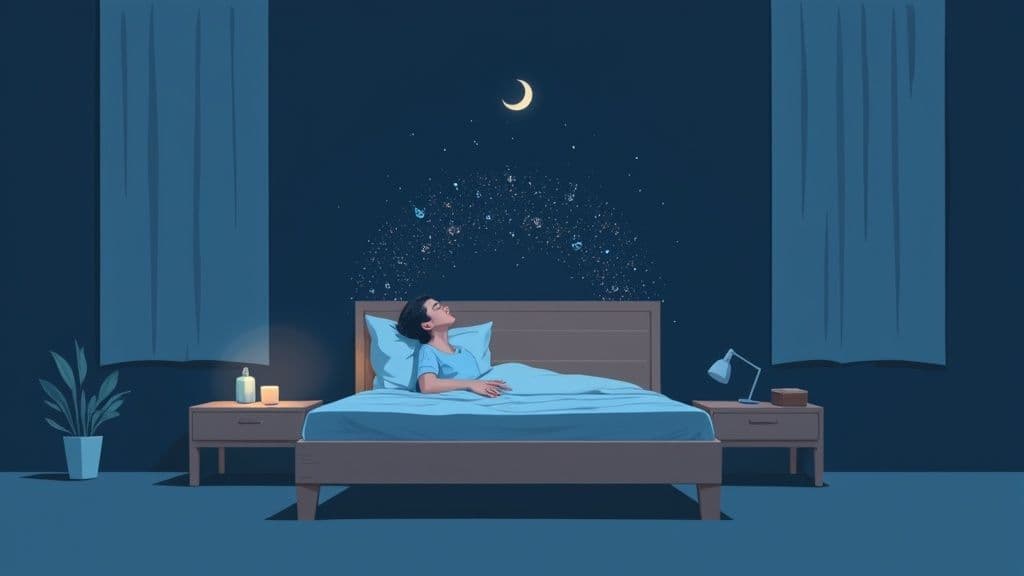
Instead of trying to wrestle your thoughts into submission (which never works), you simply give them a new, calming focus. This isn't just a distraction; it's a way of actively engaging the very same parts of your brain that process real-world experiences.
Why Your Imagination Is a Powerful Sleep Aid
Here’s the fascinating part: when you vividly imagine a peaceful scene—say, a quiet beach at sunset or a cozy cabin with a crackling fire—your body starts to respond as if you were actually there. This mind-body connection is what makes guided imagery so effective.
This process helps shift your body out of the stress-fueled "fight or flight" mode and into the restorative "rest and digest" state. That physiological shift is everything when it comes to sleep.
It triggers a cascade of real, physical benefits:
Lowers Heart Rate: Your pulse naturally slows, sending a clear signal to your body that it's safe to relax.
Reduces Muscle Tension: You can physically feel your shoulders drop and your jaw unclench as your body releases stored-up stress.
Quiets Anxious Thoughts: By focusing on the sensory details of your imagined scene, you leave less mental bandwidth for worries to creep in.
Think of it as a mental reset button. Guided imagery doesn't just put a band-aid on stress; it gives your body a direct command to recalibrate, creating the ideal conditions for your mind to finally let go and welcome sleep.
To help you see how these pieces fit together, here's a quick look at the core components of guided imagery.
Guided Imagery at a Glance
This table breaks down how each element of guided imagery works to promote better sleep.
Component | How It Helps You Sleep | Simple Example |
Sensory Details | Engages all your senses (sight, sound, smell, touch) to make the mental scene feel real and immersive. This pulls your focus away from anxious thoughts. | Imagining the warm sun on your skin, the sound of gentle waves, and the salty smell of the ocean air. |
Narrative Focus | Gives your mind a simple, calming storyline to follow, preventing it from wandering back to daily stressors or to-do lists. | Picturing yourself walking slowly down a path in a quiet forest, noticing the trees and the light filtering through the leaves. |
Emotional Shift | Creates feelings of safety, peace, and contentment, which helps counteract the anxiety and frustration that often come with sleeplessness. | Focusing on the feeling of deep comfort as you imagine sinking into a soft, warm bed in a safe, quiet room. |
Each component works in harmony to guide your mind and body toward a state of deep relaxation.
For a broader toolkit, exploring a practical guide to mindfulness for taming a busy mind can offer some fantastic complementary techniques. And if overthinking is your main challenge, learning how to stop overthinking at night can provide even more targeted strategies.
How Guided Imagery Prepares Your Mind for Rest
To get a handle on how guided imagery actually works, picture yourself as the director of your own internal movie. Your mind is the screen, and your imagination is the camera, painting a scene designed purely for relaxation. This isn't just aimless daydreaming; it's a focused mind-body technique that creates real, measurable shifts in your body.
When you vividly imagine the sights, sounds, and salty air of a peaceful beach, you’re doing more than just distracting yourself from your worries. You're actively sending a powerful signal to your nervous system that it’s safe to power down.
From Fight or Flight to Rest and Digest
Your body essentially has two main operating modes. First, there's the sympathetic nervous system, better known as the "fight or flight" response. This is your high-alert, stress-fueled state—perfect for handling a genuine threat, but terrible when you're just trying to sleep.
The second is the parasympathetic nervous system, or the "rest and digest" state. This is where true relaxation, healing, and—you guessed it—sleep happen.
Guided imagery for sleep acts as a gentle but firm switch, intentionally shifting you from that revved-up state to a calmer one. By immersing your mind in a safe, tranquil narrative, you're telling your body there’s no danger here. This biological downshift is the real key to creating the perfect conditions for sleep, as your mind and body finally start working together toward rest.
This mental practice isn't about escaping reality. It's about giving your body a chance to recalibrate, so you can meet daily stressors with more resilience and finally find the quiet needed for sleep.
The power of this technique is backed by some pretty solid research. A big 2018 review of multiple controlled trials found that in 76.9% of studies, guided imagery produced significant positive effects on targeted health outcomes. When it came to sleep specifically, it was shown to lower that feeling of being "wired" before bed and improve how well people felt they slept, making it easier to fall and stay asleep. You can dig into the full findings on how guided imagery impacts health outcomes.
The Physical Signs of a Calming Mind
As your nervous system makes that all-important shift, the physical benefits start to become undeniable. This is where the magic really happens, turning a simple mental exercise into a powerful tool for better rest.
Your body begins to show clear, tangible signs of relaxation:
Heart Rate Slows Down: Your pulse steadies and drops, a classic indicator that stress is melting away.
Blood Pressure Lowers: The strain on your cardiovascular system eases as your body moves into a calmer state.
Muscles Release Tension: You might suddenly notice your shoulders dropping away from your ears or your jaw unclenches as physical stress dissolves.
These changes create the perfect internal environment for your body to finally let go and drift off. If you're just getting started with this kind of practice, our guide on sleep meditation for beginners has more foundational techniques to help you build a solid routine.
The Science of Imagination and Sleep Quality
The real magic behind guided imagery is its ability to step in and break the frustrating cycle of anxious thoughts that so often keeps us awake. We’ve all been there—your head hits the pillow, and suddenly your brain decides it's the perfect time to replay every worry and to-do list item. This mental loop has a name: cognitive rumination, and it’s one of the biggest culprits behind insomnia. It puts your mind on high alert, making rest feel impossible.
Guided imagery acts like a circuit breaker for that frantic energy. By actively pouring your focus into a positive, engaging scene—maybe a quiet walk through an ancient forest—you're essentially starving those anxious thoughts of the attention they crave. You're giving your mind a new, better job to do, one that encourages calm instead of chaos.
This mental shift is more than just a simple distraction; it triggers real, measurable changes in your brain. It helps you transition from the buzzy, alert beta brainwaves of a wide-awake mind toward the slower alpha and theta brainwaves—the very ones associated with deep relaxation and the gentle entry into sleep.
Why Your Imagination Matters
Here’s a fascinating quirk of the human mind: your brain often struggles to tell the difference between something you vividly imagine and something that’s actually happening. When you visualize a warm, safe, and comfortable place, your body gets the message. It responds by releasing calming neurochemicals and dialing back the production of stress hormones like cortisol.
This physical response is what sleep experts call reducing presleep arousal. It's the key to getting your body ready for rest, and it's why the sensory details in guided imagery are so critical:
Visuals: Picturing the soft glow of moonlight filtering through the leaves.
Sounds: Imagining the gentle crunch of leaves under your feet or the distant hoot of an owl.
Feelings: Sensing the comforting weight of a cozy blanket or the cool night air on your skin.
The more you can immerse your senses in the scene, the more effectively you can shift your entire body into a state that’s ready for sleep. For anyone curious about other ways to influence brain activity, exploring how sound technologies like binaural beats for sleep can influence brainwaves offers another layer to preparing the mind for rest.
Not a Universal Magic Bullet
Now, it’s important to say that guided imagery isn't a one-size-fits-all solution. Its effectiveness can really vary from person to person. A big reason for this comes down to a concept known as hypnotizability—which is simply a fancy term for how easily an individual can get lost in imaginative experiences. Some of us can conjure up vibrant mental worlds in an instant, while others find it harder to paint a clear picture in our minds.
This natural difference can genuinely affect how well it works. A fascinating 2020 study dug into this very question and found that a person's level of hypnotizability could actually change how guided imagery impacted their sleep patterns. While the practice was helpful for many, the research showed that our own imaginative abilities play a major part in the results. If you're interested in the details, you can read the full research on sleep and hypnotizability.
The Takeaway: The goal isn’t to create a perfect, Hollywood-style movie in your head. It's about generating a feeling of peace and safety. Even if you're not a strong visualizer, focusing on the other senses—the imagined sounds, smells, and physical sensations—can be just as powerful for calming your nervous system and paving the way for a truly restful night.
Guided Imagery Scripts You Can Use Tonight
Knowing the science is one thing, but experiencing the calm for yourself is where the real magic happens. This is where we put theory into practice. Below are three simple yet powerful guided imagery scripts you can try tonight to create the perfect mental getaway for sleep.
The process is wonderfully simple. First, get comfortable in your bed. Next, take a few slow, deep breaths to let your body know it’s time to wind down. Finally, gently close your eyes and let your imagination follow the story, engaging as many of your senses as you can.
Each script is designed to tap into different preferences, giving you a toolkit for creating tranquility whenever you need it.
The Peaceful Beach Getaway
This classic script is perfect if you find the rhythmic sounds of water and gentle warmth deeply comforting. It’s all about creating feelings of safety, release, and pure contentment.
Settle In: Lie down and feel the weight of your body sinking into the mattress. Take a deep breath in, and as you exhale, imagine letting go of all the tension from your day.
Paint the Scene: Picture yourself walking onto a warm, sandy beach just as the sun begins to set. See the soft, golden light painting the sky with hues of orange and pink.
Engage Your Senses: Can you feel the soft, powdery sand beneath your feet? Hear the gentle, rhythmic wash of waves coming ashore and then pulling back. Smell the clean, salty air as a light breeze touches your skin.
Find Your Spot: Find a comfortable place to lie down on the sand. Feel its warmth beneath you, supporting your entire body. With every wave you hear, imagine it washing away another layer of worry, leaving you feeling lighter and more peaceful. Stay here, soaking in the calm, for as long as you like.
The Quiet Forest Walk
If you connect more with the earthy smells of nature and the deep stillness of the woods, this one is for you. It’s designed to bring about a sense of grounding, stability, and quiet wonder.
Begin Your Journey: Imagine standing at the edge of a lush, quiet forest. The air is cool and smells fresh. A soft, mossy path unfolds right in front of you.
Walk Slowly: As you start walking, notice the tall, ancient trees standing like gentle guardians all around. See the soft sunlight filtering down through the leaves, creating shifting patterns on the forest floor.
Notice the Details: Hear the soft crunch of leaves under your feet with each step you take. Smell the rich, earthy scent of the soil and the fresh aroma of pine. Reach out and touch the rough bark of a tree, feeling its steady, solid presence.
Feel the Peace: With every step, feel yourself moving further from the noise of your day and deeper into a state of profound calm. The forest is safe and still, and you are a part of its peace. Continue your walk until you feel ready for sleep.
The Stargazing Journey
This script is for anyone who finds a sense of awe and perspective in the vastness of the night sky. It’s a wonderful way to make daily worries feel small and insignificant, promoting a feeling of expansive calm.
Find Your Vantage Point: Picture yourself lying on a soft, grassy hill on a clear, cool night. You’re wrapped up in a warm, cozy blanket.
Look Upward: Above you, the night sky is a deep, velvety blanket sprinkled with countless twinkling stars. See the gentle glow of the moon casting a soft, silvery light over everything.
Sense the Immensity: Feel the vast, silent space above you. Notice how small your worries feel compared to the immense, peaceful universe. With each breath, imagine you are breathing in the calm, quiet energy of the night.
Drift Away: Imagine yourself floating gently, weightlessly, among the stars. There is nothing to do and nowhere to be. Just allow this feeling of serene expansiveness to carry you into a deep and restful sleep.
Building a Consistent Bedtime Imagery Practice
The real magic of guided imagery for sleep doesn't happen in a single session. It comes from building a consistent, comforting ritual you can look forward to each night. Think of it like learning any new skill—the more you practice, the more natural and effective it becomes. The goal is to create a powerful signal for your brain and body that the day is over and it's time for deep, restorative rest.

Making this a seamless part of your nightly routine is simpler than you might think. A great way to start is with a technique called habit stacking—essentially, you just pair your imagery practice with something you already do before bed. For example, you could begin your session right after you brush your teeth or as soon as you turn off the lights.
This small step helps forge a strong neurological connection, turning the practice from just another thing on your to-do list into an automatic, calming habit.
Finding the Right Tools for Your Journey
When it comes to actually finding guided imagery tracks, you've got plenty of options, each with its own pros and cons. Finding what fits your lifestyle and preferences is the key to sticking with it.
Free Audio Platforms: Places like YouTube have an endless library of free guided imagery sessions. The biggest draw is the sheer variety and the fact that it's cost-free, though you might have to put up with the occasional ad.
Dedicated Sleep Apps: Many popular wellness apps have entire sections of high-quality, professionally recorded guided imagery for sleep. These usually offer a more polished, ad-free experience with handy features like progress tracking, but they typically require a subscription.
And using technology like this really can work. A feasibility study on a bedtime app that delivered guided sessions for chronic insomnia found some pretty impressive results, with participants showing significant sleep improvements. The study had a 77% retention rate and 91% app compliance, which just goes to show how well these tools can support a consistent practice. You can explore the research findings on app-based sleep interventions on jmir.org.
Start Small to Build Lasting Momentum
If there's one piece of advice to take away, it's this: start with manageable goals. You absolutely do not need a 30-minute session every single night to see benefits.
A simple 5 to 10-minute session is a perfect starting point. The aim is not perfection but consistency. By keeping it short and easy, you eliminate the pressure and make it far more likely that you'll stick with it, night after night.
Over time, this small, consistent action builds a powerful habit. Your mind will begin to anticipate this moment of calm, making it that much easier to let go of the day’s stress and finally welcome sleep.
Common Questions About Guided Imagery for Sleep
As you start dipping your toes into guided imagery, it’s only natural for a few questions to surface. This whole process is a personal journey, and figuring out the common bumps in the road can make you feel a lot more confident. So, let’s tackle some of the most frequent questions to help you get the most out of every session.
The idea here isn’t just to give you textbook answers but to clear up any confusion and help you make this practice truly your own.
What if I Can’t Visualize Anything Clearly?
This is, without a doubt, the most common worry people have, and the answer is simple: you don't have to. The point isn’t to direct a perfect, high-definition movie inside your head. It’s much more about sensing and feeling the scene.
If crisp mental pictures aren’t showing up, just pivot to your other senses. Can you ‘hear’ the waves lapping against the shore? Can you ‘feel’ the warmth of the sun on your skin? That feeling of deep, genuine relaxation is so much more important than how sharp the image is. And you might find that with a little practice, the visualizations start to get clearer all on their own.
How Long Does It Take to See Results?
This one really varies from person to person. Some people feel a real sense of calm on the very first night they try it. For others, it might take a few weeks of sticking with it before they notice a meaningful shift in their sleep patterns.
Think of it like building a new muscle at the gym. The more consistently you practice guiding your mind to a peaceful place, the stronger, easier, and more automatic that mental pathway becomes.
A good starting point is a gentle 10 to 15-minute session each night. Weaving it into your wind-down routine is the best way to build momentum that lasts.
Is Guided Imagery the Same as Meditation?
While both are fantastic tools for relaxation, they take different roads to get to the same destination: a calm mind. They work beautifully together, but they are different practices.
Here’s a simple way to think about the key difference:
Mindfulness Meditation: This practice is often about non-judgmental awareness. You’re typically observing your thoughts as they come and go without getting tangled up in them.
Guided Imagery: This is a much more active and directed process. You’re intentionally steering your imagination toward a specific, detailed scene, using sensory details to fully occupy your mind.
In short, meditation often works by observing the mind to quiet it, while guided imagery quiets the mind by giving it something peaceful to focus on.
What if I Fall Asleep During the Session?
Honestly? That’s fantastic news! When you’re using guided imagery to help you sleep, falling asleep is the whole point. The entire practice is designed to relax your mind and body to that perfect tipping point where sleep can just… happen.
If you find yourself drifting off before the audio track is over, you should absolutely count that as a win. The goal isn't to finish an exercise or hear the end of the story. It’s about creating the perfect internal state for your body to finally let go and get the rest it's been craving.
Ready to drift away into a world of calm? The stories at Otherworld Tales are crafted to be the perfect guided imagery companion, leading your mind on gentle journeys that pave the way for deep, restorative sleep. Explore our library of enchanting audio tales and find your perfect escape tonight at https://www.otherworldtales.com.