8 Calming Sounds for Anxiety: A 2025 Guide to Finding Auditory Peace
Discover 8 powerful calming sounds for anxiety, from binaural beats to ambient soundscapes. Learn practical tips to create your perfect auditory escape.
Featured story

A Meeting With The Leanan Sidhe
TheOtherLand · 1hr 49min
Join us as we journey through an enchanted forest under starlit skies, where the mortal Cathal and the faerie Eilis, a Leanan Sídhe, are bound by fate, love, and sacrifice. Experience their story as it unfolds with the magic of ancient Ireland: a tale of inspiration, desire, and the price of love in a world touched by otherworldly forces.
In a world buzzing with constant notifications and overwhelming noise, finding a moment of peace can feel like a genuine challenge. AnxietyIn a world buzzing with constant notifications and overwhelming noise, finding a moment of peace can feel like a genuine challenge. Anxiety often manifests as a relentless internal monologue, a storm of 'what-ifs' that hijacks our focus and drains our energy. But what if the key to quieting that storm isn't silence, but the right kind of sound? The science is increasingly clear: specific auditory stimuli can directly influence our nervous system, helping to lower heart rate, reduce stress hormones like cortisol, and guide our brainwaves into a state of deep calm.
This guide explores eight distinct types of calming sounds for anxiety, moving beyond generic advice to offer practical, actionable strategies. We will break down not just what to listen to, but how to listen, transforming your headphones or speakers into a powerful tool for mental well-being. You will discover the unique benefits of everything from binaural beats to nature soundscapes and learn how to tailor them to your specific needs. Whether you are battling daytime stress, seeking better focus, or preparing for a restful night's sleep, this curated list will help you build your personal sonic sanctuary and regain control over your inner peace.
1. Binaural Beats
Binaural beats are a unique form of sound therapy that uses a specific auditory illusion to gently guide your brain toward a state of relaxation. This method involves playing two slightly different sound frequencies, one into each ear, at the same time. Your brain then perceives a third, phantom beat at a frequency equal to the difference between the two tones. This process is known as brainwave entrainment.
For managing anxiety, specific frequency ranges are particularly effective. Alpha waves (8-12 Hz) are associated with a state of calm wakefulness, like the feeling you have during meditation. Theta waves (4-8 Hz) are linked to deep relaxation, drowsiness, and the early stages of sleep. Listening to binaural beats in these ranges can help slow down racing thoughtsFor managing anxiety, specific frequency ranges are particularly effective. Alpha waves (8-12 Hz) are associated with a state of calm wakefulness, like the feeling you have during meditation. Theta waves (4-8 Hz) are linked to deep relaxation, drowsiness, and the early stages of sleep. Listening to binaural beats in these ranges can help slow down racing thoughts and ease feelings of tension, making them one of the most direct calming sounds for anxiety.
How to Use Binaural Beats
To get started, find a comfortable, quiet place where you won't be disturbed. Because this technique relies on sending separate frequencies to each ear, high-quality stereo headphones are essential for the effect to work properly.
Start Small: Begin with a 15-minute listening session. If you find it helpful, you can gradually increase the duration to 30 minutes or longer.
Find Your Frequency: Experiment with both alpha and theta wave tracks to see which one feels most soothing to you. Apps like Brain.fm use AI to generate functional music that includes these tones, while countless playlists are available on YouTube and Spotify.
Create a Routine: Try listening during a stressful part of your day or incorporate it into your bedtime routine to help quiet your mind before sleep.
Important Note: Due to their deeply relaxing and sometimes hypnotic effects, you should never listen to binaural beats while driving, operating machinery, or performing any task that requires your full attention and alertness.
2. Nature Sounds (Rain, Ocean Waves, Forest Ambience)
Nature sounds are authentic recordings from the natural world that create a peaceful and immersive auditory environment. These sounds, such as gentle rainfall, the rhythmic crash of ocean waves, or the subtle rustling of a forest, are deeply ingrained in our evolutionary history as signals of safety and tranquility. Listening to them helps activate the parasympathetic nervous system, which slows the heart rate, lowers blood pressure, and reduces the production of stress hormones like cortisol.
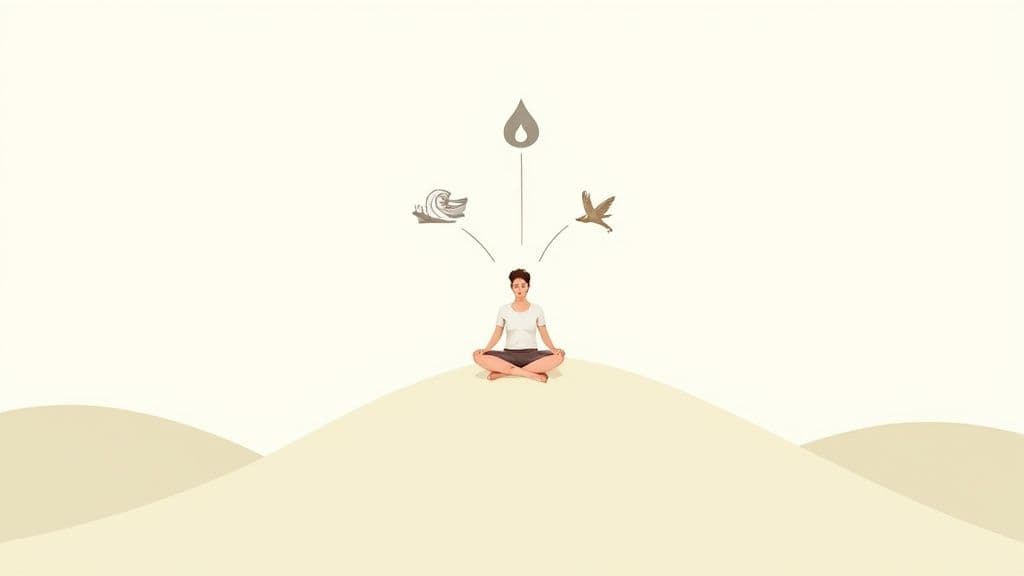
The non-threatening and pattern-based quality of these sounds provides a predictable and steady backdrop that can mask disruptive household noises and calm an overactive mind. This makes them exceptionally effective as calming sounds for anxiety, whether you're trying to focus, unwind after a long day, or drift off to sleep. For a deeper exploration, you can learn more about how specific calming nature sounds impact the brain.
How to Use Nature Sounds
One of the biggest advantages of nature sounds is their versatility. You can play them through speakers to fill a room or use headphones for a more personal experience. There are countless high-quality recordings available on apps like Calm, streaming services, and dedicated websites like myNoise.net, which allows for sound customization.
Layer and Mix: Enhance the effect by layering different sounds. Combine a gentle rain track with soft, instrumental music, or add distant thunder to an ocean wave recording for a more dynamic soundscape.
Find Your Preference: Experiment to discover what works best for you. Some people find the steady patter of rain most comforting, while others prefer the ebb and flow of waves or the lively chatter of a forest.
Create a Multi-Sensory Experience: Pair your chosen sounds with other sensory inputs, like diffusing a lavender essential oil or dimming the lights, to deepen your state of relaxation. Beyond digital recordings, incorporating a physical element such as a mini rainmaker can offer an authentic and tactile experience of soothing rain sounds.
Important Note: For sleep, consider using a timer function on your app or device. While continuous sound can be helpful, some people sleep more deeply in complete silence once they have successfully relaxed and drifted off.
3. White Noise and Pink Noise
White noise and pink noise create a consistent and predictable auditory blanket, effectively masking sudden, jarring environmental sounds that can trigger anxiety. White noise contains all audible frequencies at equal intensity, sounding like a soft, steady hiss. Pink noise is similar but has more power in the lower frequencies, resulting in a deeper, more natural sound often compared to a gentle waterfall or steady rain. This "acoustic camouflage" helps prevent your brain from being overstimulated by irregular noises.
By creating a stable soundscape, these noises signal to your brain that your environment is safe and unchanging. This reduces hypervigilance and allows your nervous system to relax, making them powerful calming sounds for anxiety. The predictability of the sound helps quiet a racing mind, allowing for greater focus or easier transition into sleep. Many find pink noise, in particular, to be less harsh and more soothing for long-term listening.
How to Use White and Pink Noise
To effectively use these sounds, the goal is to create a seamless auditory backdrop. You can use dedicated apps, websites, or even common household items to produce these soothing frequencies.
Find Your Color: Experiment with both white and pink noise to see which you prefer. Pink noise is generally considered more relaxing by most listeners. You might also explore brown noise for an even deeper, bass-heavy rumble.
Adjust the Volume: Start at a low volume, just enough to mask distracting background sounds. The noise should blend into your environment, not dominate it. Apps like Noisli or websites like myNoise.net offer customizable generators.
Use Natural Sources: A simple fan or an air purifier can be an excellent source of natural white noise. Physical devices like the Marpac Dohm are also specifically designed for this purpose. If you struggle with sleep due to noise, learn more about how white noise can help with insomnia.
Important Note: For maximum effect in a very noisy environment, consider combining a white noise source with noise-canceling headphones or high-quality earplugs. This creates an unparalleled level of auditory control, allowing you to build a tranquil bubble anywhere.
4. Ambient Music and Soundscapes
Ambient music is a genre of non-intrusive, minimalist instrumental sound designed specifically to calm the nervous system without demanding active listening. Artists create lush soundscapes using synthesizers, strings, and environmental elements that provide emotional support while allowing you to remain mentally present. Unlike traditional music, ambient pieces lack verses and choruses, creating a continuous, evolving sonic environment.

Pioneered by artists like Brian Eno, this form of music is crafted to blend into your surroundings and reduce mental clutter. The absence of a traditional structure helps prevent your brain from anticipating what comes next, which can soothe the anxious mind. For this reason, it is one of the most effective calming sounds for anxiety, often used in therapeutic settings and featured in highly popular playlists like Spotify's 'Sleep,' which has billions of streams. You can explore more about how this works by reading about sound therapy for relaxation.
How to Use Ambient Music
To begin using ambient music for anxiety relief, choose a time when you need to lower your stress levels, such as during a work break or while winding down for bed. The goal is to create a supportive audio backdrop for your activities.
Start with the Classics: If you're new to the genre, begin with foundational works like Brian Eno's "Music for Airports" or a modern masterpiece like Max Richter's "Sleep" to understand its calming potential.
Active then Passive Listening: For the first 10-15 minutes, close your eyes and focus on the sounds. Then, allow the music to fade into the background as you go about a quiet activity like reading or journaling.
Create Dedicated Playlists: Curate your own "anxiety relief" playlists with your favorite ambient tracks. This makes it easy to access your go-to calming sounds when you need them most.
Establish a Routine: Use ambient music at consistent times, like every morning or before bed, to create a strong mental association between the sounds and a state of peace.
Important Note: While all ambient music is calming, some sub-genres like "dark ambient" can have a more somber or intense tone. Stick to classic ambient, space ambient, or minimalist compositions when your primary goal is anxiety reduction.
5. ASMR (Autonomous Sensory Meridian Response) Audio
ASMR is a sensory phenomenon characterized by a tingling, static-like sensation on the skin, typically beginning on the scalp and moving down the back of the neck and upper spine. This response is triggered by specific auditory or visual stimuli, such as whispering, tapping, or crinkling sounds. For many, experiencing ASMR promotes a state of deep relaxation and can significantly reduce feelings of stress and anxiety.
The calming effect of ASMR is thought to be linked to the release of endorphins, dopamine, and serotonin in the brain. The intimate, personal attention simulated in many ASMR videos mimics the comforting feelings of being cared for, making it one of the most unique and effective calming sounds for anxiety. While the response is highly subjective, those who experience it often describe a profound sense of peace and well-being.

How to Use ASMR Audio
Finding the right ASMR triggers is a personal journey, as what works for one person may not work for another. The key is to explore different sounds and creators to discover what resonates with you.
Explore Different Triggers: Start by listening to a variety of common triggers, such as soft speaking, gentle tapping, page-turning, or crinkling plastic. Creators like GentleWhispering ASMR and ASMR Darling on YouTube have extensive libraries covering countless sounds.
Use Quality Headphones: Many ASMR recordings are binaural, creating a 3D sound experience that feels very close and personal. Stereo headphones are essential to fully experience this immersive effect.
Start with Short Sessions: Begin with a 10-15 minute video to see how you respond. If you find it relaxing, you can incorporate longer sessions into your routine, especially before bedtime to help you unwind.
Don't Force It: The tingling sensation can't be forced. The best way to experience ASMR is to relax, listen passively, and let the sounds wash over you without trying too hard to feel something.
Important Note: ASMR is not for everyone. Some people find the sounds irritating or distracting, a phenomenon known as misophonia. If you find whispering or other common triggers annoying, this may not be the right relaxation tool for you.
6. Guided Meditation and Body Scan Audio
Guided meditation and body scan audio involve a calming voice that leads you through structured mindfulness exercises, progressive relaxation, and body awareness practices. Instead of passively listening, you actively participate by following verbal instructions for breathing, visualization, and focusing your attention. This method is highly effective for anxiety because it interrupts the cycle of anxious thoughts and grounds you in the present moment.
By directing your focus to your breath or physical sensations, these sessions create mental space and reduce the overwhelming nature of worry. A narrator's steady, reassuring tone combined with strategic pauses helps slow your heart rate and ease muscle tension. This active engagement makes guided audio one of the most powerful calming sounds for anxiety, transforming listening from a passive experience into a restorative practice.
How to Use Guided Meditation
To start, choose a comfortable position, either sitting upright or lying down, in a quiet space where you can focus without interruption. Unlike other ambient sounds, the quality of the voice and the clarity of the instructions are key.
Start Small: Begin with short 5 to 10-minute sessions to build the habit. As you become more comfortable, you can explore longer meditations.
Find Your Guide: The narrator's voice is crucial. Explore apps like Headspace or Insight Timer to find two or three guides whose tone and pacing you find genuinely soothing. Consistency with a voice you trust can deepen your practice.
Time It Right: Practice in the morning to set a calm tone for the day or use it before bed to address anxiety-induced insomnia. Having sessions downloaded for offline access is also helpful for unexpected moments of high stress.
Important Note: The goal isn't to "clear your mind" of all thoughts, which can create more stress. Instead, the practice is to gently notice when your mind wanders and guide your attention back to the narrator's voice or your breath without judgment.
7. Classical and Baroque Music (Specifically Optimized)
Certain classical and Baroque compositions offer a structured, mathematically precise soundscape that can profoundly soothe the nervous system. Pieces from composers like Debussy, Satie, and Mozart often feature moderate tempos, predictable harmonic progressions, and a lack of jarring changes, which helps activate the parasympathetic nervous system responsible for rest and relaxation. This isn't just about listening to any symphony; it's about selecting specific pieces whose inherent order and beauty create a reliable sense of safety and calm.
The predictability and consonant harmonies in this music can lower heart rate, reduce blood pressure, and decrease cortisol levels. Research from institutions like Harvard Medical School has validated these benefits, showing how the intricate patterns found in works by Bach or Vivaldi engage the brain without overstimulating it. This makes specifically chosen classical music one of the most timeless and effective calming sounds for anxiety, providing a sophisticated alternative to ambient noise.
How to Use Classical and Baroque Music
To effectively use this sound for anxiety relief, focus on creating an intentional listening experience rather than just having it on as background noise. The key is in the selection and the environment.
Start with Gateway Pieces: Begin with compositions known for their tranquil qualities, such as Debussy’s "Clair de Lune," Erik Satie’s "Gymnopédies," or the slower movements from Chopin’s nocturnes.
Control the Volume: Keep the music at a low to moderate volume, around 40-50 decibels. The goal is to create a soothing ambiance, not an immersive concert hall experience.
Explore Baroque Structure: If you find modern classical too emotional, explore the highly structured and mathematical compositions of Baroque composers like Bach and Vivaldi. Their patterns can be incredibly grounding for an anxious mind.
Create Themed Playlists: Curate different playlists for specific needs. A morning playlist might feature uplifting Vivaldi pieces, while an evening one could focus on gentle piano works by Satie to help you unwind.
Important Note: For the best nervous system benefits, aim for listening sessions of at least 30 minutes. This gives your body enough time to sync with the music's rhythm and fully shift into a state of relaxation.
8. Isochronic Tones and Gated Brainwave Entrainment
Isochronic tones are a powerful form of brainwave entrainment that uses regular, evenly spaced pulses of sound separated by a period of silence. This distinct on-and-off rhythmic pattern directly stimulates the brain, guiding it to synchronize with a target frequency. Unlike binaural beats, which create an auditory illusion inside your head, isochronic tones present a clear, direct stimulus that can be perceived without headphones.
This direct approach is often considered more potent and faster-acting for some individuals. For anxiety relief, isochronic tones tuned to alpha (8-12 Hz) or theta (4-8 Hz) frequencies are particularly beneficial. Alpha waves promote a relaxed yet alert mental state, perfect for dissolving daytime stress, while theta waves encourage deep relaxation and meditation. By gently coaxing your brainwaves into these calmer patterns, isochronic tones provide one of the most effective calming sounds for anxiety.
How to Use Isochronic Tones
While headphones can enhance the immersive experience, they are not strictly necessary, giving you more flexibility. Find a quiet space where you can relax without interruption to receive the full benefit of the tones.
Select Your Frequency: Start with alpha wave tracks (8-12 Hz) for a gentle introduction to calm focus. If you need deeper relaxation, especially before sleep, try theta wave tracks (4-8 Hz).
Ease Into It: Begin with a 20-minute session to see how your mind responds. You can gradually increase the duration as you become more comfortable with the process.
Enhance the Effect: Combine your listening session with deep breathing exercises or mindfulness meditation to amplify the calming results. Many find dedicated apps like Neuro-Programmer 3 or extensive libraries on YouTube to be excellent resources.
Important Note: Isochronic tones are designed to alter your brainwave state and induce deep relaxation. For safety, do not listen to them while driving, operating heavy machinery, or performing any activity that requires your focused attention.
8-Item Comparison: Calming Sounds for Anxiety
Method | Implementation complexity 🔄 | Resource requirements ⚡ | Expected outcomes 📊 ⭐ | Ideal use cases 💡 | Key advantages ⭐ | Key limitations 🔄 |
Binaural Beats | Medium — requires stereo separation and session timing 🔄 | ⚡ Stereo headphones, app/audio files | 📊 Moderate relaxation & anxiety reduction; onset ~15–20 min — ⭐⭐⭐ | Short meditation, pre-sleep, acute stress relief 💡 | Evidence-based, portable, cost-effective ⭐ | Effect varies by individual; needs quality headphones; limited long-term studies 🔄 |
Nature Sounds (Rain, Ocean, Forest) | Low — simple playback, long loops 🔄 | ⚡ Speakers or headphones; streaming/apps | 📊 Consistent calming and noise masking; cortisol reduction ~20–30% — ⭐⭐⭐⭐ | Background for work, sleep, noise masking 💡 | Universally appealing; no learning curve; abundant free options ⭐ | Can be monotonous; source quality varies; some sounds may trigger users 🔄 |
White Noise & Pink Noise | Low — steady signal, minimal setup 🔄 | ⚡ Generators/apps, speakers/headphones or household devices | 📊 Strong noise masking; improves sleep/focus and ADHD-related symptoms — ⭐⭐⭐⭐ | Sleep aid, focused work, environments with unpredictable noise 💡 | Excellent masking; affordable; low habituation ⭐ | Can be harsh or fatiguing; volume tuning required; repetitive 🔄 |
Ambient Music & Soundscapes | Low–Medium — curation for mood/length 🔄 | ⚡ Streaming services, quality speakers/headphones | 📊 Mood improvement and sustained calm; good background support — ⭐⭐⭐⭐ | Relaxation routines, work/study background, evening wind-down 💡 | Aesthetic, supports routines, widely accessible ⭐ | Subtle effect for some; quality playback improves outcome; may feel melancholic 🔄 |
ASMR Audio | Medium — finding effective triggers and binaural mixes 🔄 | ⚡ High-quality stereo headphones preferred; creator-specific content | 📊 Rapid strong relaxation for responders; highly variable across population — ⭐⭐⭐⭐ (responders) | Quick relaxation, insomnia relief, reducing racing thoughts 💡 | Very effective for responders; diverse content; quick onset ⭐ | 25–40% non-responders; whispering may annoy others; quality varies 🔄 |
Guided Meditation & Body Scan | Medium — structured practice and pacing 🔄 | ⚡ App/recordings, quiet space; headphones optional | 📊 Clinically supported anxiety reduction (~20–30%); teaches coping skills — ⭐⭐⭐⭐⭐ | Beginners, cognitive anxiety, building long-term coping skills 💡 | Directly targets thought patterns; transferable techniques; strong evidence ⭐ | Requires compatible guide voice; needs focused listening; habituation reduces novelty 🔄 |
Classical & Baroque (Optimized) | Low — playlist curation and volume control 🔄 | ⚡ Speakers/headphones; curated recordings/playlists | 📊 Lowers cortisol/blood pressure; calming and cognitive benefits — ⭐⭐⭐⭐ | Background for work, study, evening routines; culturally familiar settings 💡 | Intellectually enriching, socially normalized, supports focus ⭐ | May be disliked by some; recording quality matters; "Mozart Effect" overstated 🔄 |
Isochronic Tones & Gated Entrainment | Medium — frequency selection and session control 🔄 | ⚡ Tone generator apps, speakers or regular headphones | 📊 Direct brainwave entrainment; potentially faster relief (≈10–15 min) — ⭐⭐⭐⭐ | Quick anxiety reduction without stereo headphones; pairing with meditation 💡 | Effective without stereo separation; broader user applicability; noticeable effects ⭐ | Audible pulsing can distract or discomfort; requires frequency matching; less pleasant to some 🔄 |
Crafting Your Calm: Integrating Soundscapes into Your Daily Life
You now have a comprehensive toolkit of auditory allies, from the brainwave-synchronizing power of binaural beats and isochronic tones to the immersive tranquility of nature sounds and ambient music. We've explored how white and pink noise can mask distractions, how ASMR can create profound relaxation, and how guided meditations can anchor you in the present moment. The journey, however, doesn't end with simply knowing these tools exist. The true transformation begins when you consciously integrate these calming sounds for anxiety into the fabric of your daily life, turning passive listening into an active wellness practice.
Building Your Personal Auditory Sanctuary
The most effective approach is a personal one. Think of yourself as the curator of your own mental and emotional environment. Your goal is to move from a reactive state, where you seek sound after anxiety has already taken hold, to a proactive one, where your soundscape actively supports your desired state of mind throughout the day.
Start by identifying your unique anxiety patterns and triggers.
Morning Overwhelm? Instead of waking to a jarring alarm, try a gentle, pre-set playlist of forest birds or a soft ambient track to ease into your day.
Midday Focus Slump? Drown out distracting office chatter or internal noise with a steady stream of pink noise or a specifically chosen Baroque music piece known to enhance concentration.
Evening Racing Thoughts? Create a dedicated "wind-down" ritual. An hour before bed, switch from stimulating content to a calming guided body scan or the gentle rhythm of ocean waves to signal to your brain that it's time to rest.
The Art of Experimentation and Layering
There is no single "best" sound; the power lies in discovering what resonates most deeply with you. This requires experimentation. Spend a week trying a different sound for a specific situation each day and note how you feel. Did rain sounds make you feel more peaceful or just sleepy during your work session? Did the structure of classical music feel more focusing than the abstract flow of an ambient soundscape?
Actionable Tip: Create a simple "Sound Journal." Jot down the sound you used, the time of day, your activity, and a one-to-ten rating of your anxiety level before and after listening. This data will quickly reveal your most effective personal sound-based strategies.
Furthermore, remember the power of layering. At Otherworld Tales, we built our audio player specifically around this concept, allowing listeners to blend our fantasy stories with soundscapes like rain or a crackling fire. This creates a deeply immersive and comforting experience. You can apply this same principle by playing a binaural beat track quietly underneath a guided meditation or layering soft rain sounds with your favorite calming music playlist. This depth can significantly enhance the anxiety-reducing effects. Understanding the psychology behind this is fascinating; you can even explore detailed insights into the impact of background music on mood to see how auditory environments are crafted to influence emotional states in various settings.
By actively curating your auditory world, you are taking a powerful, tangible step toward managing your anxiety. You are not just listening to sounds; you are designing a life with more peace, focus, and intentional calm.
Ready to experience the profound fusion of storytelling and sound? At Otherworld Tales, we combine epic fantasy adventures with customizable, calming soundscapes to create an immersive sanctuary for your mind. Explore our library and craft your perfect escape at Otherworld Tales today.